Leading University Creating Innovation for Sustainable Future


Healthy University Rating System (HURS)
University : Siam University
Country : Thailand
Web Address : https://sustainability.siam.edu
ZT 3 Illicit Drug Use
[3.1] Comprehensive Measures Against Narcotic Drug Use
Description:
Siam University combines a clear prohibition with education, counselling and referral, and long-standing work with the community and the authorities around its campus. Its Regulation on Student Discipline forbids students to bring narcotic drugs, alcohol or weapons into the University and requires them to obey the law, alongside the national Narcotics Code B.E. 2564 (2021). The Health and Well-being Policy, approved by the University Council on 30 October 2024, provides confidential counselling, crisis intervention and referral for students, faculty and staff.
Working with the district. Siam University has long worked with the Phasi Charoen District Office on preventing, suppressing and addressing drug problems. In 2026 the two met several times, including the third 2026 meeting of the District Narcotics Prevention and Suppression Operations Center Committee on 20 May 2026, which reviewed policies, operational guidelines and the work of all agencies. On 14 July 2026 the District Director and the Dean of the Faculty of Medicine discussed community health development, health promotion, disease prevention and proactive screening for residents. The University also joined the Lower Central Region Higher Education Network’s Project for Building Immunity and Preventing Drug Abuse in Higher Education Institutions 2569 (6 January 2026).
Volunteers in the community. As part of the Bangkok Metropolitan Administration’s drug-surveillance volunteer project, lecturers and students worked in Sri Pradu, a crowded community next to the campus that faces drug problems. With the district office, the Phasi Charoen police and the BMA Health Department they surveyed every house, taught residents and pupils about drugs, checked residents’ health, cleaned and painted the community as a “white community”, and followed up with home visits; the University returns every academic year (Table ZT 3.1.3).
Education and care. Students attend drug-prevention talks under the Project for Preventing and Solving Drug Problems in Higher Education Institutions, and pharmacy and occupational health students study drug laws and drug control. Students and staff who need help are seen confidentially at the Health Center or through the Faculty of Nursing LINE Official Account, and are referred to psychiatrists, the Somdet Chaopraya Institute of Psychiatry or the national drug helpline 1165.
| 1. University regulation |
|---|
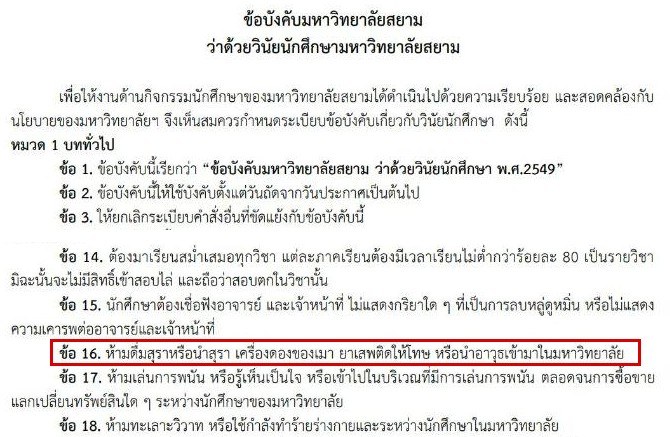 |
| Siam University Regulation on Student Discipline B.E. 2549, clause 16: students may not drink alcohol or bring alcohol, intoxicants, narcotic drugs or weapons into the University (Office of Student Affairs, sa.siam.edu) |
| 2. District narcotics committee and higher-education network, 2026 |
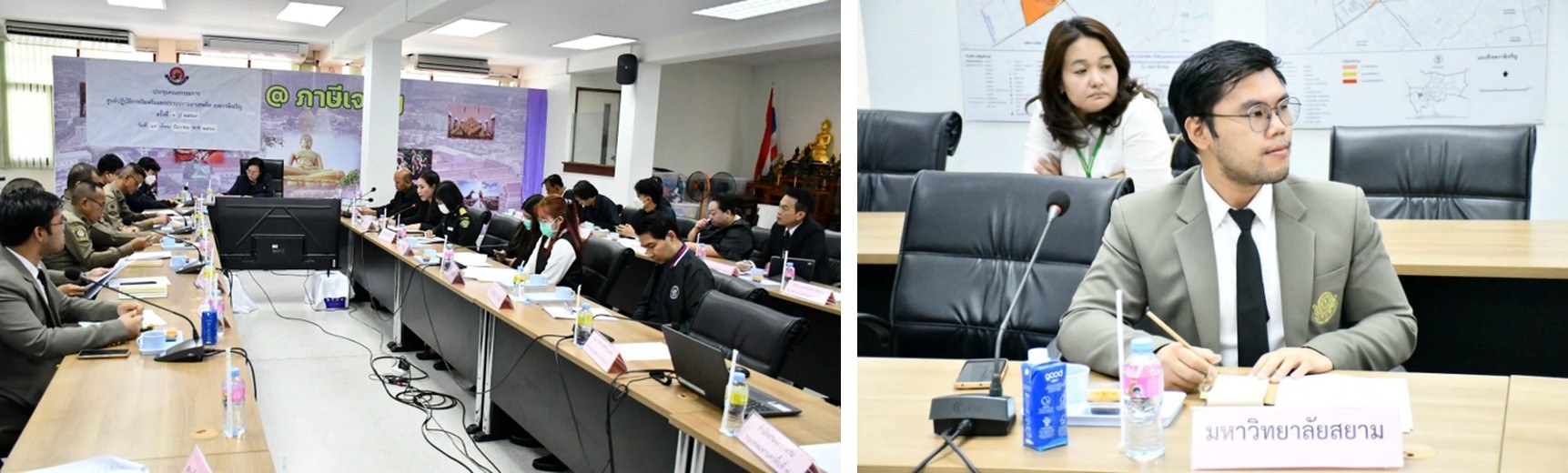 |
| Narcotics prevention and suppression in the city: Siam University at the third 2026 meeting of the Phasi Charoen District Narcotics Prevention and Suppression Operations Center Committee, chaired by the District Director, 20 May 2026 |
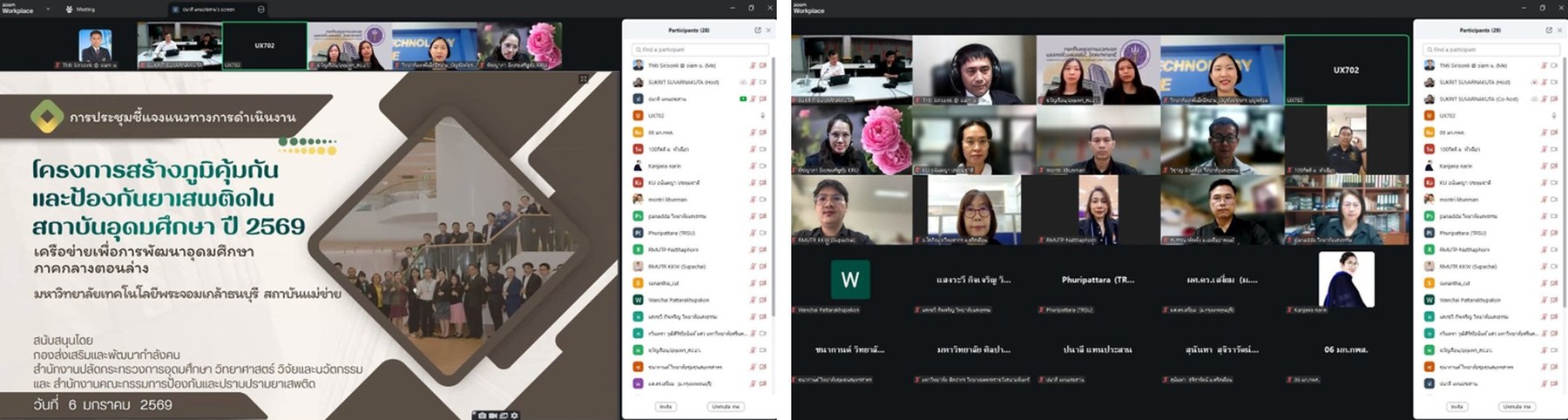 |
| Online briefing on the Project for Building Immunity and Preventing Drug Abuse in Higher Education Institutions 2569, Lower Central Region Higher Education Network, hosted by KMUTT, 6 January 2026 |
| 3. Drug-prevention campaign for students |
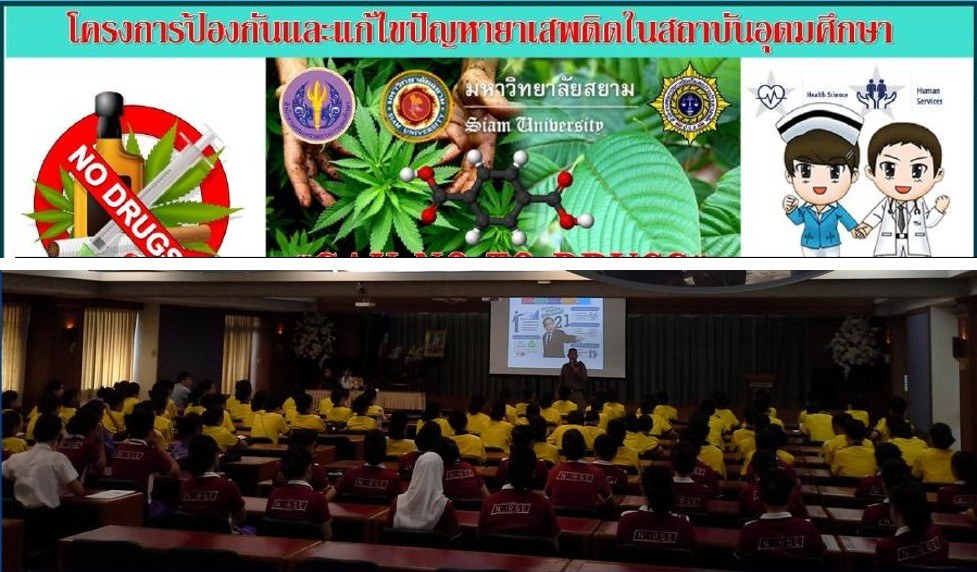 |
| “Project for Preventing and Solving Drug Problems in Higher Education Institutions – Say No to Drugs” (Siam University with partner agencies): students attend a drug-prevention talk in an auditorium |
| 4. “Sri Pradu White Community” – drug-surveillance volunteers in the neighbouring community |
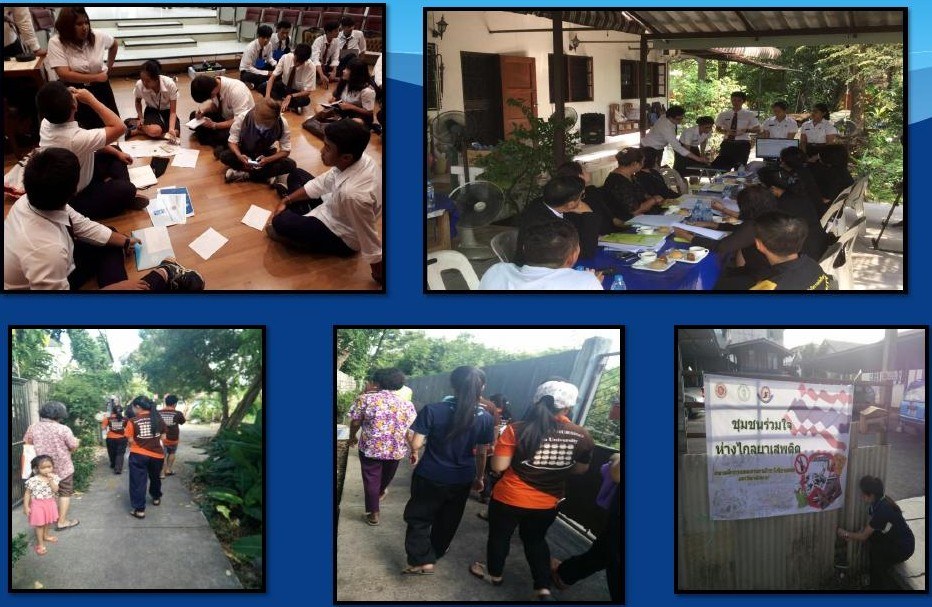 |
| Before and during the community visits: students plan the work, meet community leaders, walk the lanes house by house and put up the banner “Community united, away from drugs” |
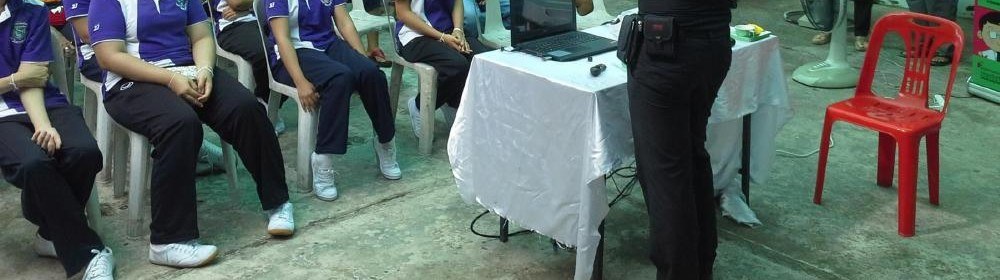 |
| A Phasi Charoen police officer teaches students and residents about drugs in the Sri Pradu community |
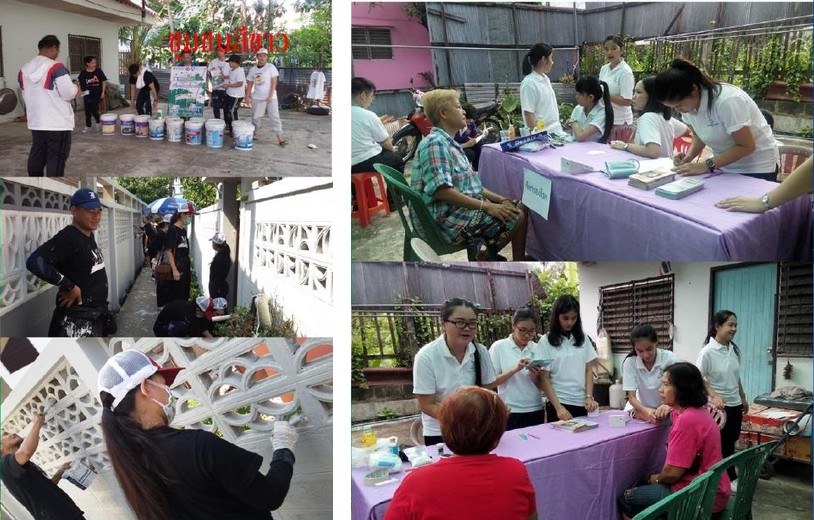 |
| “Beautiful homes, bright community – Sri Pradu White Community”: (left) students and residents paint walls and houses; (right) health checks for residents by students |
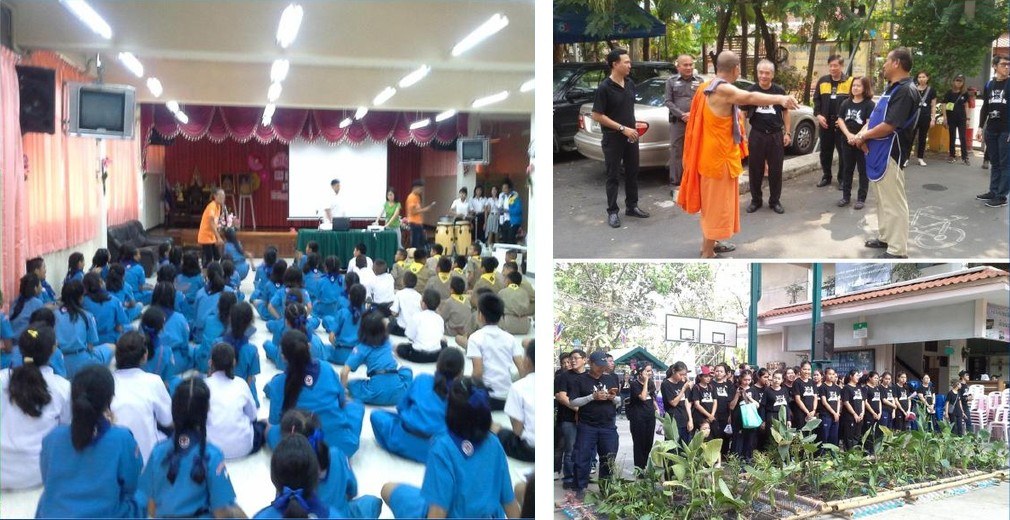 |
| (Left) Activities for pupils in a local school (Right) Healthy-temple activity at Wat Pradu Bang Chak with monks, police and students |
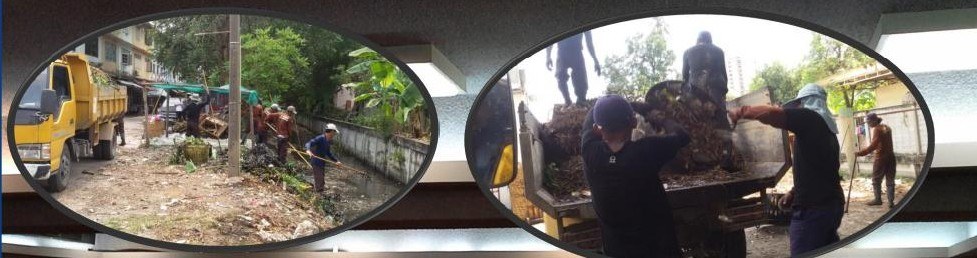 |
| Clean-up of waste and overgrown areas in the community with the district’s trucks |
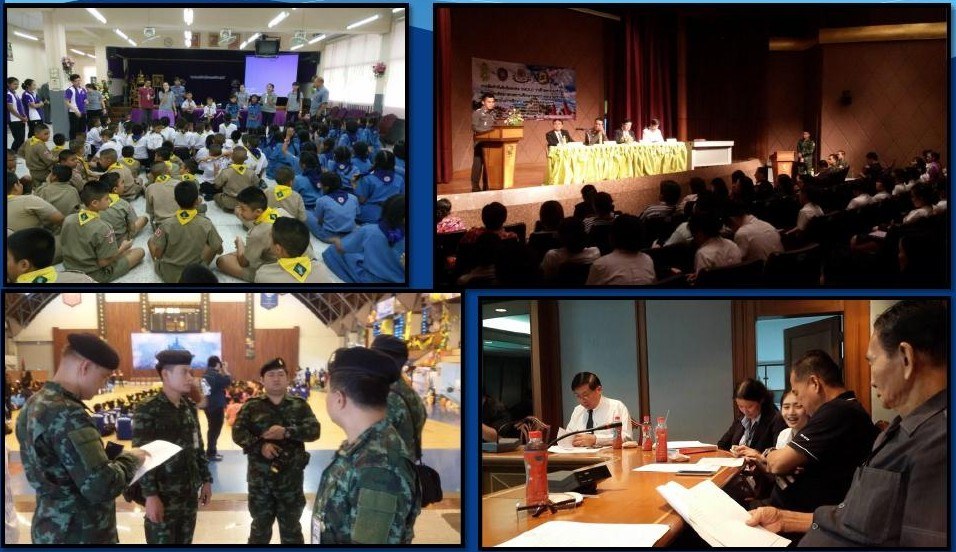 |
| Network support: school assembly, a police officer speaking at a drug-prevention seminar, security officers at a school event and a planning meeting with partners |
| 5. Counselling and referral |
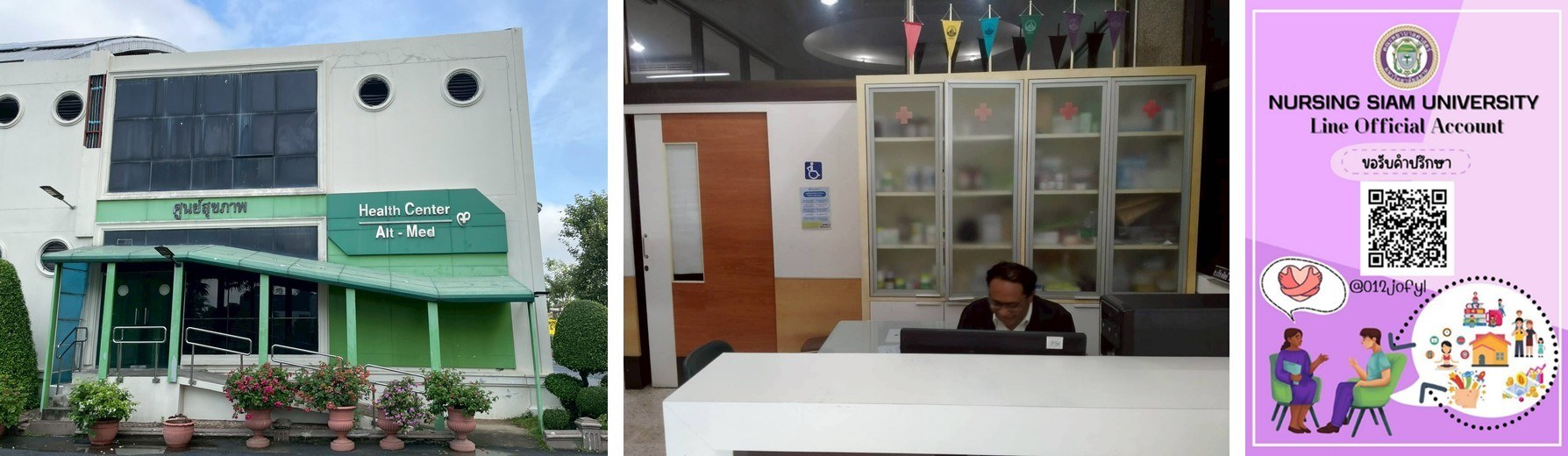 |
| Health Center – free services for students and staff – and the Faculty of Nursing LINE Official Account for confidential health and mental-health advice |
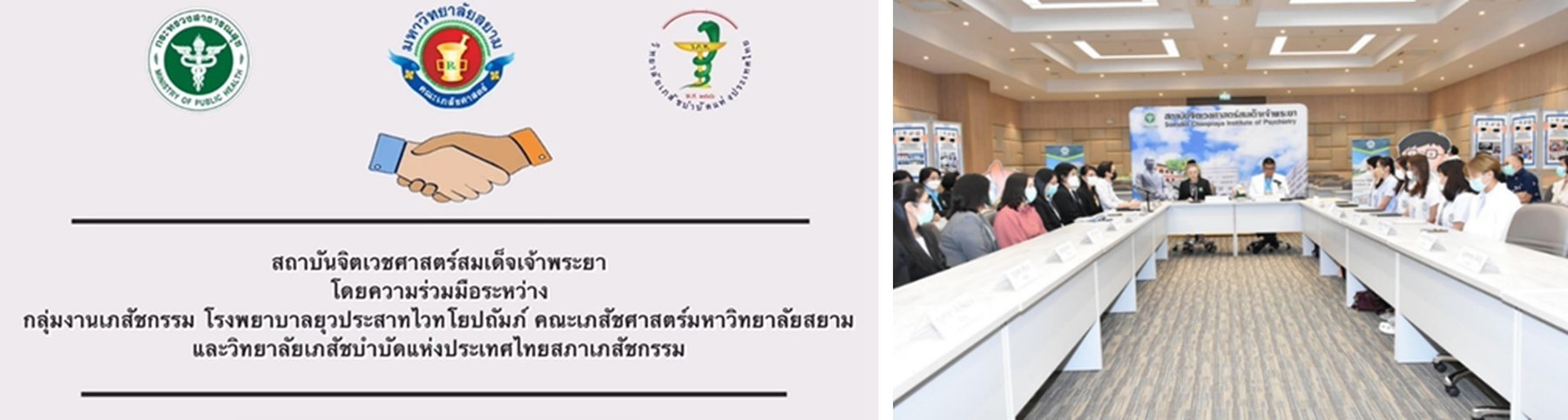 |
| Specialist referral: MoU between the Somdet Chaopraya Institute of Psychiatry, Yuwaprasart Waithayopathum Hospital, the Faculty of Pharmacy of Siam University and the College of Pharmacotherapy of Thailand |
| 6. District partnership for community health, 2026 |
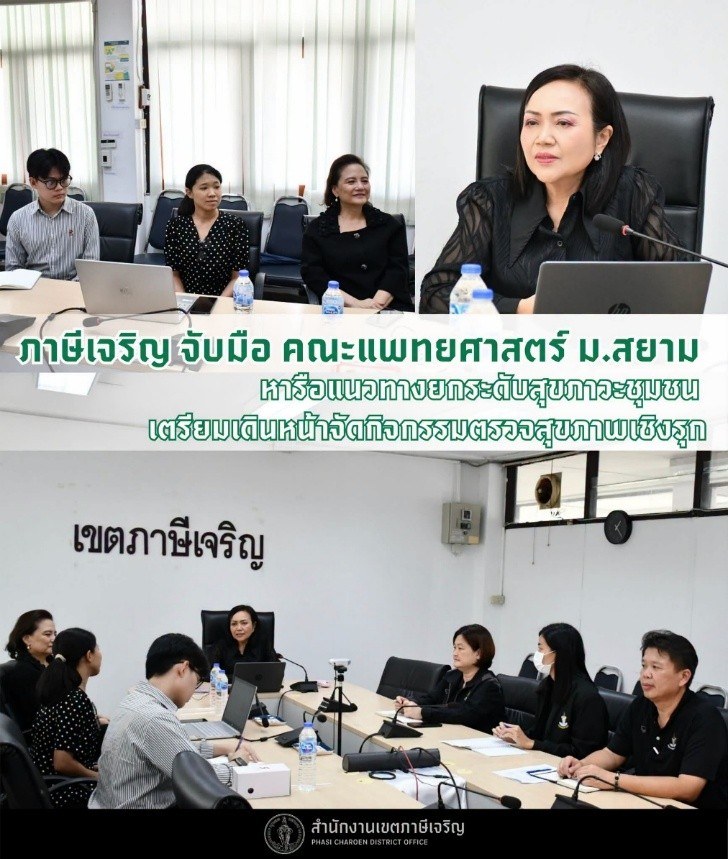 |
| Phasi Charoen District and the Faculty of Medicine discuss community health development, health promotion, disease prevention and proactive screening for residents, 14 July 2026 (Phasi Charoen District Office) |
| Narcotic drug control at Siam University (Siam University, Thailand) |
Table ZT 3.1.1 – HURS narcotic drug control measures at Siam University
| HURS measure | Implementation at Siam University | Evidence |
|---|---|---|
| 1. Prohibition of narcotic drug use within all university properties |
The Siam University Regulation on Student Discipline B.E. 2549 forbids students to bring narcotic drugs, alcohol, other intoxicants or weapons into the University (clause 16) and requires them to obey the law and university rules (clause 7); breaches are disciplinary offences. The International College Student Code of Conduct (ICO-SIAM/STU/2025-V02) makes narcotics on university premises or at university activities an offence (sec. 1.2, item 12), with sanctions up to dismissal (sec. 8). Possession, use and sale of narcotics are also offences under the Narcotics Code B.E. 2564 (2021). |
Photos 1; Regulation on Student Discipline; ICO Student Code of Conduct |
| 2. Active surveillance and monitoring of narcotic drug sale and use on campus |
Siam University joined the Bangkok Metropolitan Administration’s drug-surveillance volunteer project: lecturers and students surveyed the Sri Pradu community next to the campus house by house with community leaders, mapped the households and recorded drug problems, under the theme “Campus Safety Zone”. At district level the University sits on the Phasi Charoen District Narcotics Prevention and Suppression Operations Center Committee, which reviews prevention, suppression and the work of all agencies (third 2026 meeting, 20 May 2026). |
Photos 2, 4; SDG 11 page; Sri Pradu project |
| 3. Regular educational campaigns on the risks and legal consequences of narcotic drugs |
Siam University took part in the “Project for Preventing and Solving Drug Problems in Higher Education Institutions – Say No to Drugs”, with drug-prevention talks for students in an auditorium. In the Sri Pradu project, Phasi Charoen police officers taught students and residents about drugs, and students ran activities for pupils in local schools. In 2026 the University joined the Lower Central Region Higher Education Network’s Project for Building Immunity and Preventing Drug Abuse in Higher Education Institutions 2569 (briefing hosted by KMUTT, 6 January 2026). In the curriculum, 200-554 Pharmacy Law covers the narcotics and psychotropic substances acts, and 261-434 covers the control of alcohol and drug use by drivers. |
Photos 2, 3, 4; SDG 11 page; Sri Pradu project; SDG curriculum mapping 2569 |
| 4. Counselling and referral services for drug-related problems | Health and Well-being Policy (University Council, 30 October 2024): confidential counselling, crisis intervention and referral for students, faculty and staff. Free Health Center for students and staff; confidential advice through the Faculty of Nursing LINE Official Account; the Faculty of Pharmacy Mental Health Advisory Committee refers students to psychiatrists; MoU with the Somdet Chaopraya Institute of Psychiatry; referral to the national drug helpline 1165 (Princess Mother National Institute on Drug Abuse Treatment). |
Photos 5; SI 3.2; Healthy University Policy |
| 5. Other innovative measures against narcotic drug use | “Sri Pradu White Community” volunteer model (Table ZT 3.1.3): with the Phasi Charoen District Office, the Phasi Charoen Metropolitan Police Station and the BMA Health Department, lecturers and students combined drug education, health checks, school and temple activities, clean-up and house painting, and follow-up home visits in a crowded community facing drug problems, and return every academic year. District partnership: Phasi Charoen District Narcotics Committee (20 May 2026) and the District–Faculty of Medicine meeting on community health development and proactive screening (14 July 2026). Research: Faculty of Nursing study on family participation in rehabilitating drug users (Journal of Nursing Siam University, 24(47), 2023). |
Photos 2, 4, 6; SDG 11 page; Sri Pradu project |
Green: in place. Orange: in place or partly in place; evidence to be added. “Photos” refers to the numbered sections above.
Table ZT 3.1.2 – “Sri Pradu White Community” volunteer project
| Element | “Sri Pradu White Community” volunteer project (Siam University) |
|---|---|
| Setting | Sri Pradu, a crowded community in Phasi Charoen District next to Wat Pradu Bang Chak, registered under Bangkok Metropolitan Administration rules in 2006 and facing drug problems. Phasi Charoen has 54 communities, 5 of them “red” drug-problem communities (ONCB Bangkok data used in the project). |
| Framework | BMA drug-surveillance volunteer project; theme “Beautiful homes, bright community – Sri Pradu White Community; volunteer seedlings – Campus Safety Zone”, with the BMA Health Department and the Phasi Charoen health area. |
| Partners | Phasi Charoen District Office; Phasi Charoen Metropolitan Police Station; community leaders and residents; primary-school pupils, teachers and the school director; Wat Pradu Bang Chak. |
| Steps | Community study with leaders and a house-by-house survey and map → drug education with the police → health checks in the community → recreation and learning activities in the school and community → clean-up and house painting (“white community”) → follow-up home visits. |
| Follow-up and reporting | Home visits after the education sessions to check health and drug problems; a summary report within one month of the activity; a community visit every academic year, so that lecturers and students keep in touch with the leaders and residents. |
| Student preparation | Rules for working in the community: humility and greetings, polite speech, building trust with residents, self-control and respect for supervising lecturers, helping as part of the community, and proper dress. |
Source: Siam University presentation “Volunteer activities of Siam University – Sri Pradu community, Phasi Charoen District” (Community Showcase, attached PDF).
Evidence to attach:
-
Regulation on Student Discipline B.E. 2549 (clauses 7 and 16): https://sa.siam.edu/wp-content/uploads/2024/01/sa_2566.pdf; ICO Student Code of Conduct: https://ico.siam.edu/student-policies
-
Health and Well-being Policy: https://sustainability.siam.edu/vision-mission-and-policies-for-sustainable-future/
-
District narcotics committee (20 May 2026), HEI network (6 January 2026) and district health partnership (14 July 2026): SDG 11 page – https://sustainability.siam.edu/goal-11/; Sustainability Report 2025–2026, pp. 106–107 – https://sustainability.siam.edu/wp-content/uploads/2026/10/SDG_report_2025_2026.pdf
-
“Sri Pradu White Community” volunteer project presentation (attached PDF).
-
Counselling services: SI 3.2 evidence; SDG Report 2024–2025, pp. 40, 53 – https://sustainability.siam.edu/wp-content/uploads/2025/10/SDG-report-2024-2025.pdf