Leading University Creating Innovation for Sustainable Future


Healthy University Rating System (HURS)
University : Siam University
Country : Thailand
Web Address : https://sustainability.siam.edu
SI 2 Safe Buildings and Safe, Clean, Green Environments
[2.4] Advanced Energy Management Systems
| 1. Planning, monitoring and evaluation |
|---|
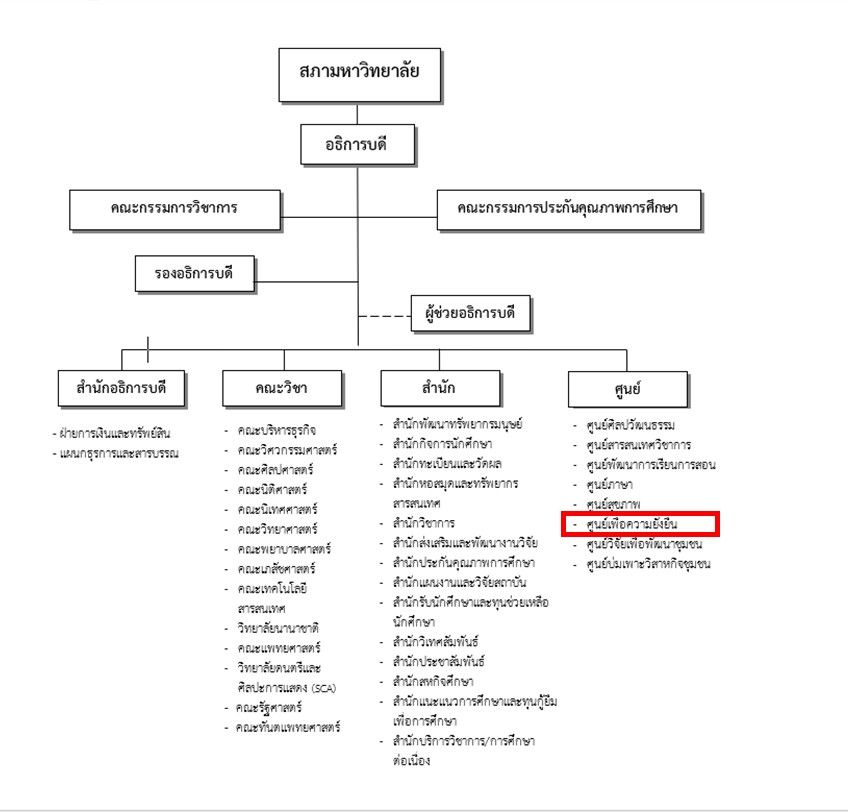 |
| Organisation chart: the Center for Sustainability (since 2018) coordinates sustainability, energy and climate projects |
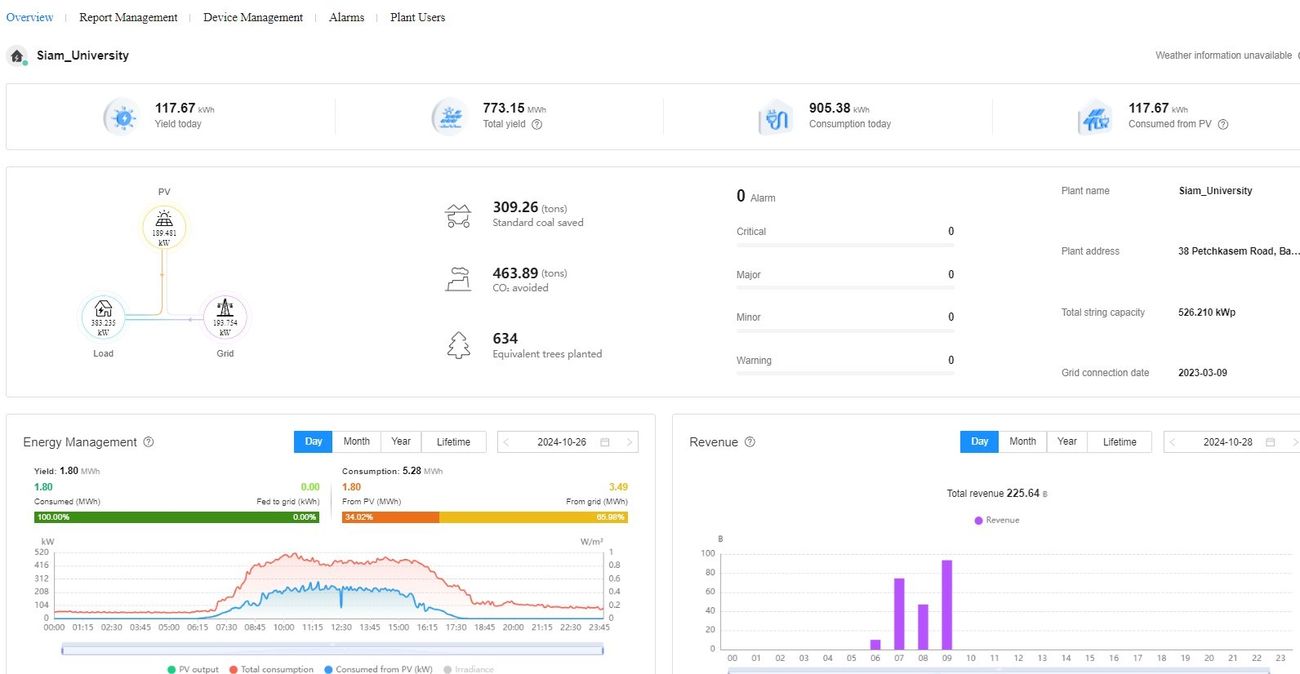 |
| Online monitoring of the solar plant: 526.21 kWp, total yield 773.15 MWh, 463.89 t CO₂ avoided, 634 trees equivalent, 0 alarms (October 2024) |
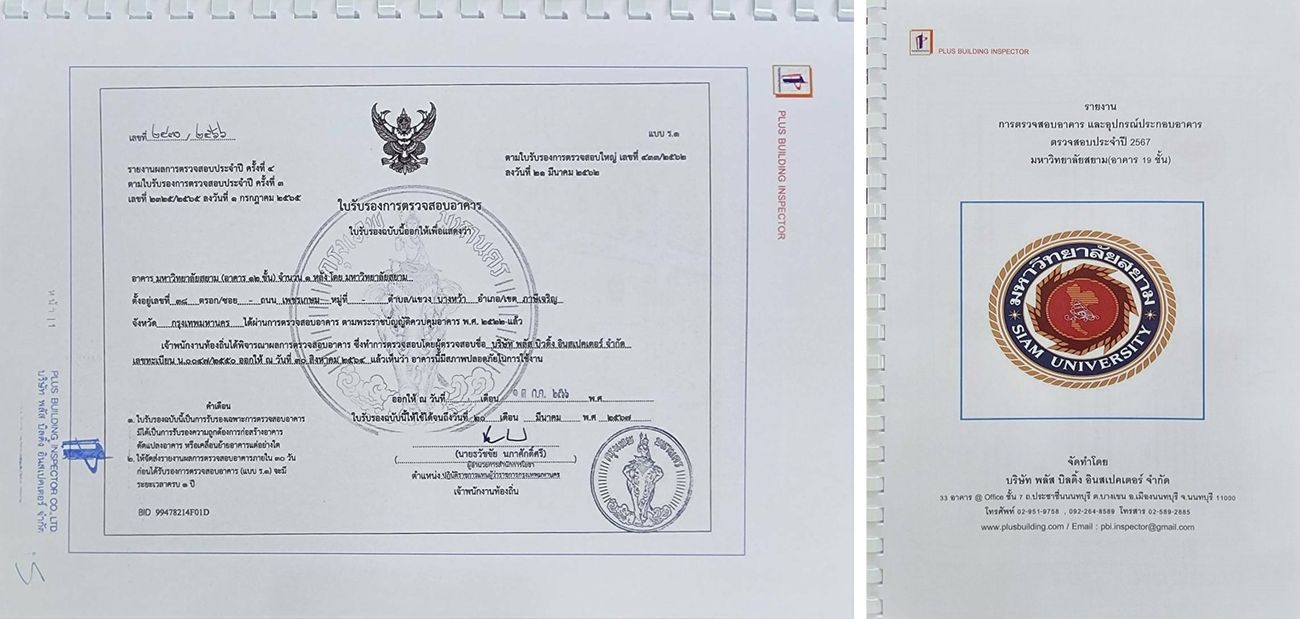 |
| Annual inspection of the 19-storey building and its equipment by a licensed building inspector (report 2567) and the building inspection certificate of the Bangkok Metropolitan Administration |
| 2. Behavioural change – Carbon Neutrality 2045 |
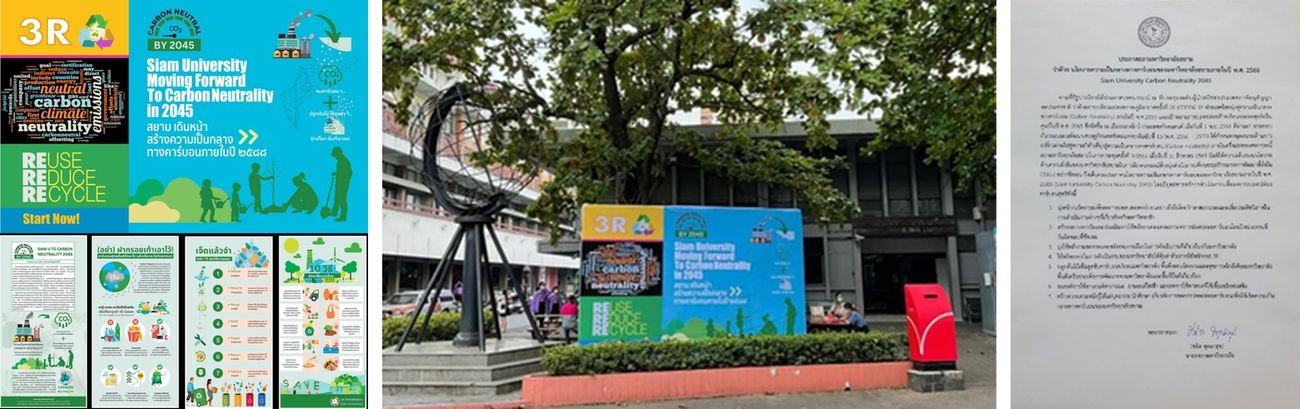 |
| “Siam University Moving Forward to Carbon Neutrality in 2045” – 3R campaign posters, campus board and the policy approved by the University Council (31 August 2022, revised 30 October 2024) |
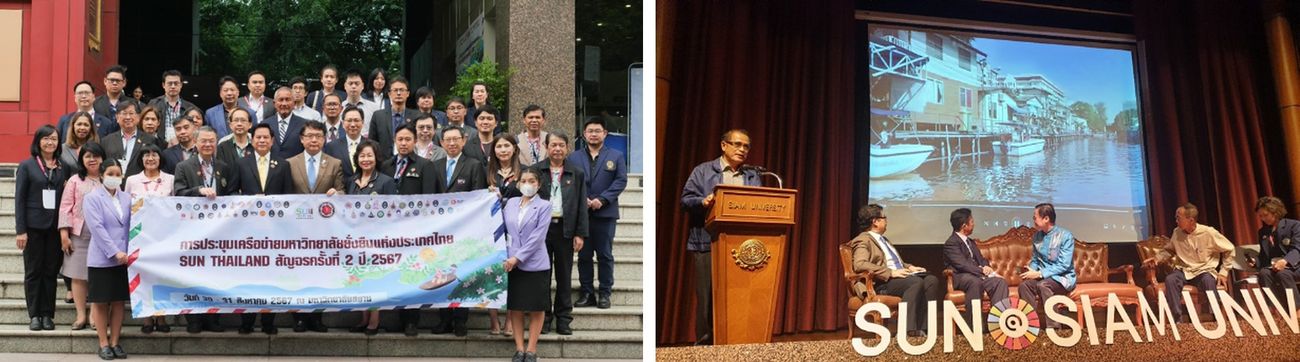 |
| SUN@Siam University, 30–31 August 2024: “Energy Talk” on sustainable energy for 32 higher education institutions, and the “Venice Siam” water-restoration session |
| 3. Alternative energy – solar rooftops and wind turbines |
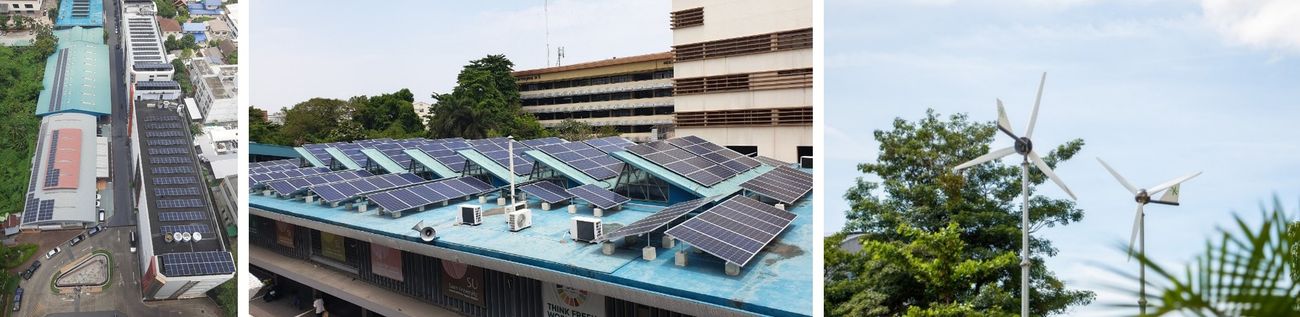 |
| Solar rooftops on campus buildings and wind turbines in the campus garden – 990,320.4 kWh of renewable electricity |
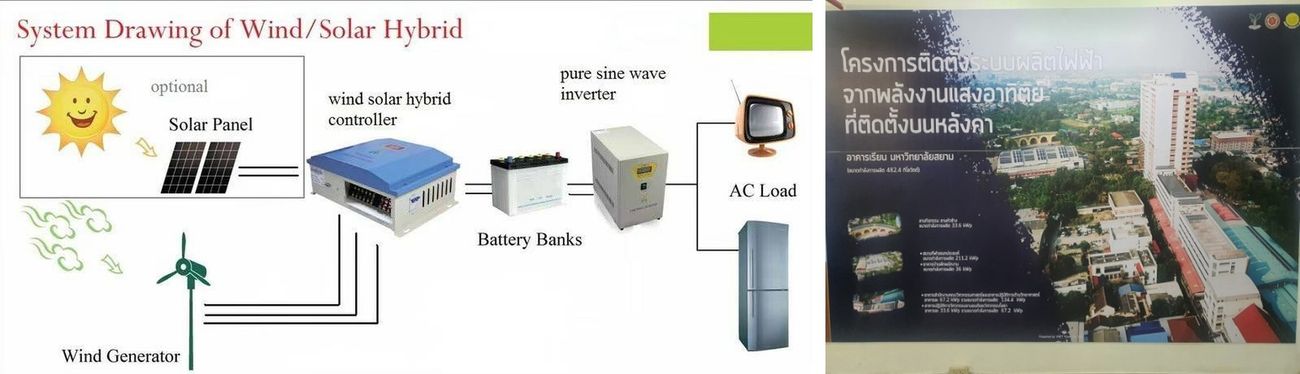 |
| Wind/solar hybrid system and the solar rooftop project board |
| 4. Green and smart buildings |
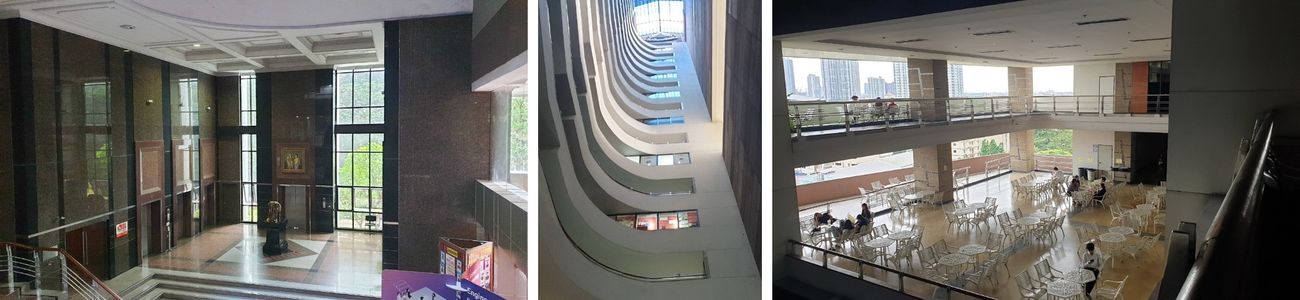 |
| Golden Jubilee (19-storey) Building – MEA energy-saving building since 2015: natural ventilation, daylight and open spaces |
| 5. Greenhouse gas reduction and electric mobility |
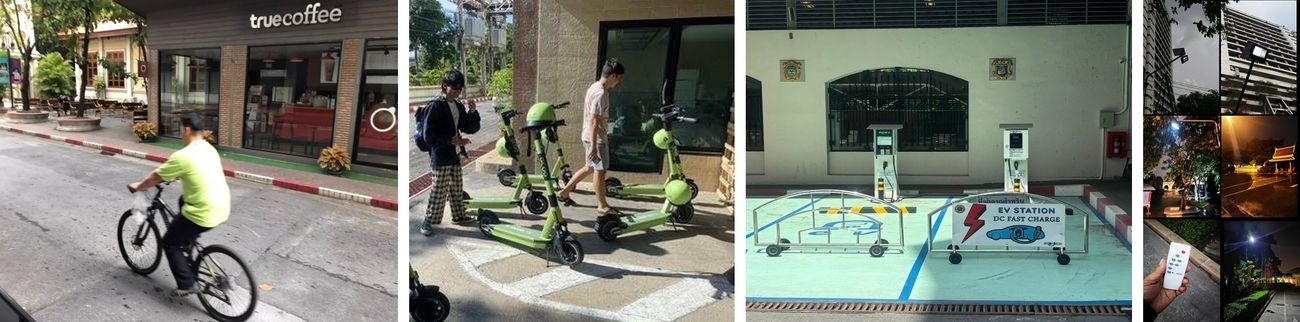 |
| Scope 1–3 measures: bicycles and electric scooters, EV charging station and solar street lights |
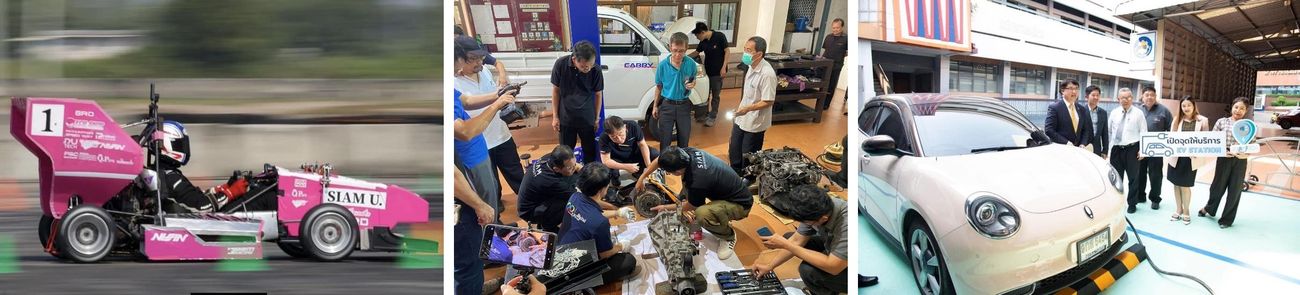 |
| Student electric-vehicle prototype, EV training programme and the campus EV charging station |
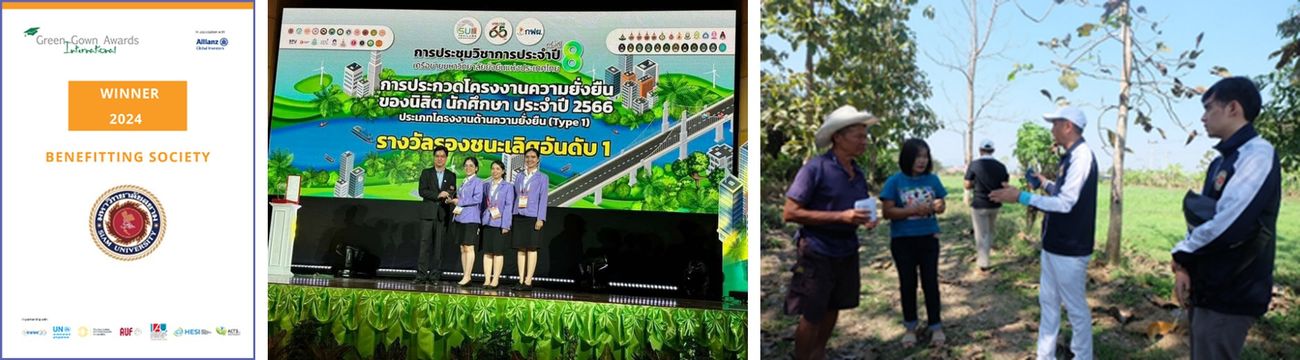 |
| “Tiny Heroes, Global Saviors” – Winner, Benefitting Society, 2024 International Green Gown Awards; SUN Thailand award; community forestation in Phrae |
| Energy management at Siam University (Siam University, Thailand) |
Description:
Energy management at Siam University is guided by the Green and Clean Campus Policy and the “Siam University Carbon Neutrality 2045” policy, approved by the University Council on 31 August 2022 and revised on 30 October 2024. The policy calls for carbon-reduction innovation, a carbon-footprint measurement unit, clean and alternative energy, the 3R campaign, tree planting, public transport and electric vehicles, and awareness among staff and students. The Center for Sustainability, set up in 2018, coordinates these programmes, and building energy managers are assigned to each building. All five energy management strategies listed by HURS are in place (Table SI 2.4.1).
Monitoring and measurable savings. The University publishes an energy management report every calendar year with monthly electricity data. Consumption fell from 4,823,154 kWh to 3,989,158 kWh and 3,381,856 kWh in the years shown in the report (Figure and Table SI 2.4.3), helped by solar power, energy-saving appliances, control of electricity in lecture rooms and lifts, replacement of air conditioners and solar lights along walkways. The solar plant is monitored online; by October 2024 it had produced 773.15 MWh and avoided 463.89 tonnes of CO₂.
Alternative energy. Solar rooftops (526.21 kWp, connected to the grid on 9 March 2023) produced 985,698 kWh and the wind turbines 4,622.4 kWh, a total of 990,320.4 kWh – 30.14% of the electricity purchased (Table SI 2.4.2).
Infrastructure performance. Building energy managers check the buildings routinely, and the Golden Jubilee Building has been an MEA energy-saving building since 2015, with natural ventilation, daylighting and an energy-saving controller. All eight buildings were assessed against smart-building criteria (automation, safety, energy, water, indoor environment and lighting); buildings with at least five criteria cover 67,356.18 m² of 89,373.58 m², or 75.36% of the floor area. The 19-storey building and its equipment are inspected every year by a licensed building inspector.
Greenhouse gas reduction and behaviour change. The greenhouse gas reduction programme covers Scope 1 (free electric vehicles and bicycles on campus), Scope 2 (solar and wind power) and Scope 3 (public transport, carpooling and walking). Campaigns include the Carbon Neutrality 2045 and 3R campaigns, the Ecolife no-single-use-plastic campaign and “Say No to Plastic, Say Yes to Cloth Bag”. At SUN@Siam University (30–31 August 2024), 32 higher education institutions joined an “Energy Talk” on sustainable energy. The University also runs EV design programmes, student EV prototypes and an EV charging station. Its Energy & Climate Change score in the UI GreenMetric rankings rose from 1,300 in 2021 to 1,850 in 2025 and 1,775 in 2026 (Table SI 2.4.4).
Selected level: Comprehensive Implementation (5 items or more) – 10 of 10 points.
Table SI 2.4.1 – HURS energy management strategies at Siam University
| HURS energy management strategy | Siam University evidence | Source |
|---|---|---|
| 1. Monitoring energy usage and setting targets for reduction | Annual energy management report (calendar year) with monthly electricity data: 4,823,154 kWh (2021), 3,989,158 kWh (2022), 3,381,856 kWh (2023); online monitoring of the solar plant; target: Siam University Carbon Neutrality 2045 | SI 2.4.1, 2.4.7; photos 1, Figure |
| 2. Programmes to promote behavioural change to conserve energy | Carbon Neutrality 2045 campaign (awareness and training for staff and students, 3R, renewable energy); “Energy Talk” at SUN@Siam University 2024; Ecolife no-single-use-plastic campaign; “Say No to Plastic, Say Yes to Cloth Bag” | SI 2.4.2, 2.4.3; photos 2 |
| 3. Analysis of energy use and infrastructure performance to find system failures | Building energy managers carry out routine checks; energy-saving controllers; smart-building assessment of all eight buildings against automation, safety, energy, water, indoor environment and lighting criteria (75.36% of floor area smart); annual inspection of the 19-storey building and its equipment by a licensed inspector (2567); solar-plant alarm monitoring (0 alarms) | SI 2.4.1, 2.4.5, 2.4.9; photos 1, 4 |
| 4. Monitoring greenhouse gas emissions and reduction strategies | Programmes for Scope 1 (free electric vehicles and bicycles on campus), Scope 2 (solar and wind power) and Scope 3 (public transport, carpooling, walking); carbon-footprint measurement unit under the Carbon Neutrality 2045 policy; solar plant has avoided 463.89 t CO₂ since connection | SI 2.4.3, 2.4.4; photos 1, 5 |
| 5. Alternative energy sources | Solar rooftops (526.21 kWp, grid-connected 9 March 2023) and wind turbines produced 990,320.4 kWh – 30.14% of purchased electricity; solar lights along walkways | SI 2.4.6, 2.4.8, 2.4.10; photos 3 |
| 6. Other: green and smart buildings, electric mobility | Golden Jubilee Building – MEA energy-saving building since 2015, with natural ventilation and daylighting; EV charging station; EV design programmes and student EV prototypes; Zero Emission Vehicles policy on campus | SI 2.4.3, 2.4.5, 2.4.9; SDG Report 2024–2025, p. 66; photos 4, 5 |
Table SI 2.4.2 – Renewable energy production
| No. | Renewable energy source | Production (kWh) |
|---|---|---|
| 1 | Solar rooftops | 985,698 |
| 2 | Wind turbines | 4,622.4 |
| Total renewable energy | 990,320.4 | |
| Electricity purchased (2.4.6) | 3,286,000 | |
| Renewable production ÷ purchased electricity | 30.14% |
Figure and Table SI 2.4.3 – Electricity consumption
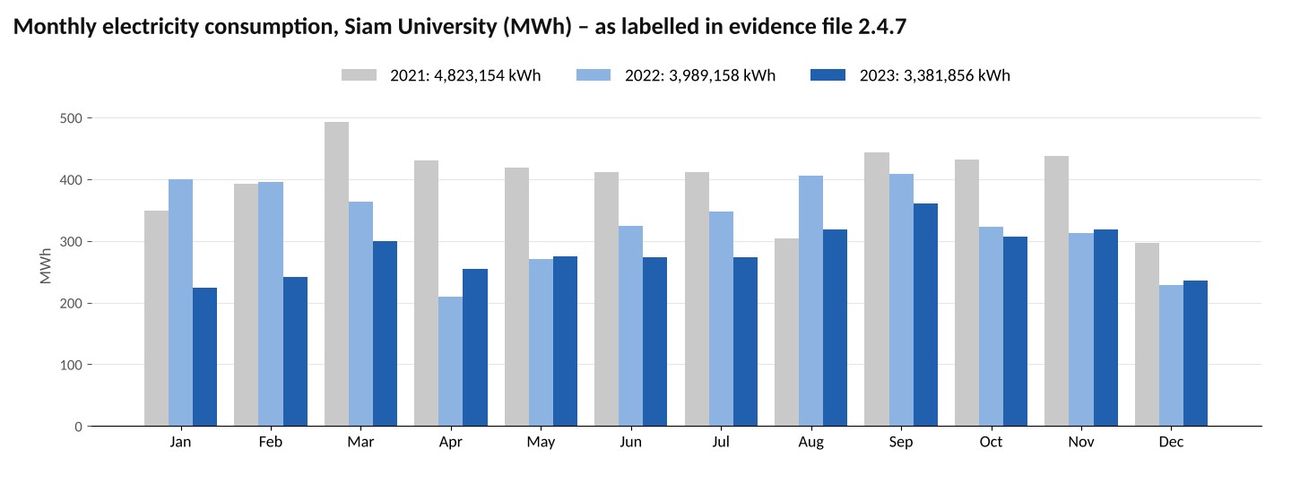
| Year (as labelled in 2.4.7) | Electricity (kWh) | Change from previous year | Energy-saving capacity (kWh) |
|---|---|---|---|
| 2021 | 4,823,154 | – | 606,306 |
| 2022 | 3,989,158 | −17.3% | 716,869 |
| 2023 | 3,381,856 | −15.2% | 945,761 |
Source: monthly data in SI 2.4.7 (energy management reports). Energy-saving capacity: second chart in the same file.
Table SI 2.4.4 – External evaluation: UI GreenMetric Energy & Climate Change score
| UI GreenMetric | 2021 | 2022 | 2023 | 2024 | 2025 | 2026 |
|---|---|---|---|---|---|---|
| Energy & Climate Change score | 1,300 | 1,450 | 1,525 | 1,550 | 1,850 | 1,775 |
Source: Sustainability Report 2025–2026, p. 12.
Evidence to attach:
-
Evidence files SI 2.4.1–2.4.10 (policy, programmes, renewable energy, electricity use, smart buildings).
-
Carbon Neutrality 2045 and Green and Clean Campus policies: https://sustainability.siam.edu/vision-mission-and-policies-for-sustainable-future/
-
SDG Report 2024–2025, p. 66: https://sustainability.siam.edu/wp-content/uploads/2025/10/SDG-report-2024-2025.pdf; Sustainability Report 2025–2026, p. 12: https://sustainability.siam.edu/wp-content/uploads/2026/10/SDG_report_2025_2026.pdf