Leading University Creating Innovation for Sustainable Future

Goal 15: Protect, restore and promote sustainable use of terrestrial ecosystem, sustainably manage forests, combat desertification
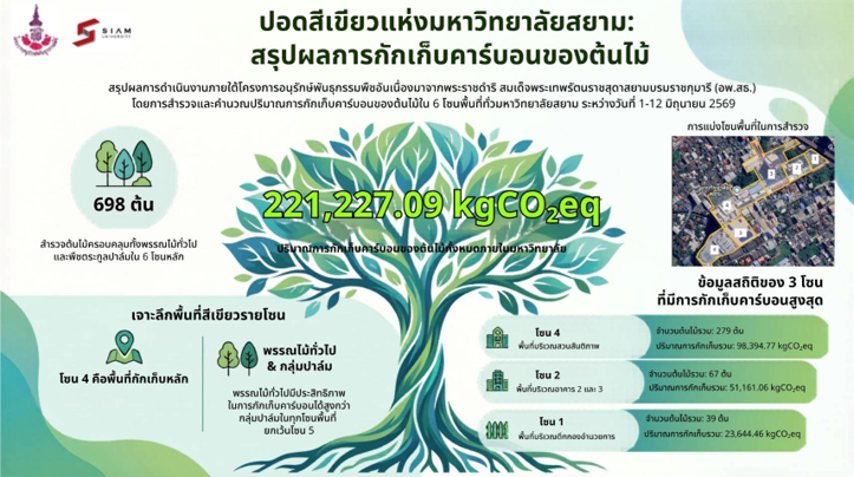
Tree Carbon Sequestration
https://rspg.siam.edu/
Siam university measured the trees on our campus to assess their growth rates and health, to estimate how much pollution they absorb and how much they cool the surroundings, and to support sustainable green space for the university and nearby communities. The work had four aims: (1) Carbon accounting. Tree biomass was used to estimate the carbon dioxide the campus trees actually store. These figures can serve as voluntary organisational carbon credits that offset the carbon footprint of university operations, (2) The Sustainable Development Goals. The study supports SDG 11 (Sustainable Cities and Communities) by developing an environmentally friendly green campus. It supports SDG 13 (Climate Action) by expanding and managing local greenhouse-gas sinks, and SDG 15 (Life on Land) by surveying biodiversity, assessing ecosystem health, and planning long-term tree care, (3) ESG reporting. A tree inventory recording each tree’s species, size, and location was compiled as a central database. It provides evidence for Green Office certification and green building standards such as LEED and TREES, (4) Well-being. The data will guide additional planting to increase shade, mitigate the urban heat island effect, and reduce air-conditioning energy use (SDG 7). Quality green space also helps reduce stress and support the mental health of staff (SDG 3). The project ran from 26 May to 12 June 2026 as part of the Plant Genetic Conservation Project under the Royal Initiative of Her Royal Highness Princess Maha Chakri Sirindhorn (RSPG).
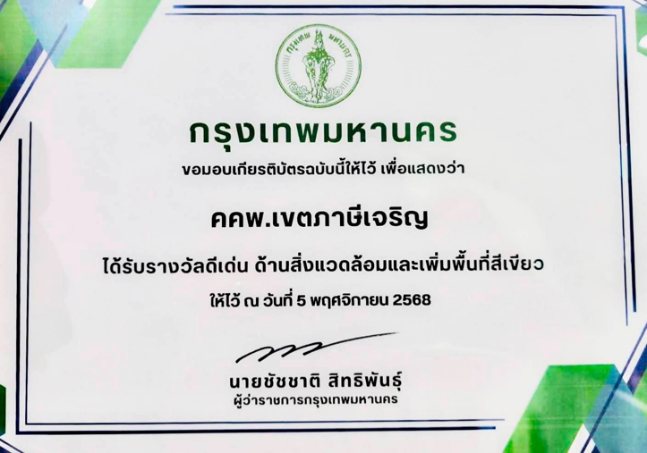
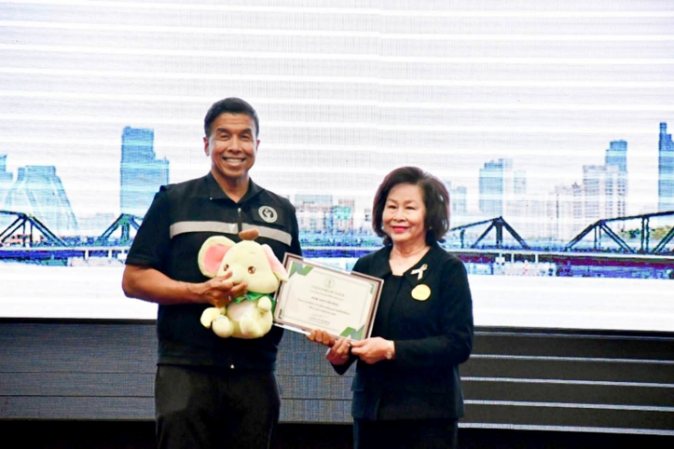
Outstanding Award for Environment and Green Space Expansion
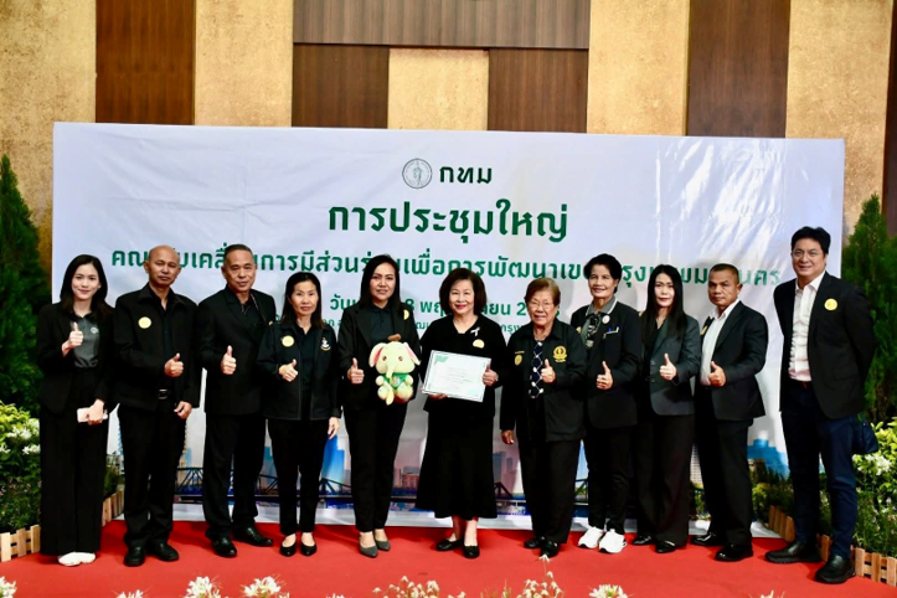
On 8 November 2025, Bangkok Governor Chadchart Sittipunt chaired the general assembly of the District Development Participation Committees and the Area-Based District Development Working Groups, covering five development areas across all 50 Bangkok districts. Grouped by district cluster, the committees presented their past achievements and their plans for upcoming projects. At the assembly, the Phasi Charoen District committee received the Outstanding Award for Environment and Green Space Expansion. The award recognised three initiatives: The Siam Pradu Suk public restroom and rest pavilion in the “15-minute park” at Wat Pradu Bang Chak, Eco-friendly electric motorcycles for waste collection, and a clean, zero-waste community programme that uses black soldier fly larvae to reduce organic waste. The three prrojects were initiated by Siam University. Hence, Professor Dr. Chanita Rukspollmuang, Vice President of the university and a member of the the Phasi Charoen committee on participation for development accepted the award on the group’s behalf.
Thai Traditional Medicine and Herbs from the Community Forest
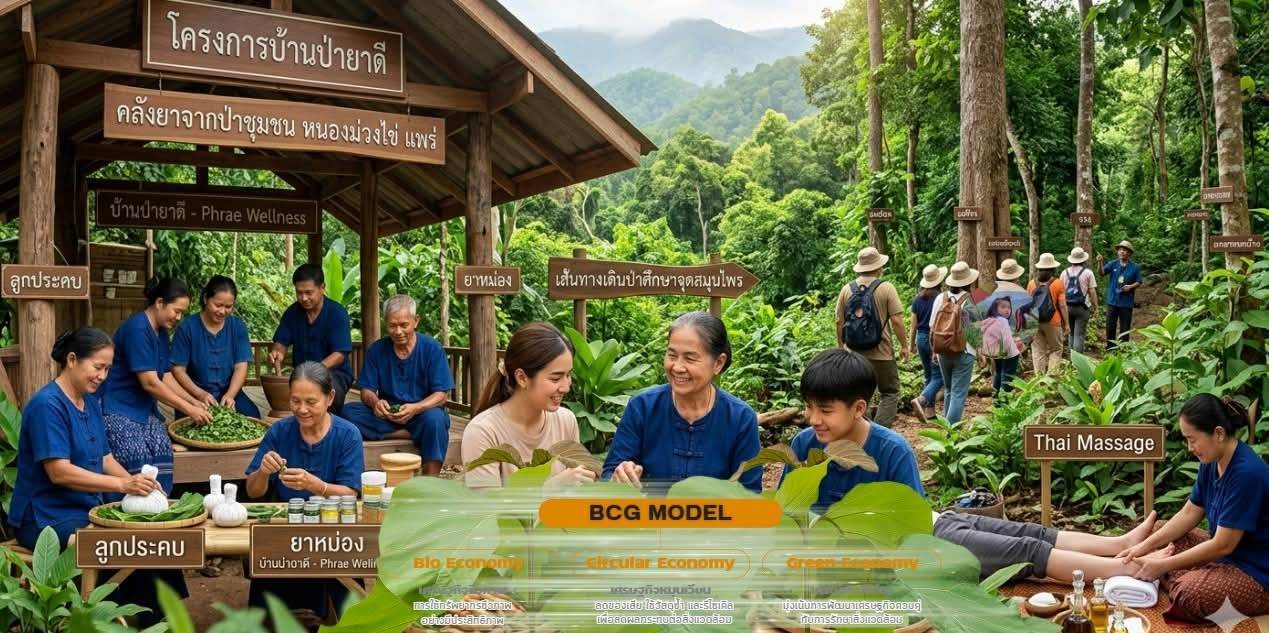
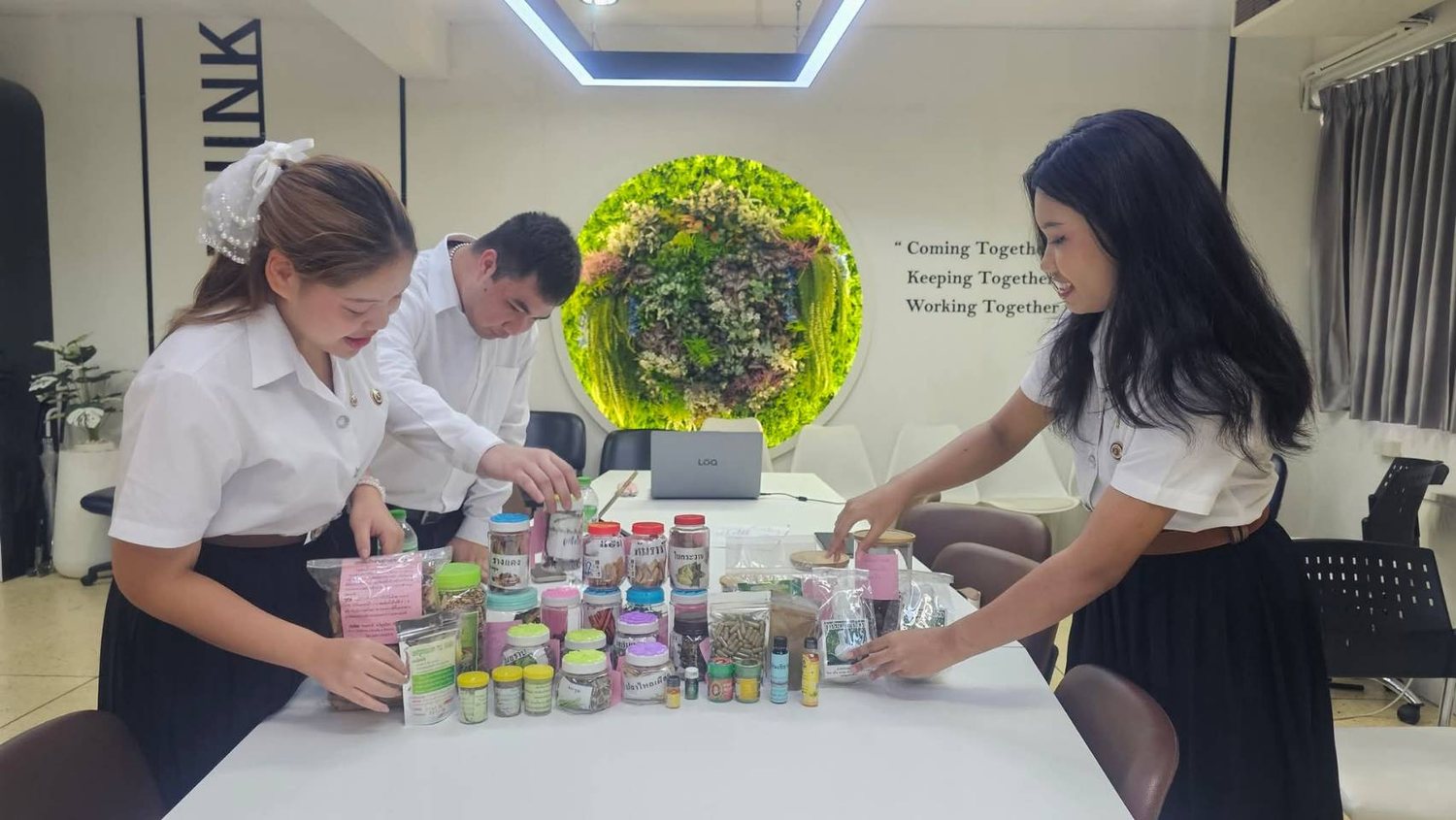
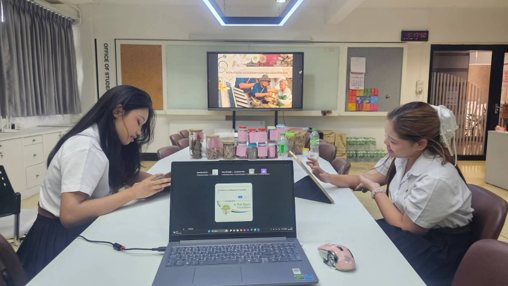
“The Ban Pa Ya Di Community: Thai Traditional Medicine and Herbs from the Community Forest” is a social initiative of Siam University’s Enactus team, carried out by students and staff from several faculties with the Faculty of Pharmacy as the main academic partner, under the Enactus Thailand and Rak Kaew Foundation networks. Selected for the national Enactus Thailand competition, where it advanced in the Impact League category, the project works in Nong Muang Khai District, Phrae Province. It combines traditional medical knowledge with sustainable forest management to strengthen the local economy and community health. Students document healers’ knowledge, catalogue medicinal plants, develop scientifically tested herbal products, and support branding, pricing and sales. They also run workshops so the community can manage the enterprise independently after the project ends. The expected outcomes are stronger forest conservation, closer ties between generations, and new income from products sold under the community’s own brand.