Leading University Creating Innovation for Sustainable Future

Goal 17: Revitalize the global partnership
for sustainable development
Siam University President: First Private University to Chair SUN Thailand
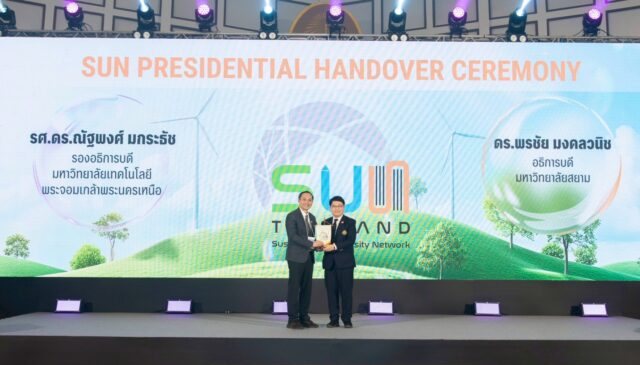
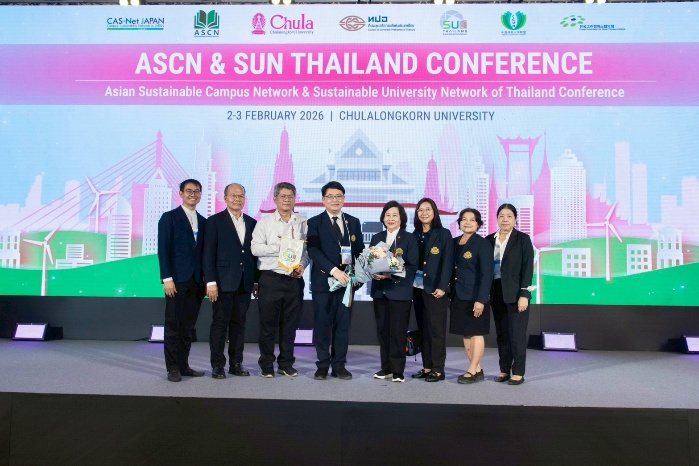
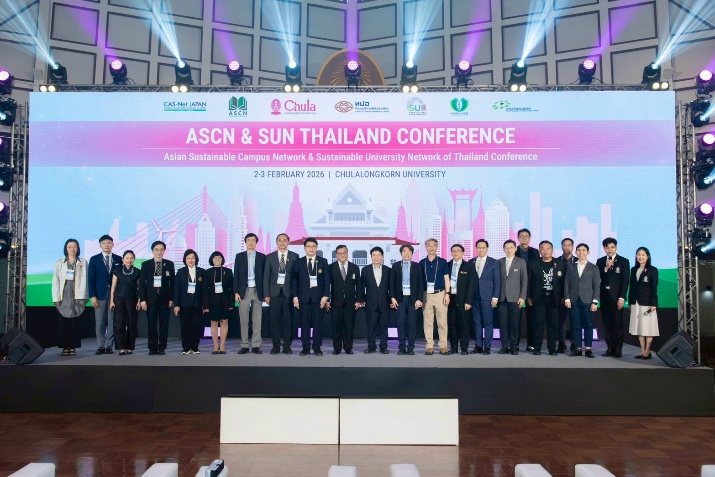
Dr. Pornchai Mongkhonvanit, President of Siam University, was elected President of the Sustainable University Network of Thailand (SUN Thailand) for 2026–2027. The Presidential handover ceremony was held at the SUN Thailand members’ meeting, held during the 7th ASCN & 10th SUN Thailand Conference on 2–3 February 2026 at Chulalongkorn University. Siam University is the first private university to be chosen for this position. Its chairmanship of SUN Thailand reflects the university’s sustainability policy of promoting collaboration among higher education institutions in support of the United Nations Sustainable Development Goals, in line with national policy and international commitments.
Regional and National Coordinators for Sustainability Activities
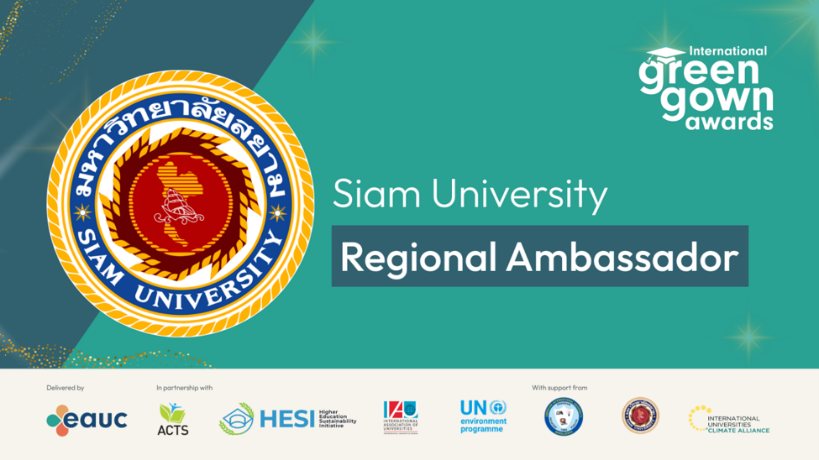
Siam University serves as a Regional Ambassador for the International Green Gown Awards (IGGA), which are run by the Environmental Association for Universities and Colleges (EAUC) and endorsed by the United Nations Environment Programme (UNEP). In this role, the university encourages higher education institutions in Thailand and the wider region to submit their sustainability and social impact projects to the awards. It also helps Thai universities present their local sustainability initiatives internationally and advance the UN SDGs.
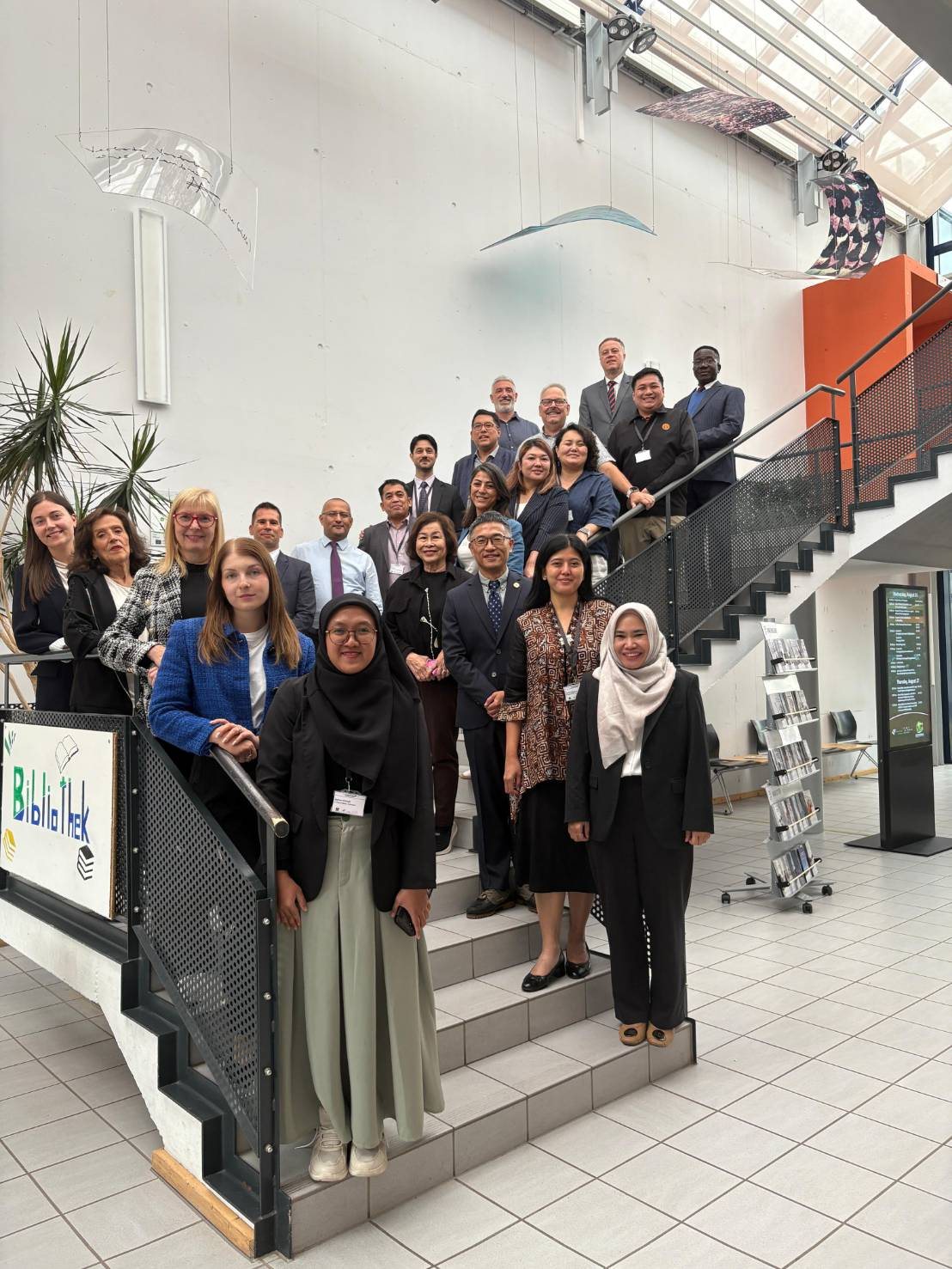
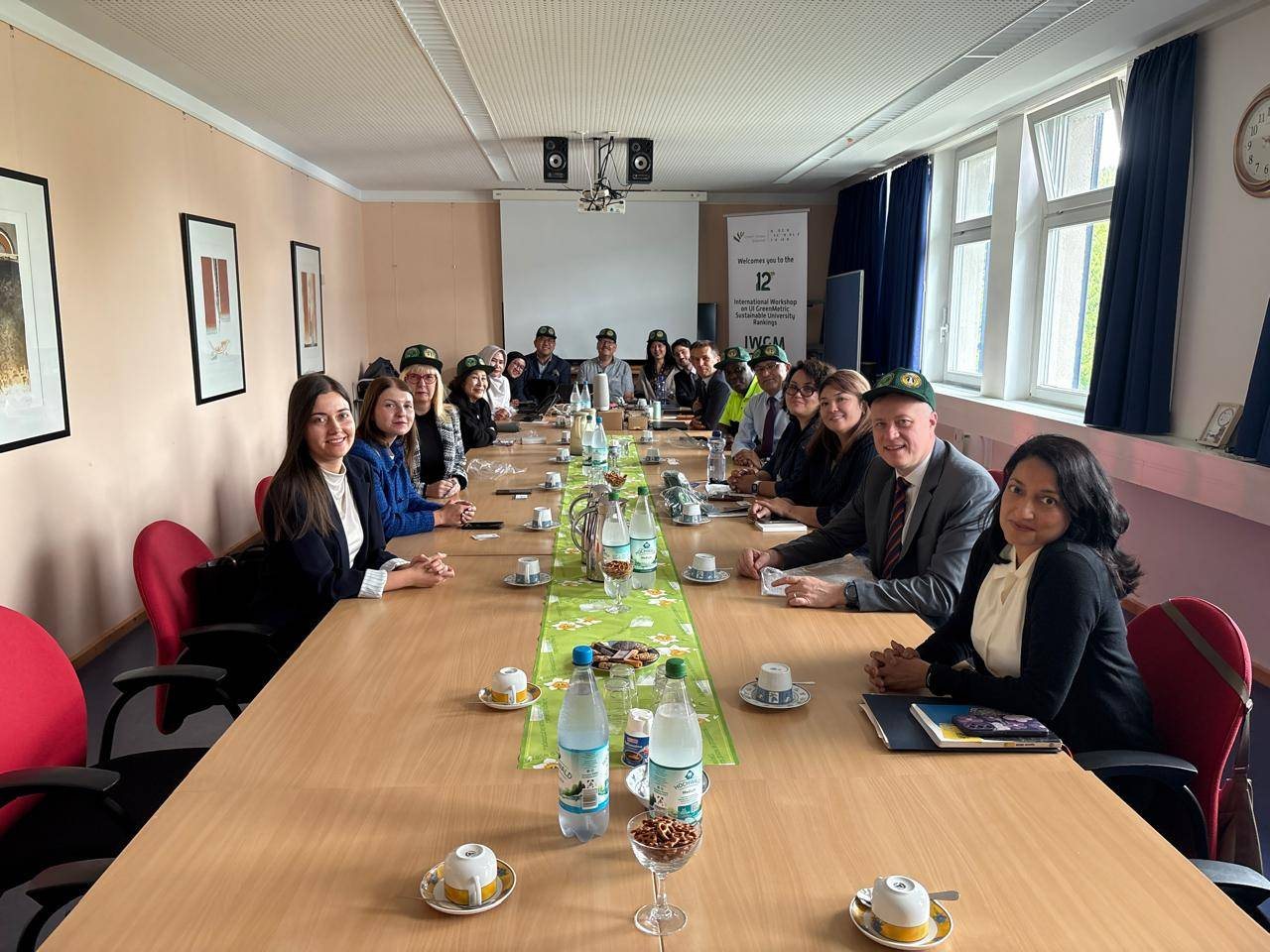
Following its appointment as President of SUN Thailand, Siam University was also designated as 2026-2027 Thailand’s National Coordinator in the UI GreenMetric Sustainable University Rankings Network (UIGM-SUREN), within its steering committee framework. The university is represented in this role by its President, Dr. Pornchai Mongkhonvanit, and Vice President, Professor Dr. Chanita Rukspollmuang . Most recently, Vice President Professor Dr. Chanita presented Thailand’s Country Report at the 10th Steering Committee Meeting of UIGM-SUREN on 24 August 2026 at Umwelt-Campus Birkenfeld, Trier University of Applied Sciences, Germany. She also gave a presentation at the 12th International Workshop on UI GreenMetric Sustainable University Rankings (IWGM 2026) on 25–26 August 2026, which brought together university leaders and sustainability practitioners from around the world to share experience and good practice. (https://uigreenmetric.com/about/network)
ISCN SEA (Southeast Asian) Chapter
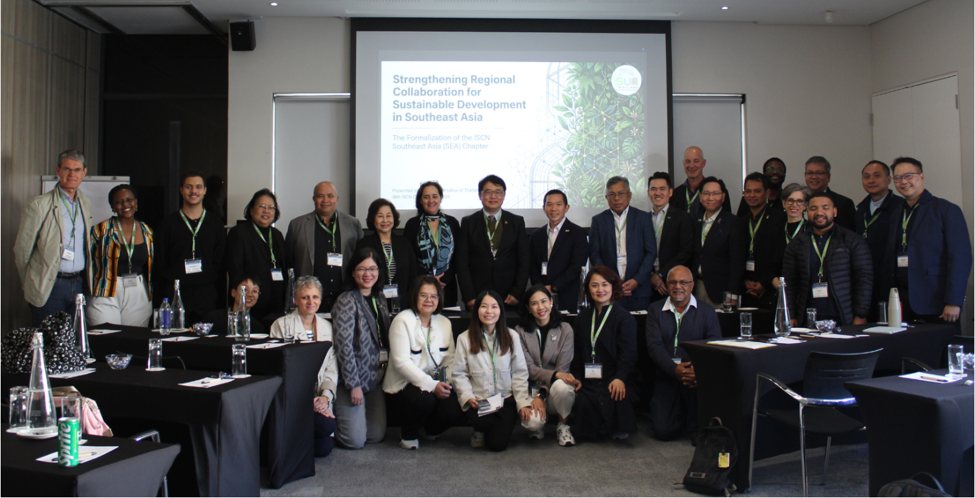
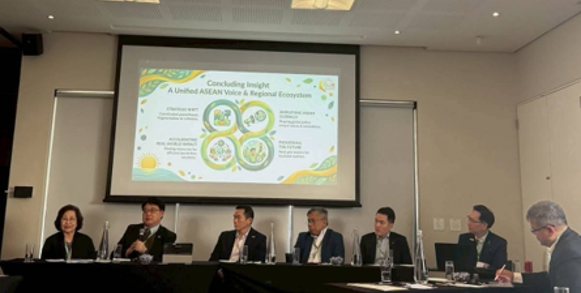
The International Sustainable Campus Network (ISCN) Board formally endorsed the establishment of a new ISCN Southeast Asian Chapter on 28 May 2026. Siam University initiated the proposal and coordinated the Chapter’s establishment, working with fellow ISCN members in Thailand (Chulalongkorn University, King Mongkut’s University of Technology Thonburi and Thammasat University) and with support from Universiti Kebangsaan Malaysia, the National University of Singapore and VinUniversity. The Sustainable University Network of Thailand (SUN Thailand) also played a key role. First proposed at the 2024 ISCN Conference and established as an outcome of the 2026 conference hosted by the University of Cape Town, the Chapter will give universities across the region, both members and non-members, a platform to share good practice and collaborate on sustainable campus development and climate action. A regional in-person meeting is planned for early 2027.
Education for the SDGs
Driving government SDG policy
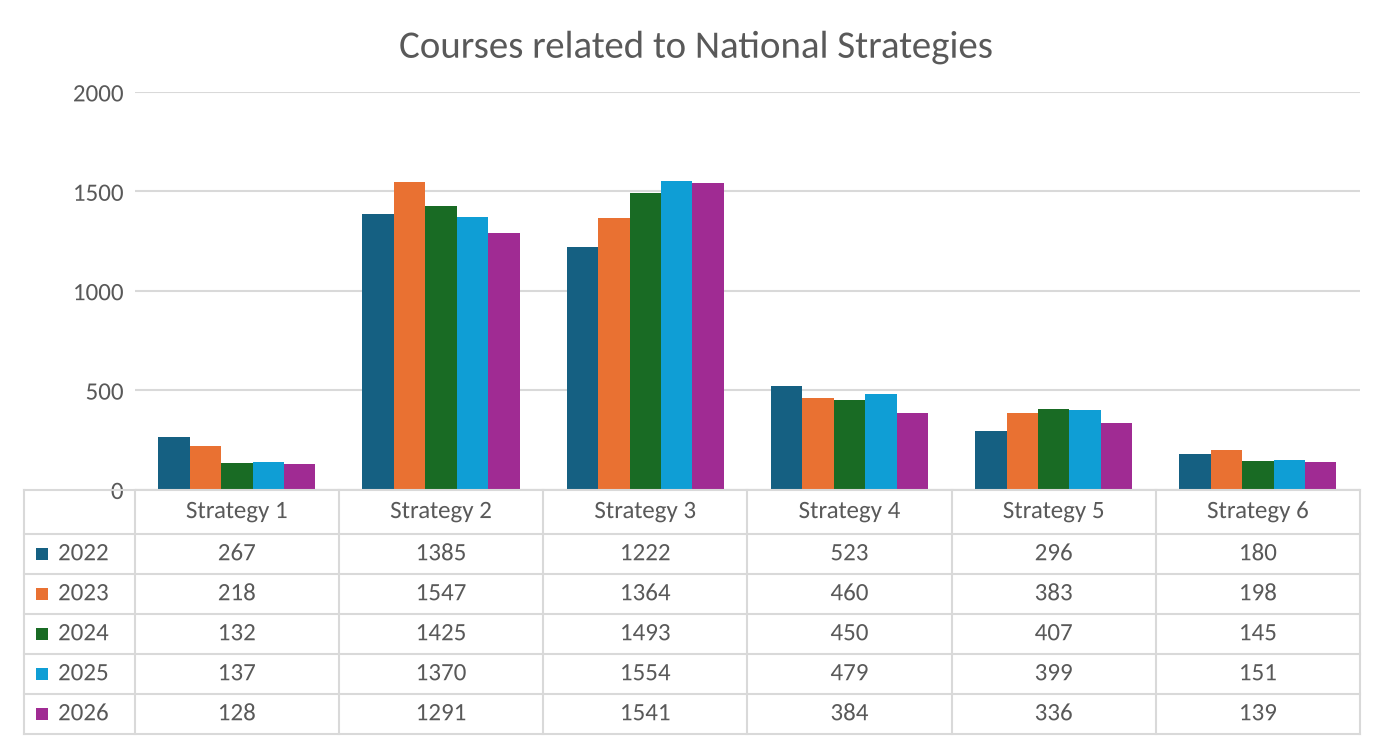
Siam University offers quality undergraduate and graduate programs in 16 faculties which drive Thailand’s 20-Year National Strategy (2018 – 2037). The strategy comprises six key strategies, namely, (1) national security; (2) national competitiveness enhancement; (3) human capital development and strengthening; (4) social cohesion and just society; (5) eco-friendly development and growth; and (6) public sector rebalancing and development. We have administered a survey since 2020. In 2026, it was found that 2,046 out of 2,369 courses were relevant to one or more national strategies. Most of the courses were related to National Strategic 3 human capital development and strengthening (1,541), followed by National Strategic 2 national competitiveness enhancement (1,291), National Strategy 4 social cohesion and just society (384); National Strategy 5 eco-friendly development and growth (336), National Strategy 6 public sector rebalancing and development (139), and National Strategy 1 national security (128), respectively. Interestingly, it is noteworthy that despite curriculum revision of many degree programs, the pattern of course offerings is quite the same since 2022, that is, most of the courses are relevant to National Strategic 2 national competitiveness and National Strategic 3 human capital development and strengthening.
Integration of SDGs in academic programs
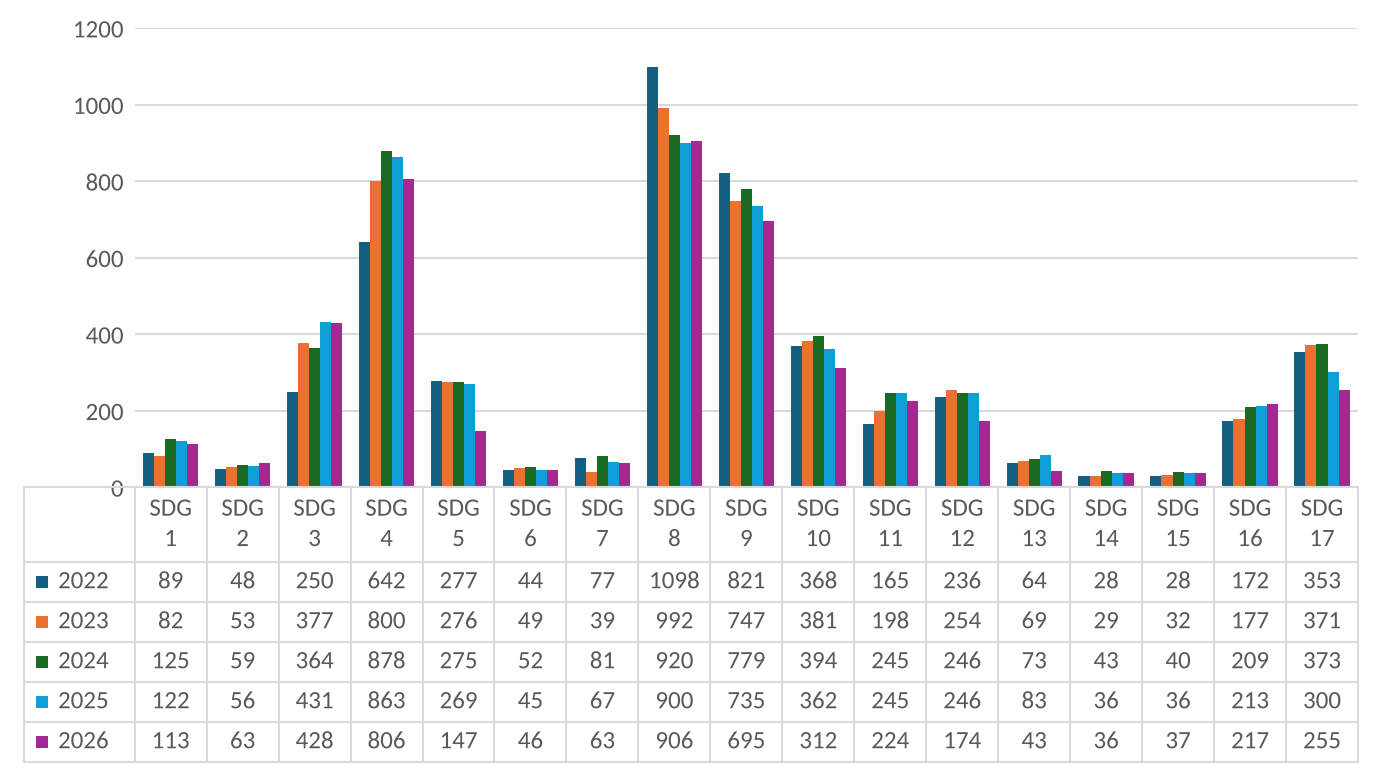
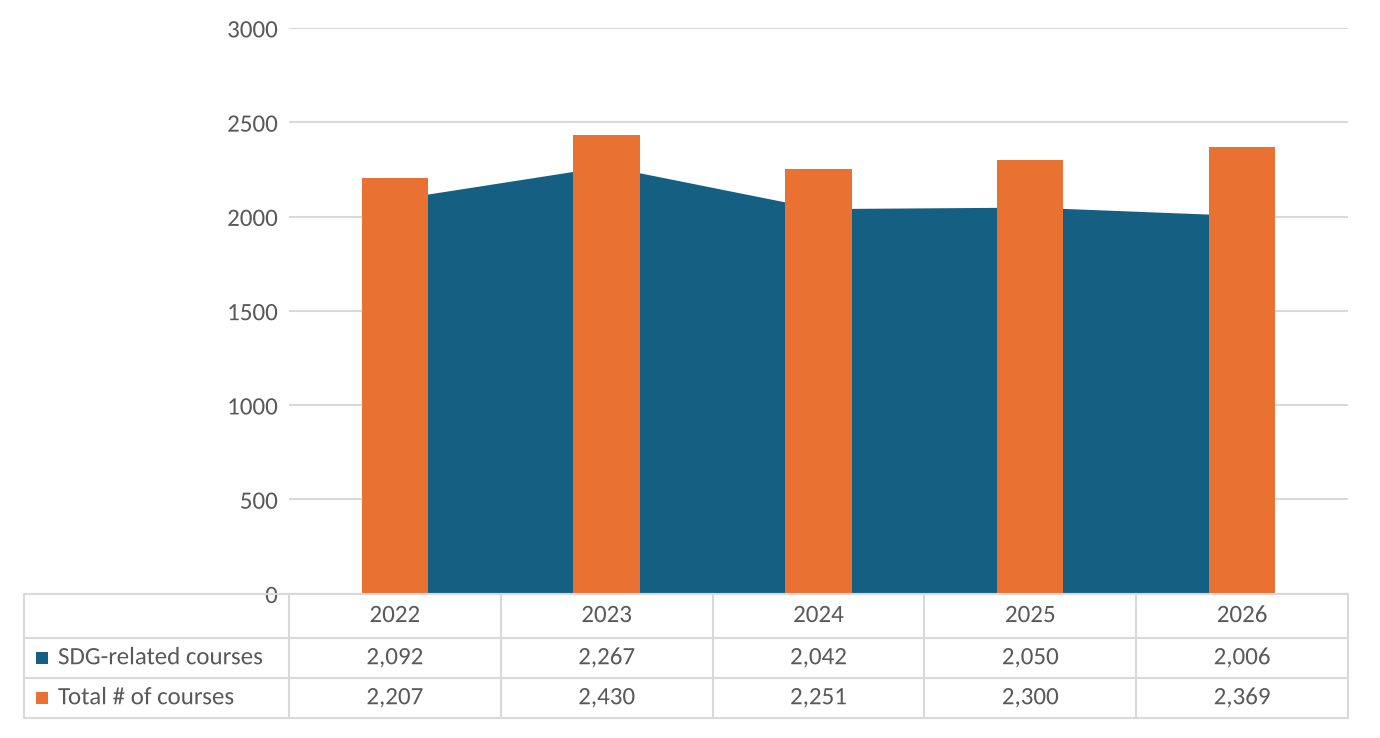
In accordance with the “Action for the Goals” policy aiming at least 75% of all courses offered shall promote sustainability literacy – awareness, knowledge, competences, participation, the University encourages all academic activities to integrate SD and SDGs and promote real-life experiences through the living learning lab approach. Siam University has conducted a survey since 2020 to study the integration of SDGs in all academic programs, including General Education. The major changes started in 2024 when all programs of study revised their courses and new faculties were established. Recently a degree program in “Sustainable Business and Digital Ecosystem” was approvead and is expected to be offered. The survey in August 2025 revealed that 2,050 out of 2,300 courses, or 89.13% have integrated 1 or more SDGs in their content and learning activities. The highest number was in SDG 8 Decent work and economic growth (900), followed by SDG 4 Quality education (863), SDG 9 Industry, innovation & infrastructure (735), SDG 3 Good health and well-being (431), and SDG 10 Reduce inequalities (362). The SDGs that were integrated the least were in the environment dimension –SDG 14 Life below water (36), and SDG 15 Life on land (36) (see Table below). The latest survey adminstered during September 2026 found that 2,006 out of 2,369 courses or 84.67% have integrated 1 or more SDGs in their content and learning activities. SDG that was highest integrated in our courses was SDGs 8 (906), followed by SDGs 4 (806), SDGs 9 (695), SDGs 3 (428), SDGs 10 (312), SDGs 11 (224), SDGs 16 (217), SDGs 12 (174), SDGs 5 (147), SDGs 1 (113), SDGs 2 (63), SDGs 7 (63), SDGs 6 (46), SDGs 13 (43), SDGs 15 (37), SDGs 14 (36).
Number of courses with SDGs 2022-2026
Sustainable Development Goals (SDGs) | # of courses with SDGs | |||||
2022 | 2023 | 2024 | 2025 | 2026 | ||
SDG1 | No poverty | 89 | 82 | 125 | 122 | 113 |
SDG2 | Zero hunger | 48 | 53 | 59 | 56 | 63 |
SDG3 | Good health and well-being | 250 | 377 | 364 | 431 | 428 |
SDG4 | Quality education | 642 | 800 | 878 | 863 | 806 |
SDG5 | Gender equality | 277 | 276 | 275 | 269 | 147 |
SDG6 | Clean water and sanitation | 44 | 49 | 52 | 45 | 46 |
SDG7 | Affordable and clean energy | 77 | 39 | 81 | 67 | 63 |
SDG8 | Decent work and economic growth | 1,098 | 992 | 920 | 900 | 906 |
SDG9 | Industry, innovation & infrastructure | 821 | 747 | 779 | 735 | 695 |
SDG10 | Reduce inequalities | 368 | 381 | 394 | 362 | 312 |
SDG11 | Sustainable cities and communities | 165 | 198 | 245 | 245 | 224 |
SDG12 | Responsible consumption & product | 236 | 254 | 246 | 246 | 174 |
SDG13 | Climate action | 64 | 69 | 73 | 83 | 43 |
SDG14 | Life below water | 28 | 29 | 43 | 36 | 36 |
SDG15 | Life on land | 28 | 32 | 40 | 36 | 37 |
SDG16 | Peace, justice and strong institutions | 172 | 177 | 209 | 213 | 217 |
SDG17 | Partnerships for the goals | 353 | 371 | 373 | 300 | 255 |
Total # of SDG-related courses | 2,092 | 2,267 | 2,042 | 2,050 | 2,006 | |
Total # of courses | 2,207 | 2,430 | 2,251 | 2,300 | 2,369 | |
Integration of SDGs in courses offered 2022-2026
Comparison of the total number of SDG-related courses and the total number of courses 2022-2026
Siam University Sustainability Literacy Test (Siam-U SULI Test)
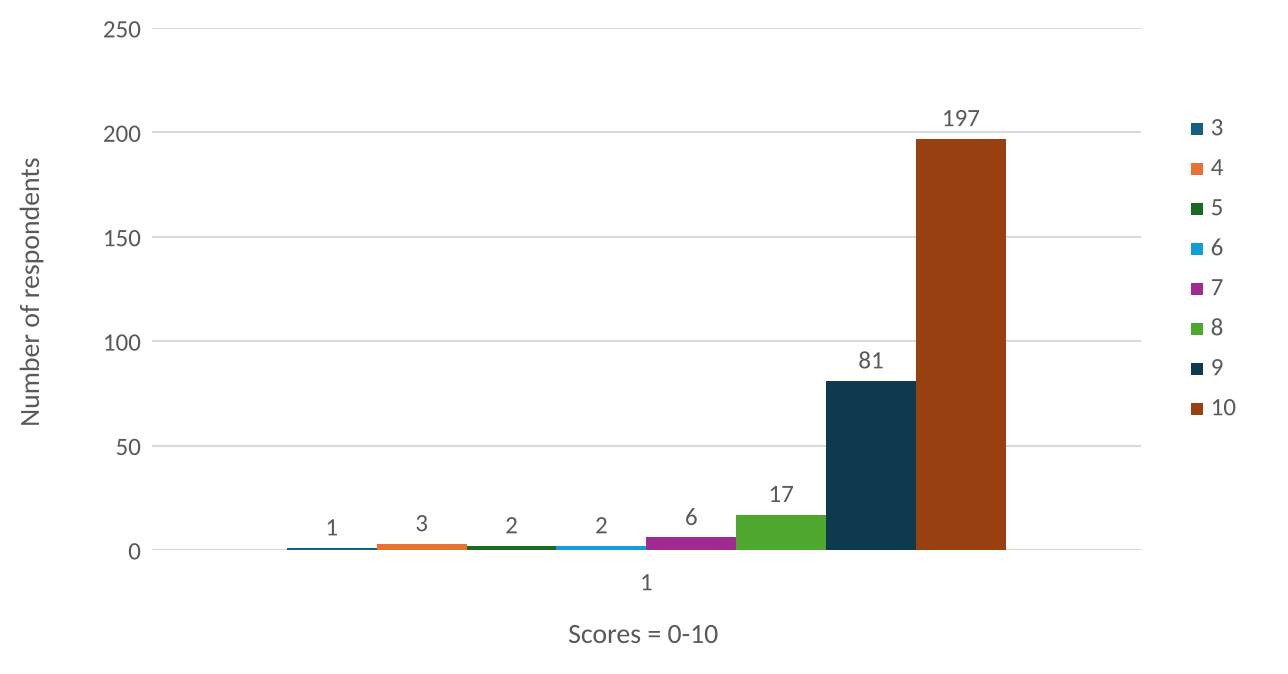
We have administered the Siam-U sustainability literacy test covering knowledge, competence, and participation on SDGs since February 5-6, 2022. The latest survey was collected from 309 newly graduates during 15 February – 9 June 2026. The results are as follows.
Sustainability Knowledge. The results of the SDG knowledge test (n = 309) revealed a high level of understanding among respondents. The Mean score was 9.43 out of 10 with scores ranging from 3.0 to 10.00 implying that the majority of respondents a correct and comprehensive understanding of the SDGs. The concentration of high scores (9–10) may indicate effective exposure to sustainability education or prior engagement with sustainability initiatives. Respondents demonstrated a very high level of knowledge about the SDGs, with correct-response rates ranging from 80.58 to 98.38 per cent across all ten items. Overall, the results indicated that graduates possessed a very strong foundational understanding of the Sustainable Development Goals, particularly in relation to equality, clean water, innovation, partnerships and education. Nevertheless, further learning about the basic features of the SDGs, such as the core goals and the context of the 2030 Agenda for Sustainable Development, is recommended to make their knowledge more complete.
Sustainability Competences. Overall, respondents’ sustainability competency had a current mean score of 3.792, a high level, while the expected mean score of 4.305 was at the highest level. The mean gap was 0.513, and the average PNI was 0.135. These results indicated that respondents already had a good level of sustainability competency but still wished to develop it further. An analysis of each competency showed that anticipatory competency had the greatest need for development, with a PNI = 0.153. It was followed by strategic thinking (0.142) and knowledge integration (0.140). These results suggest that graduates need more support in anticipating future trends, planning solutions to sustainability problems, and connecting knowledge across disciplines. The competencies with the highest current mean scores were collaboration with others and intrapersonal competency, both at 3.916, a high level. This indicated that respondents’ strengths lie in working with others, adaptability, self-management and lifelong learning. In summary, graduates demonstrated a high overall level of sustainability competency, with particular strengths in collaboration and intrapersonal competency. However, further development is needed in anticipatory competency, strategic thinking and knowledge integration, so that graduates can apply sustainability knowledge more effectively to analyse, plan and solve problems in their personal and professional lives.
Participation in Sustainability. Overall, respondents’ participation in activities related to the 17 SDGs had a current mean score of 3.759, a high level, while the expected mean score of 4.368 was at the highest level. The mean gap was 0.609, and the average PNI was 0.162. These results indicated that respondents already participated well in SDG-related activities but aspired to increase their involvement further. In terms of development needs, the goals requiring the highest priority were SDG 2 (Zero Hunger), which had the highest PNI = 0.1996, followed by SDG 1 (No Poverty) at 0.1868, SDG 9 (Industry, Innovation and Infrastructure) at 0.1837, SDG 8 (Decent Work and Economic Growth) at 0.1805, and SDG 7 (Affordable and Clean Energy) at 0.1755. The goals with the highest current mean scores were SDG 5 (Gender Equality) at 4.039, followed by SDG 17 (Partnerships for the Goals) at 3.841 and SDG 16 (Peace, Justice and Strong Institutions) at 3.838. This suggests that respondents’ participation is strongest in issues of social equality, collaboration and justice.
Sustainability Knowledge of 2026 Graduates (n = 309)
Key Sustainability Competences of 2026 Graduates (n = 309)
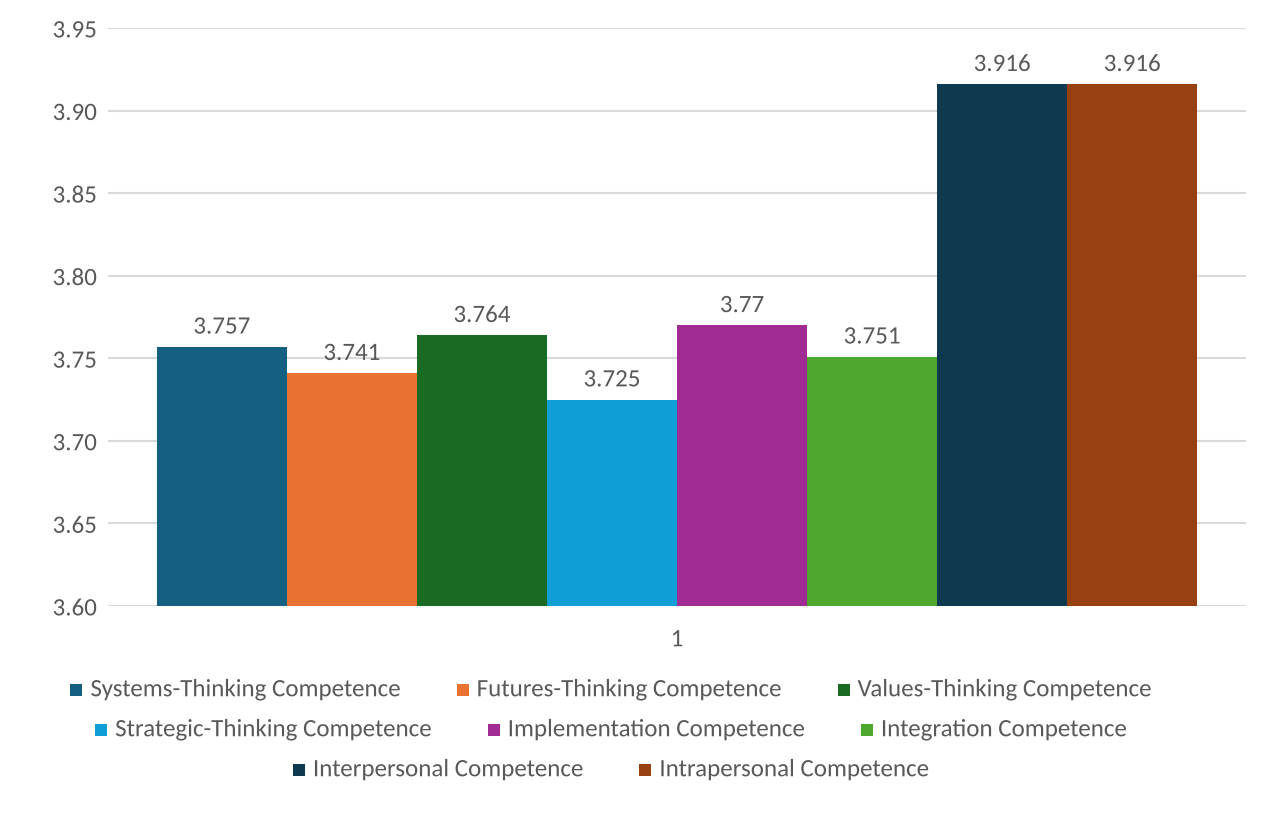
Note: 4.51 – 5.00 = highest level, 3.51 – 4.50 = high level, 2.51 – 3.50 = moderate level, 1.51 – 2.50 = low level, 1.00 – 1.50 = very low level
Comparison of the Present and Expected Level of Sustainability Competences of 2026 Graduates (n = 309)
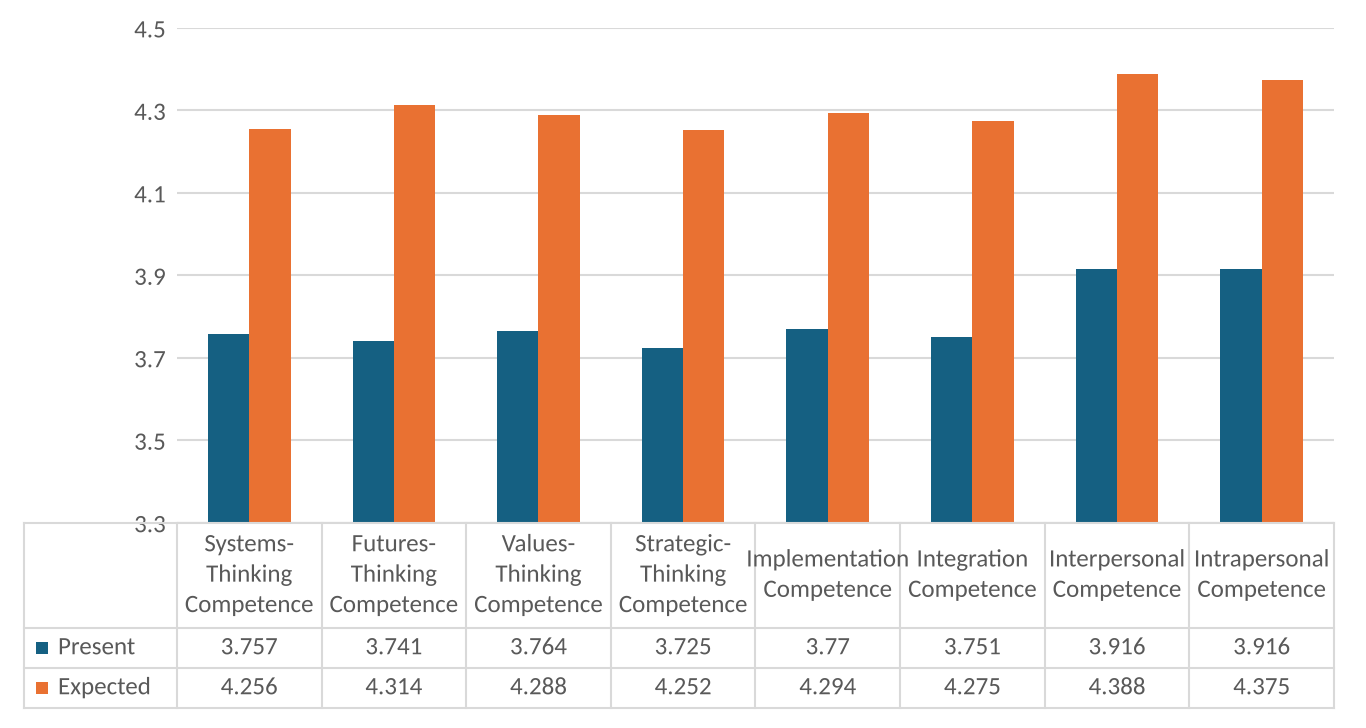
Note: 4.51 – 5.00 = highest level, 3.51 – 4.50 = high level, 2.51 – 3.50 = moderate level, 1.51 – 2.50 = low level, 1.00 – 1.50 = very low level
Comparison of the Actual Level and Expected Level of Participation in SDGs of 2026 Graduates (n = 309)
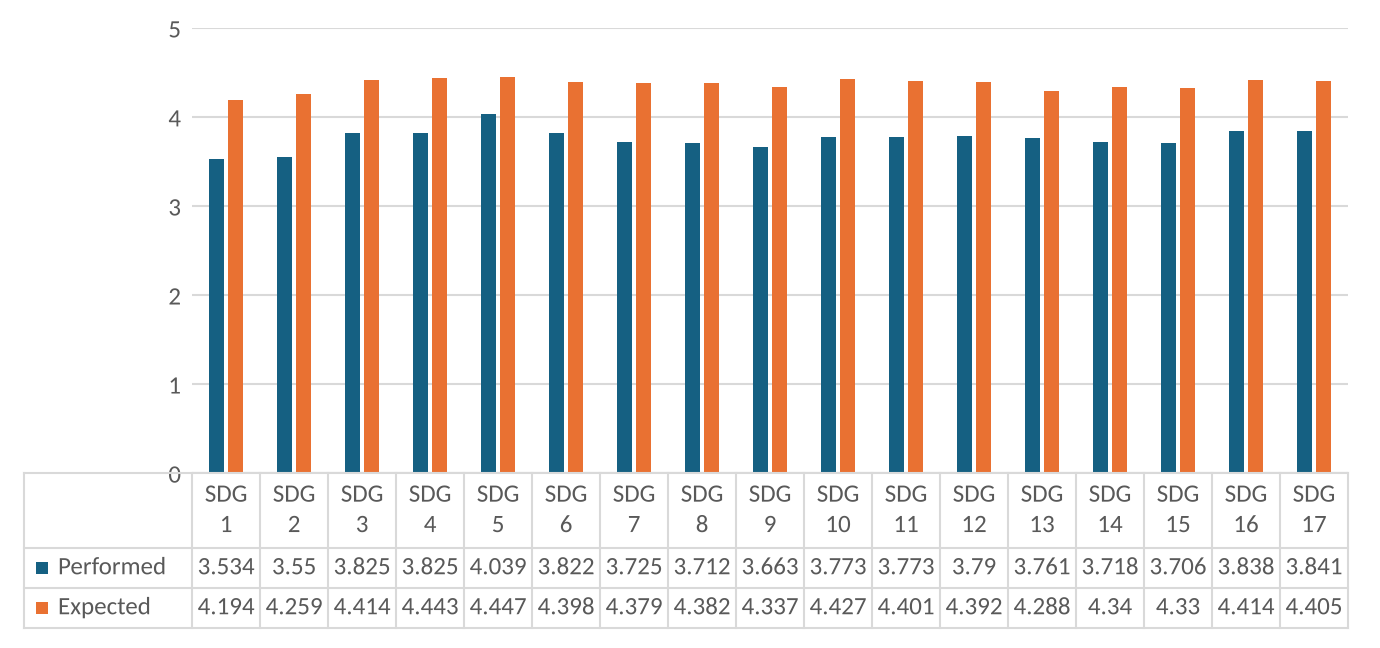
Note: 4.51 – 5.00 = highest level, 3.51 – 4.50 = high level, 2.51 – 3.50 = moderate level, 1.51 – 2.50 = low level, 1.00 – 1.50 = very low level
Upskill and Reskill Programs for Sustainability
Empowering Educators for a Sustainable Future:
Insights from the “Innovation and Sustainability for Educators” Programme
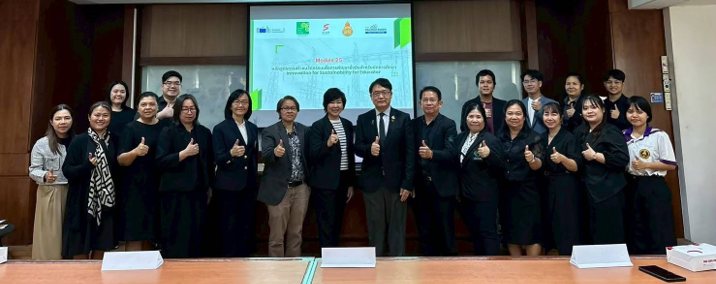
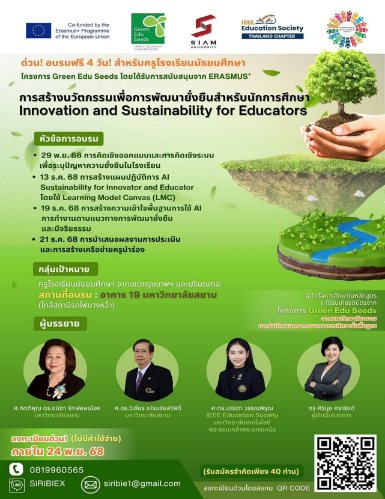
Siam University, in collaboration with the Bureau of Educational Innovation Development, Office of the Basic Education Commission (OBEC), Ministry of Education, Thailand, organised the “Innovation and Sustainability for Educators” training programme as a key component of the Green Edu Seeds project. Fully funded by the European Union’s Erasmus+ Programme, the initiative aims to equip educators with the knowledge and tools needed to integrate sustainability into their teaching practice.
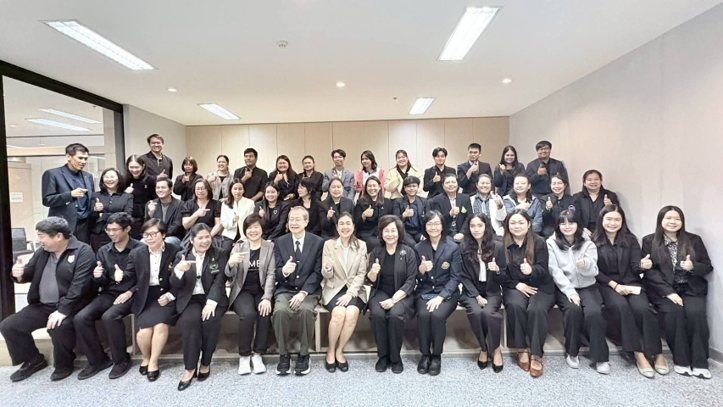
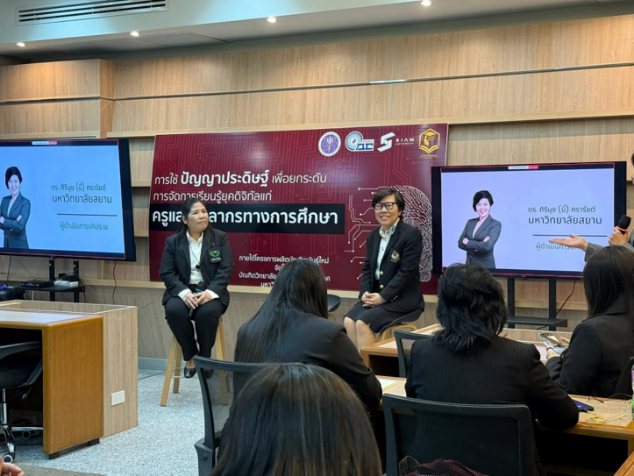
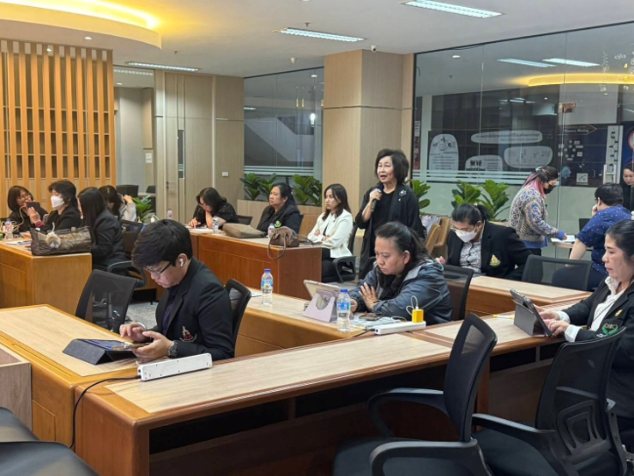
The programme brought together 40 secondary school teachers seeking to develop as “green educators.” Delivered in a hybrid format, combining on-site and online sessions, the intensive four-day training took place on 29 November and 13, 19 and 21 December 2025. Its objectives were threefold: to enable participants to design next-generation hybrid classrooms for sustainable learning; to develop proficiency in the Learning Model Canvas (LMC) as a tool for sustainability planning; and to foster an understanding of the ethical use of artificial intelligence (AI) in education in line with UNESCO guidelines. Sessions were led by Prof. Dr. Chanita Rukspollmuang (Siam University), Prof. Dr. Wichian Premchaiswadi (Siam University), and Prof. Dr. Panita Wannapiroon (King Mongkut’s University of Technology North Bangkok, KMUTNB), Chairperson of the IEEE Education Society Thailand.
The curriculum was structured around four core pillars:
Education for Sustainable Development (ESD). Participants examined global trends, the principles of the green economy, and systems thinking, with reference to the United Nations Sustainable Development Goals (SDGs).
Community Engagement. Through immersive “Living Lab” experiences, including a field visit to the Rak Withi Phasi Charoen community and the Creative Green Market, participants observed real-world applications of sustainability principles.
Design Frameworks. The Design Thinking–based Learning Model Canvas served as the primary method for developing a “Green for Education Action Plan.” The LMC guides educators in identifying a project’s key components, defining the problem, articulating a clear value proposition, and specifying the intended impact.
Strategic AI Integration. Hands-on workshops introduced generative AI tools such as ChatGPT, Microsoft Copilot and Google Gemini, enabling participants to design innovative and efficient lesson plans within the framework of the UNESCO AI Competency Framework for Teachers and its associated ethical principles.
Participant feedback was overwhelmingly positive, suggesting that the programme constitutes an effective model for professional development in education for sustainability. The organisers extend their sincere gratitude to all partner institutions, organising staff, and participating educators for their contributions to the programme’s success.
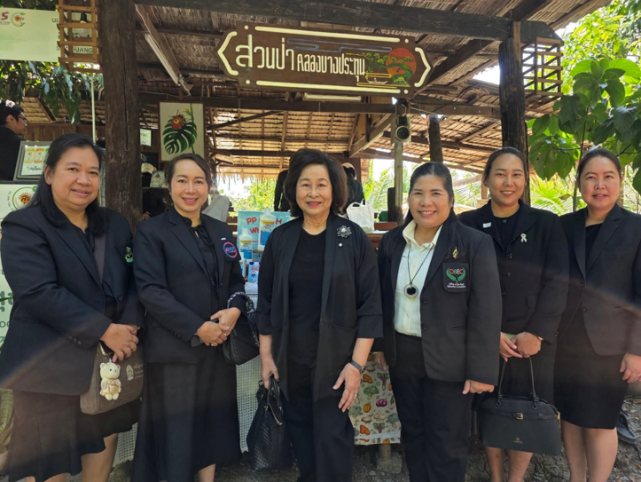
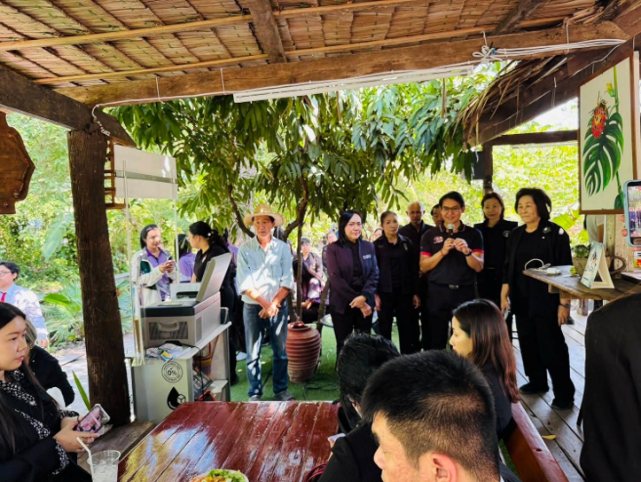
Siam Sustainable Entrepreneurship Capacity Development Program
In line with the Ministry of Higher Education, Science, Research and Innovation’s (MHESI) Reinventing University initiative, which prioritises the development of digital and artificial intelligence (AI) skills, Siam University has launched a capacity-building initiative to prepare our academic staff, researchers and personnel to become technology-based entrepreneurs. As part of this effort, the University’s Sustainability Working Group developed the “Siam Sustainable Entrepreneurship Capacity Development Program“involving 20 faculty members and staff representatives from across the University’s faculties, departments and units. It comprises seven six-hour sessions, totalling 42 hours, beginning on 4 September 2026. The program aims to promote sustainable entrepreneurial mindset and competencies with 4 ovjectives.
•
Develop participants’ knowledge, skills and competencies in key frameworks. The Inner Development Goals (IDGs), Sustainable Development Goals (SDGs) and Environmental, Social and Governance (ESG) principles social innovation, social entrepreneurship and community enterprises, the application of AI, impact measurement, including Social Return on Investment (SROI), environmental management and Green Office practices, carbon footprint assessment and carbon reduction planning as well as their role within the University’s entrepreneurial ecosystem.
•
Opportunity identification and co-creation. To strengthen participants’ ability to connect real-world problems, stakeholders, research, technology, local wisdom and resources to create value.
•
Design of social and sustainable ventures. To enable participants to develop value propositions, feasibility plans and prototypes for sustainability management.
•
Pilot projects and cross-faculty networks. To produce real projects that can be applied in teaching, research or academic services, and to foster collaboration across faculties.
Aligned with the University’s development as an entrepreneurial and innovative institution, the programme adopts a workshop-based, project-oriented approach. Working in multidisciplinary teams, participants address real challenges drawn from the University’s context or wider society. They then develop project proposals that progress from opportunity identification and co-creation of innovations to sustainability network building, SROI-based impact measurement, the responsible use of AI for data analysis, and carbon management, all linked to the SDGs and ESG principles
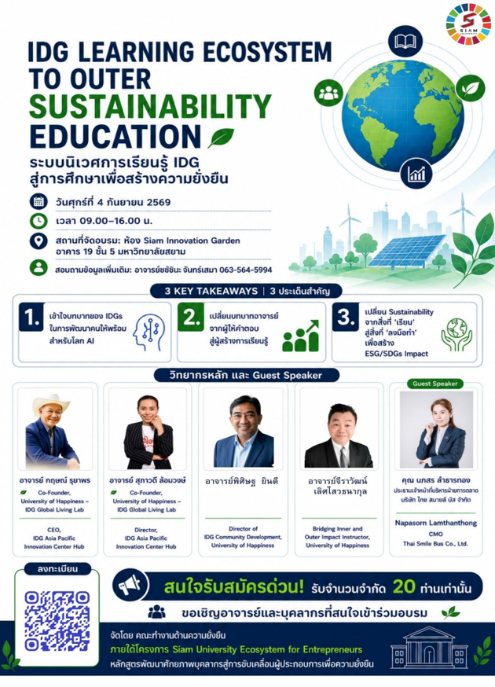
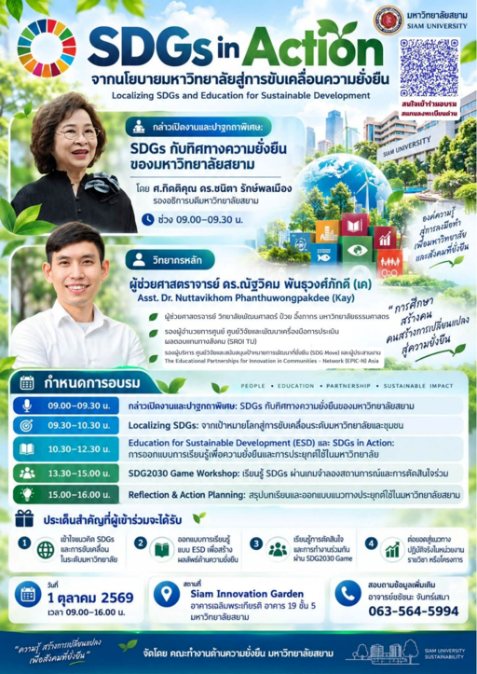
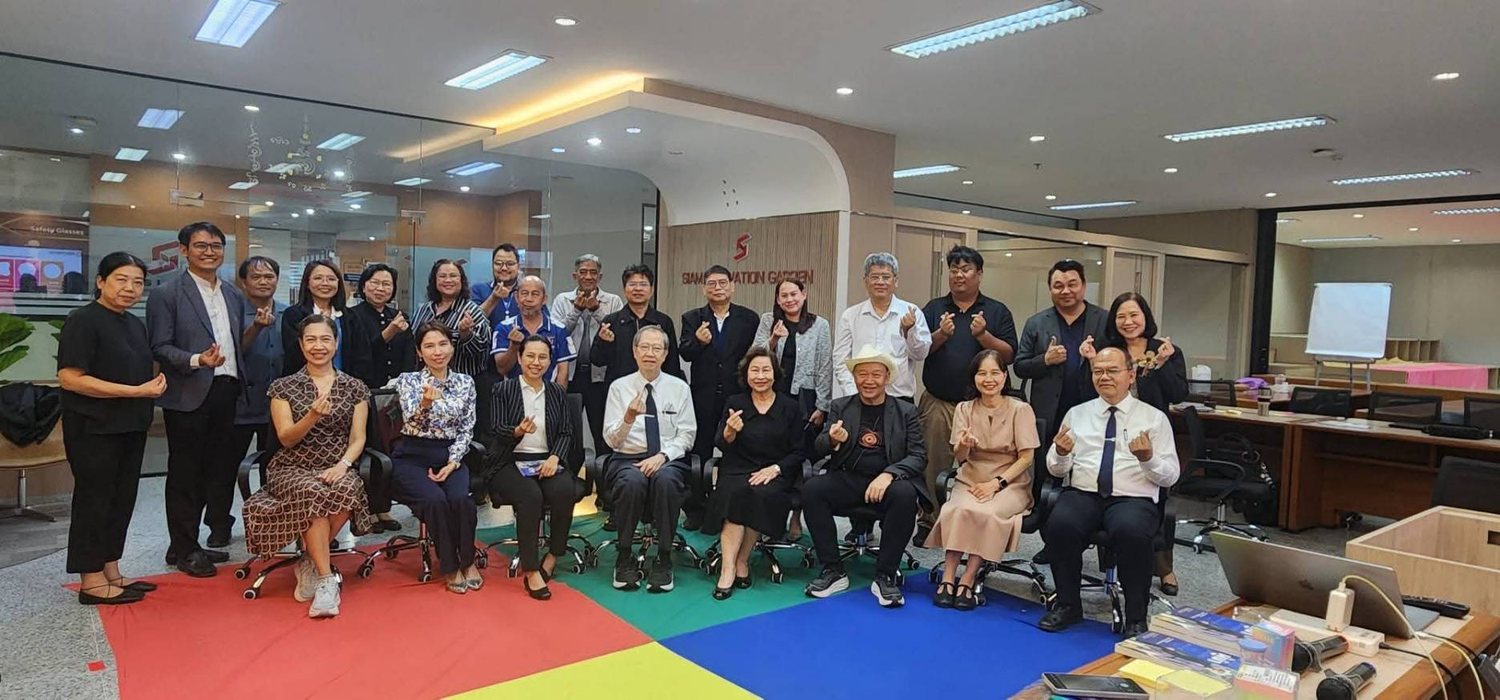
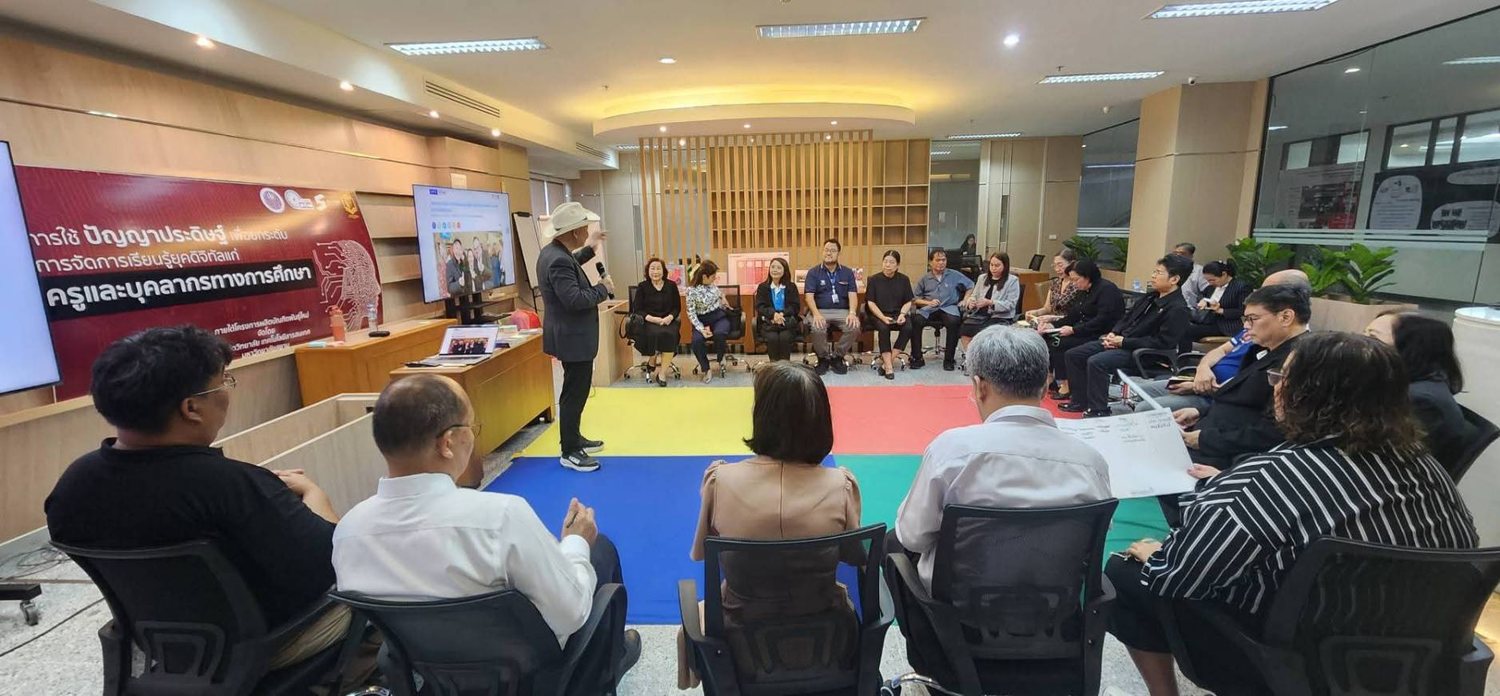
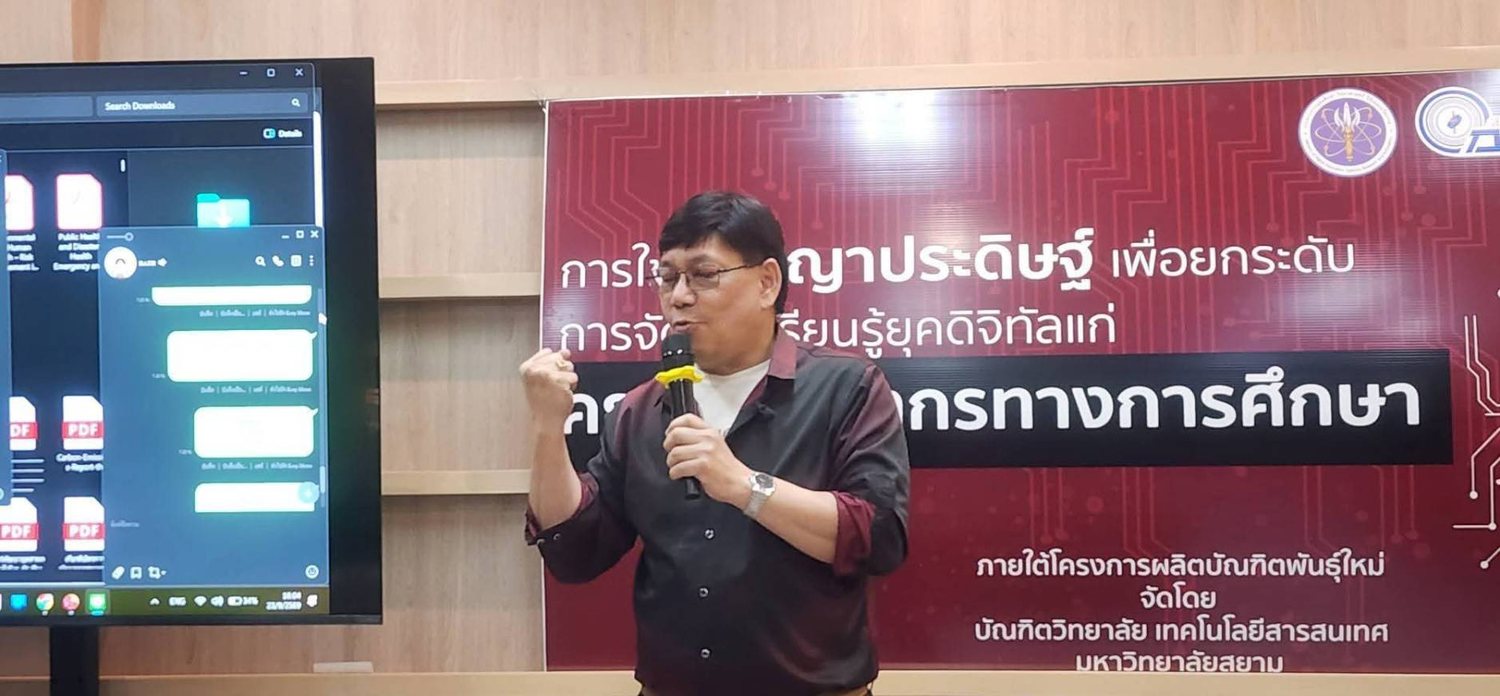
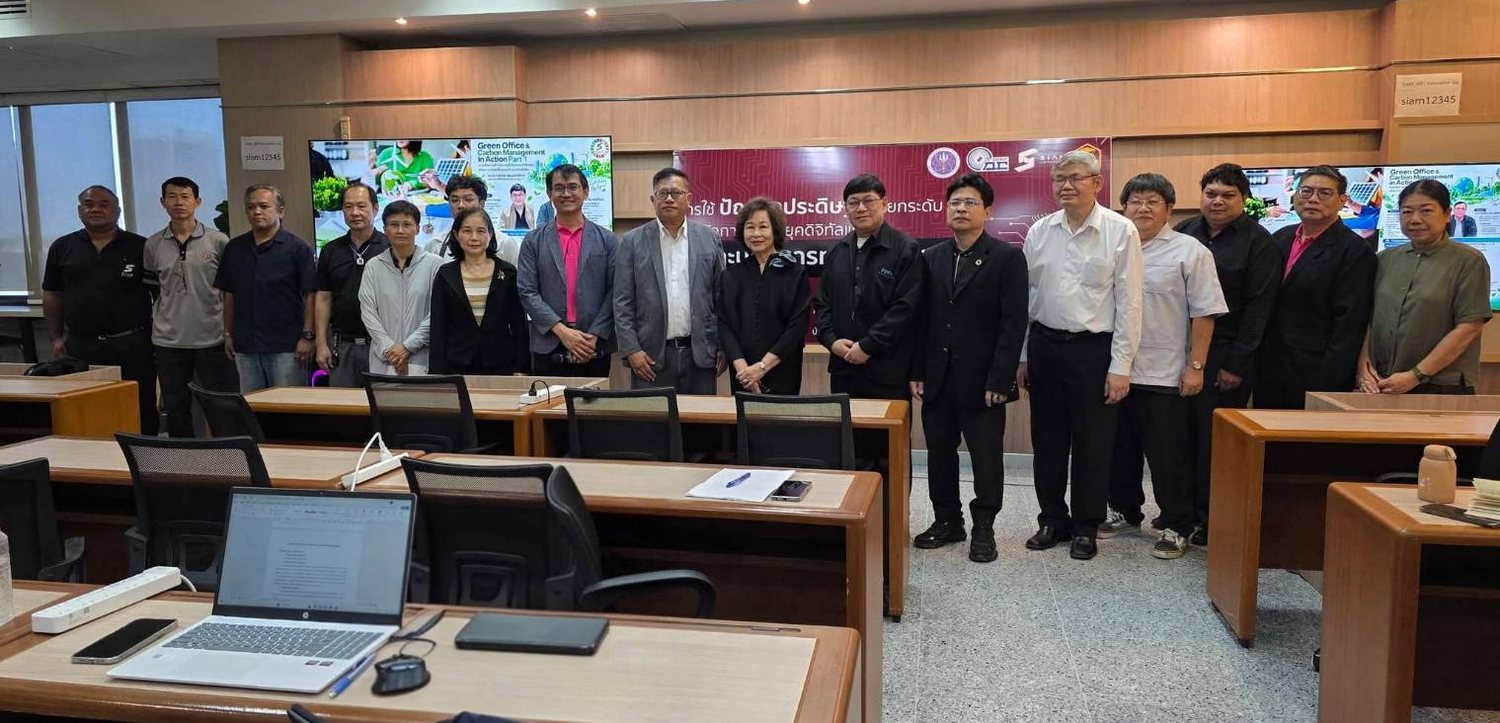
(Above) IDG Learning Ecosystem to Outer Sustainability Education, September 4, 2026
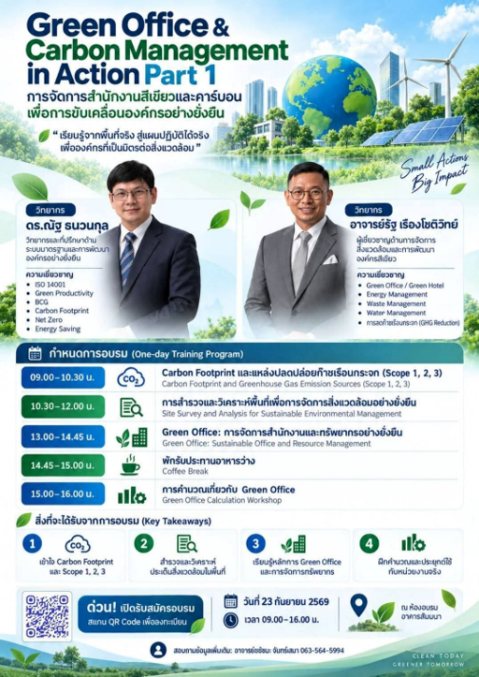
(Below) Green Office & Carbon Management in Action Part 1, September 23, 2026
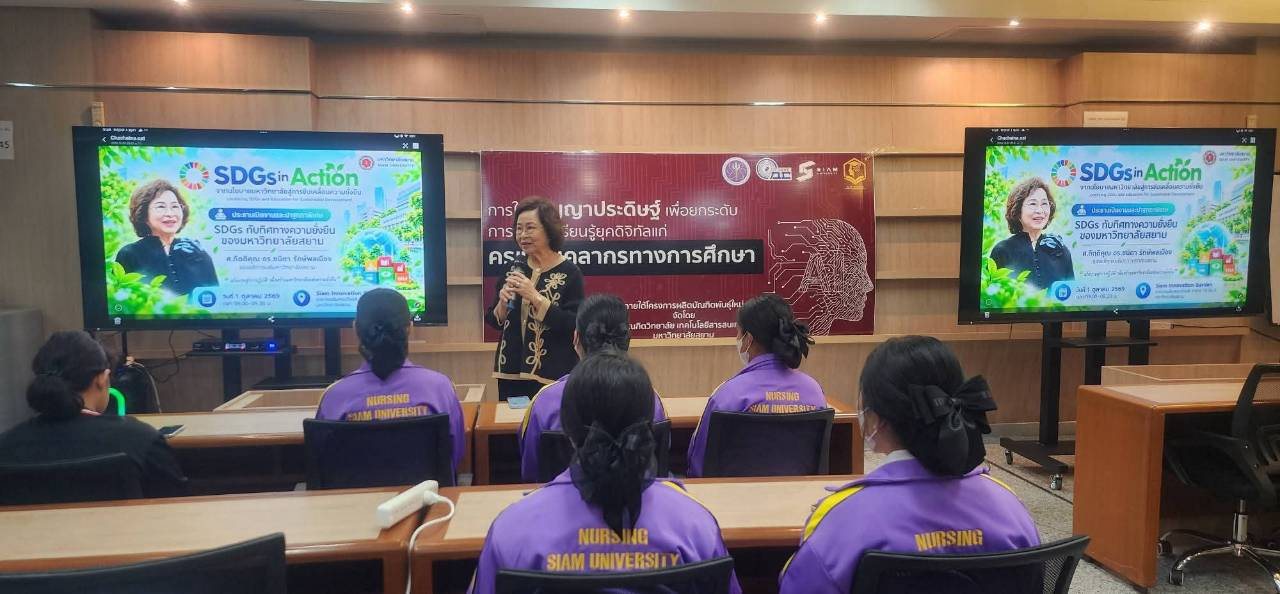
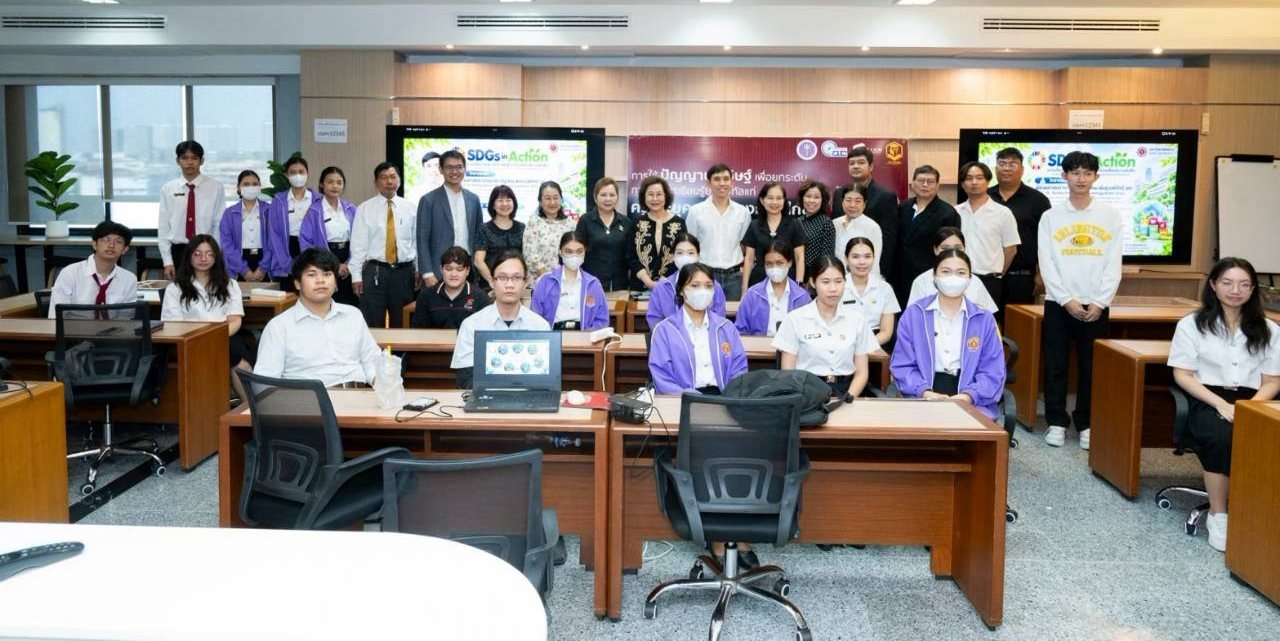
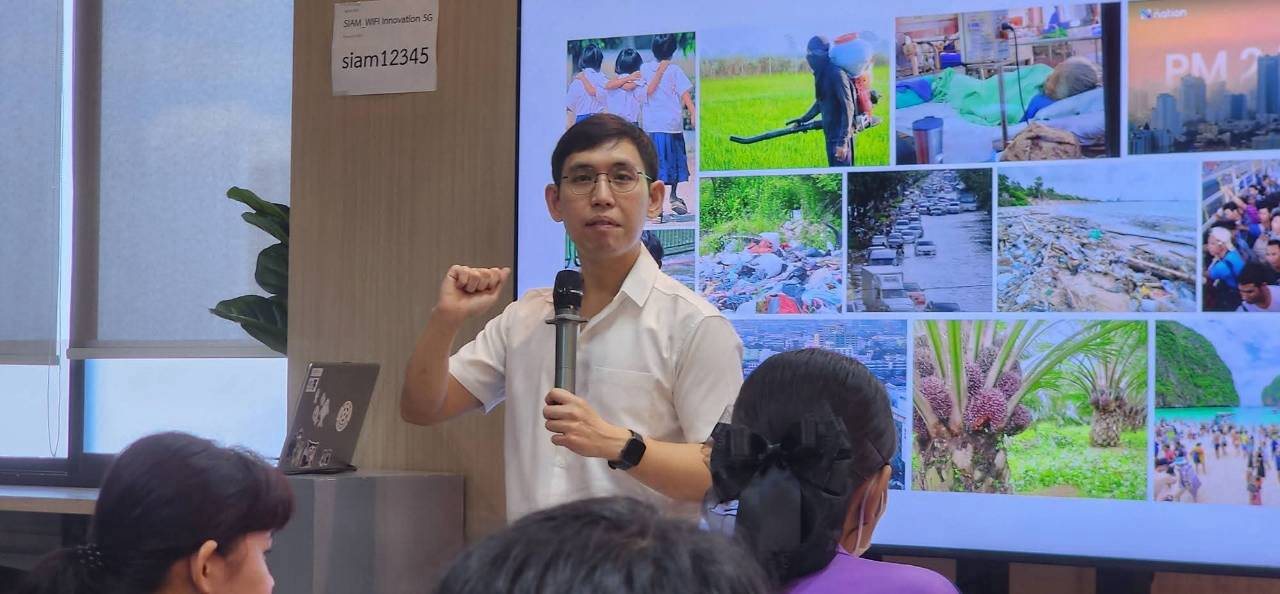
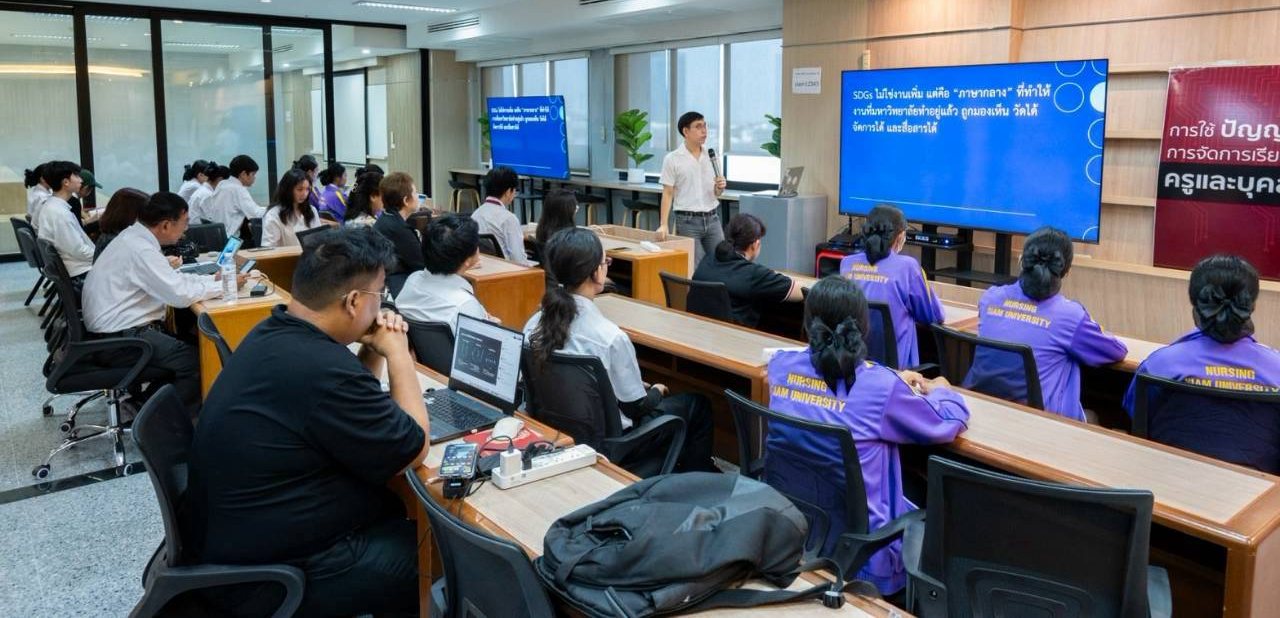
Localizing SDGs & Education for Sustainable Development, October 1, 2026
Education for SDGs in the wider community
Local Storyteller Training: Building Pride in “Home”
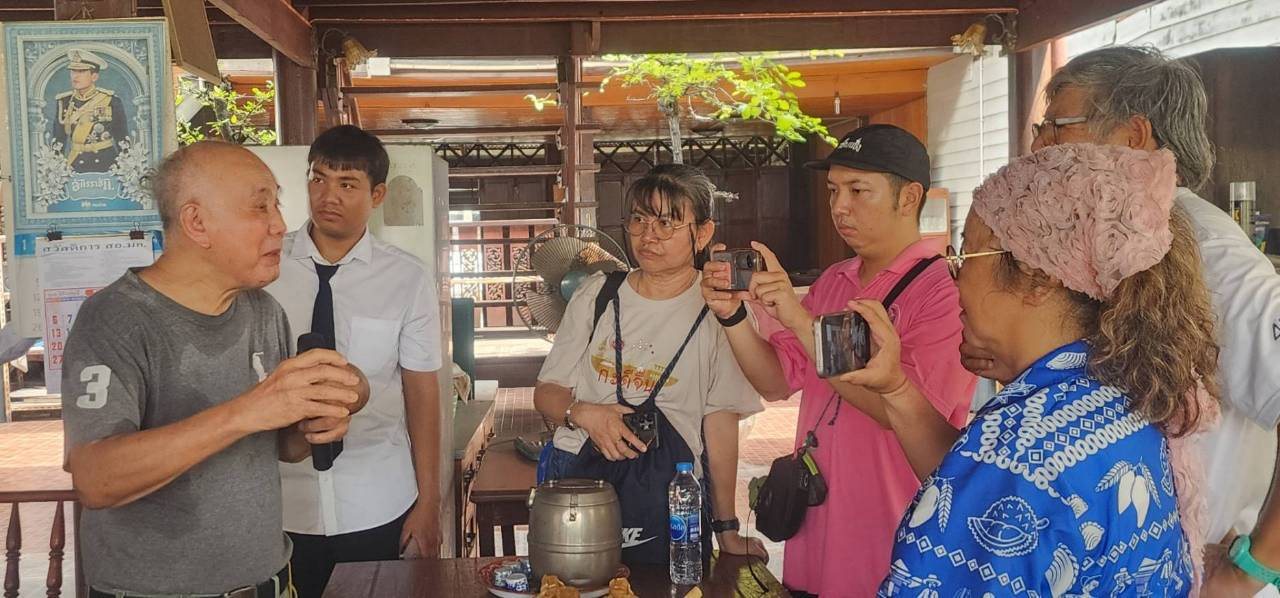
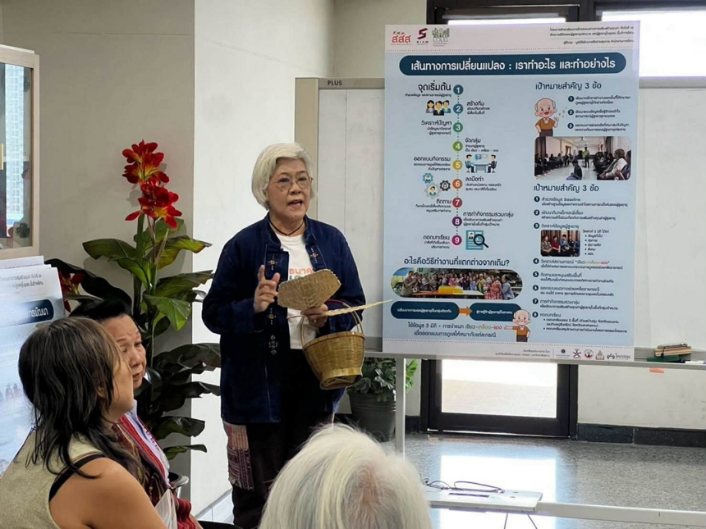
Under the 2026 Siam Government Savings Bank (GSB) “Youth for Development” project, Chachatna Chansema of the Faculty of Business Administration led a training programme for local storytellers. It aimed to build the guiding skills of local residents, school students, university students and other interested people. The first session, held at Wat Rang Bua School, combined theory with a workshop in which participants practised storytelling through simulated scenarios. It was attended by 29 people: 4 university students, 11 upper secondary students (Grades 10–11), 9 community representatives and members of the public, and 5 school administrators and teachers.The second session, held on Sunday, 13 September 2026, was a practical field trip by boat through the Khlong Bang Prathun orchard forest, visiting a traditional Thai house and the community in front of Wat Nimmanoradi. Participants observed real guiding situations and gathered material on local storytelling techniques. This session was attended by 17 people: 11 university students, 3 community members, 1 lecturer and 2 guest storytellers. Overall, the training fostered pride in the local area and community cohesion, contributing to a stronger community.
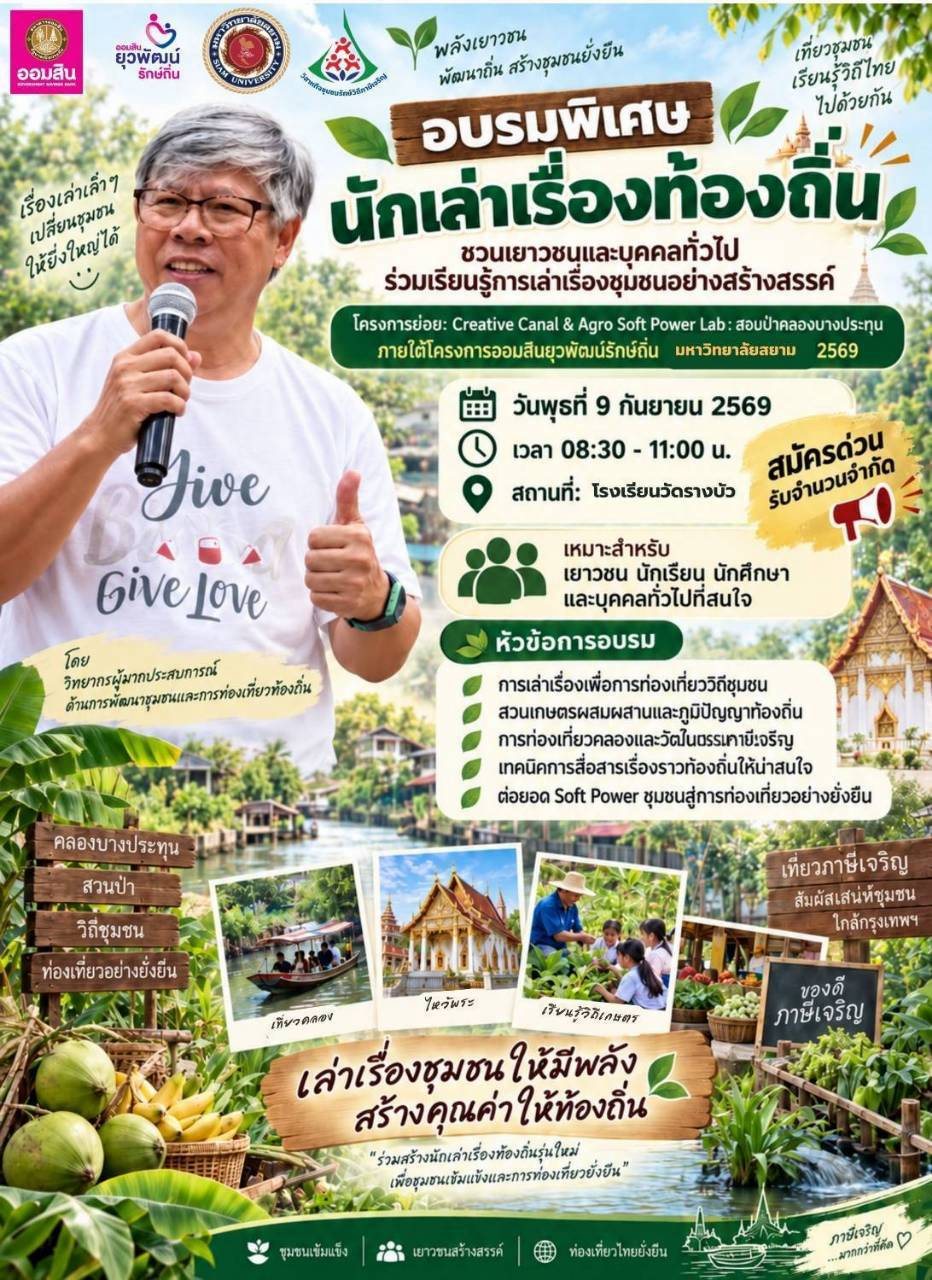
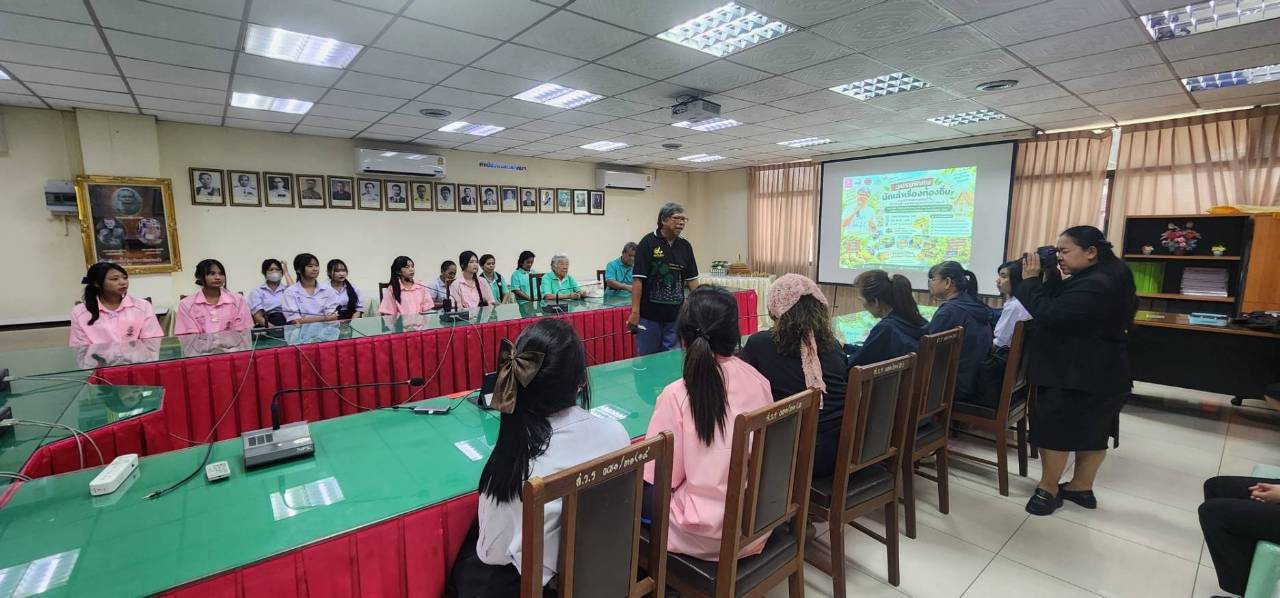
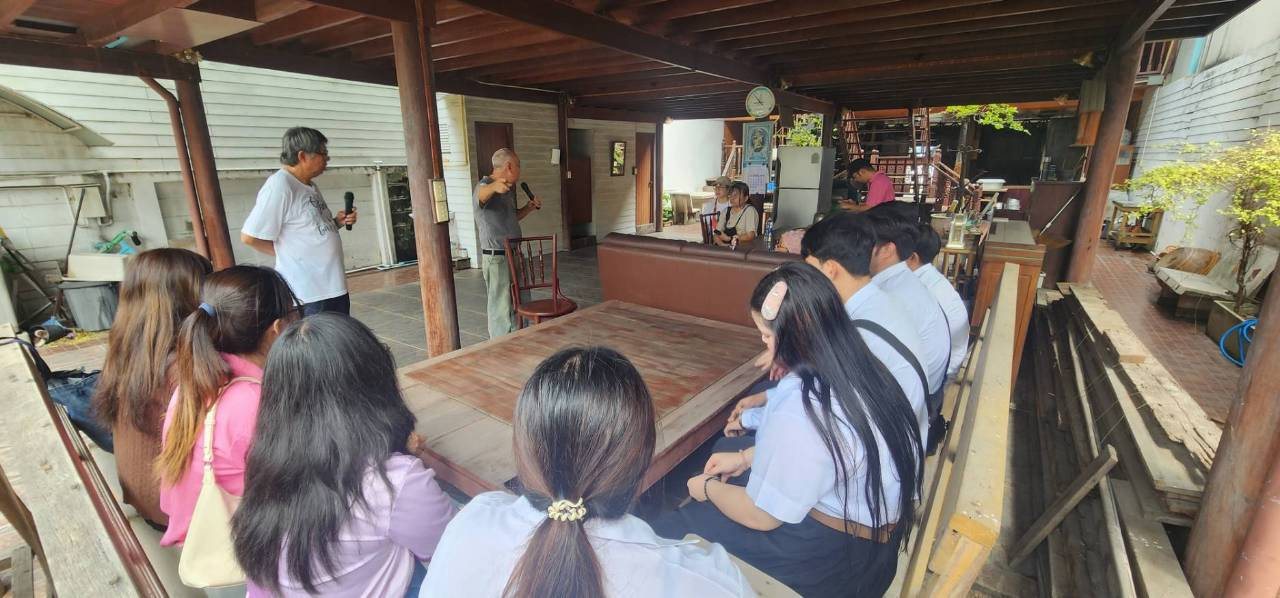

Storytelling for Local Development
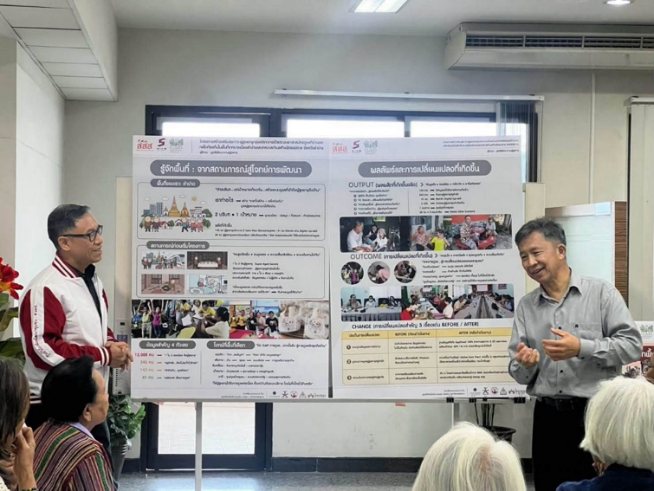
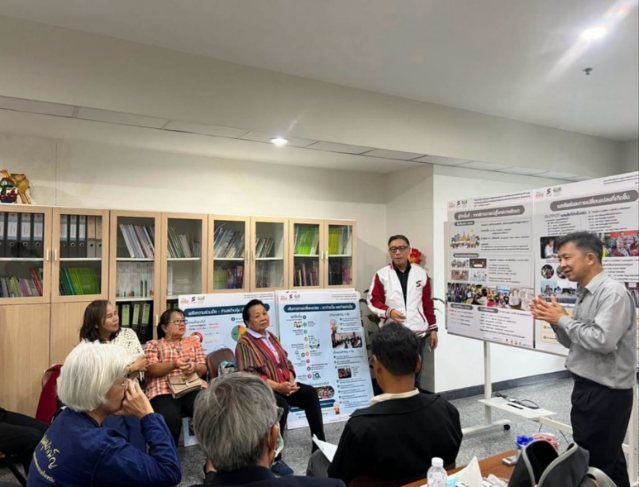
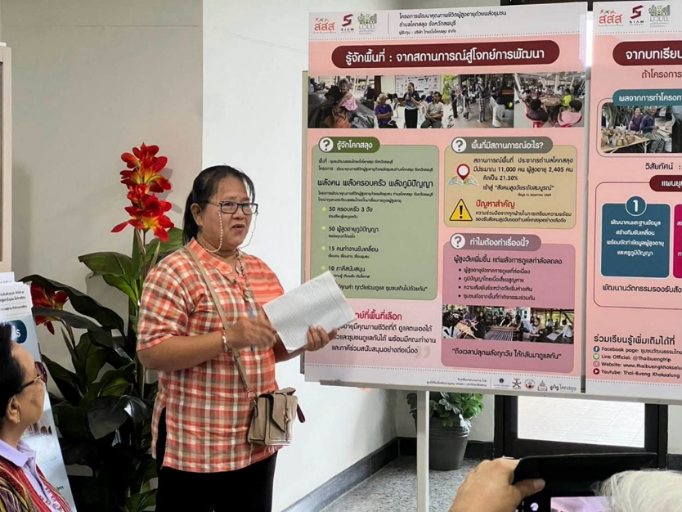
On 28 September 2026, the Siam University Research Centre for Community Development and representatives from Phasi Charoen held a lessons-learned workshop using storytelling. Participants turned their field experiences into short stories that made the lessons of community work easy to understand and apply. The stories drew on cases from across Thailand. These included multi-sector collaboration under the “Five Powers” model in Nong Suea District, Pathum Thani, individual elderly care in Ban Thum Subdistrict, Khon Kaen, intergenerational connection in the Withi Pan Hak community, Ubon Ratchathani, and a time bank and social enterprise in the Khok Salung community, Lopburi. They also included Lampang’s “Aew Ha Ui” (“Visiting Grandparents”) scheme, which combines community volunteers with a digital system to bring elderly care closer to households. By turning data and experience into vivid stories, the workshop prompted participants to consider how these lessons could be applied in their own areas. For the Research Centre, storytelling links experience, understanding and action, helping to inform the development of care systems for older people and vulnerable groups and of the all-ages time bank in the Phasi Charoen pilot area. As the workshop showed, the most valuable lessons often come not from textbooks but from the stories of people who do the work.
“Once Upon AI” Workshop under the U-School Mentoring Project
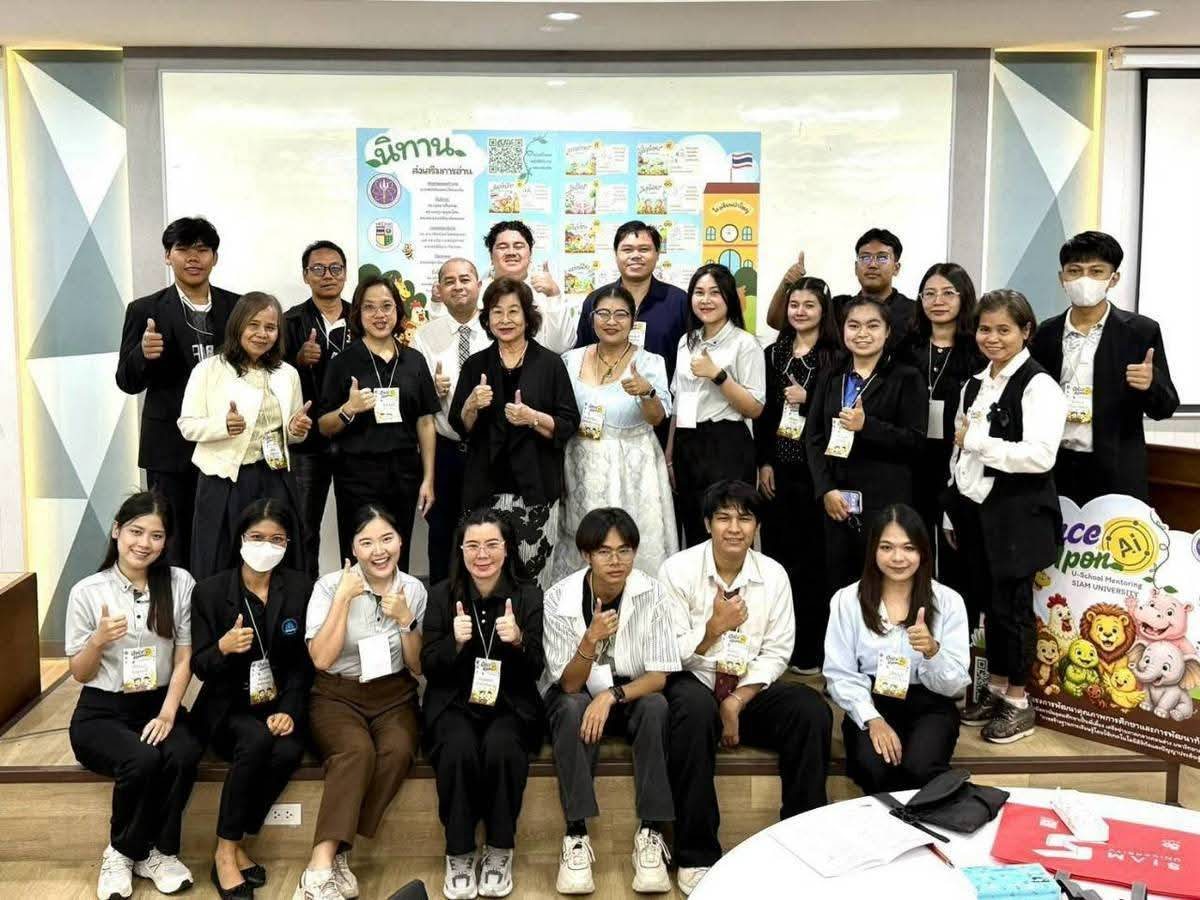
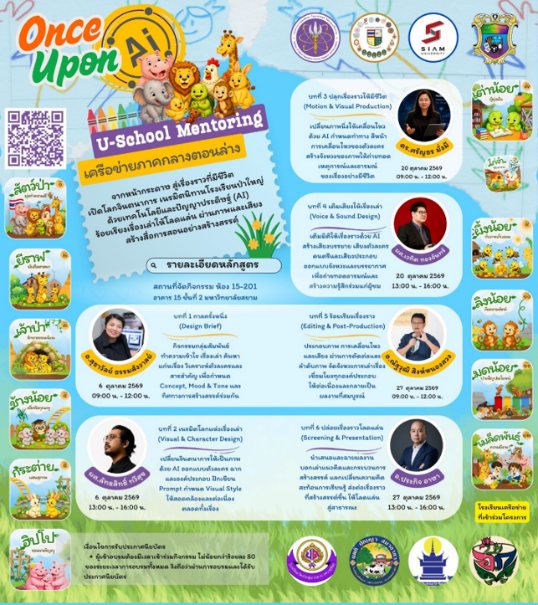
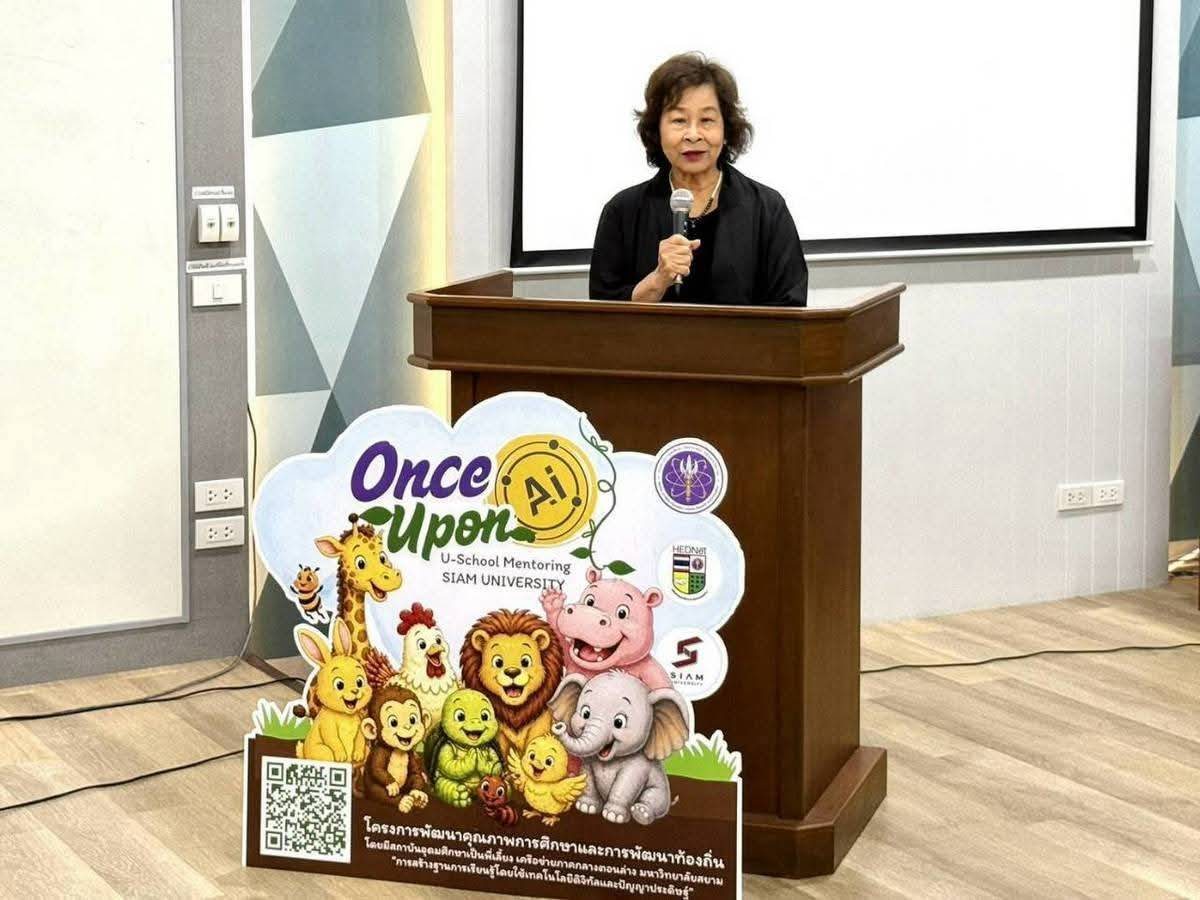
As part of the U-School Mentoring Project, Faculty of Communication Arts held the “Once Upon AI” workshop on October 6, 2026 for 40 paricipants comprising community representatives, basic education teachers, students and alumni, encouraging them to experiment with AI tools while using them creatively, critically and responsibly in teaching and learning. AI has become an integral part of how we live, work and learn. In education in particular, AI offers teachers new opportunities to design content, create media and develop innovative learning processes. The workshop provided a space for participants to experiment, exchange ideas and create without fear of making mistakes, since every experiment is part of the learning process. Above all, participants were encouraged not to let AI think for them, but to learn to think with AI creatively, critically and responsibly. The title “Once Upon AI” echoes the familiar phrase “Once upon a time,” which traditionally opens a story. In the same spirit, the workshop marks the beginning of a new chapter in learning: one in which teachers are not merely users of technology but those who decide what technology is used for. Its guiding aims are to transform tools into learning, ideas into tangible work, and imagination into meaningful experiences for learners.
Learning about Local Wisdom: Thai Herbs
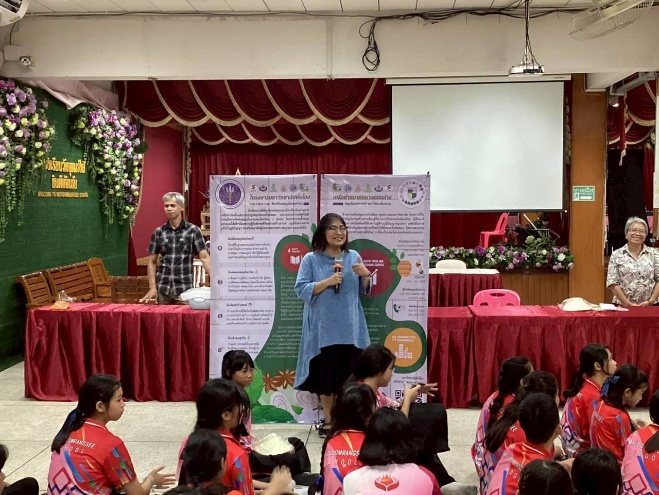
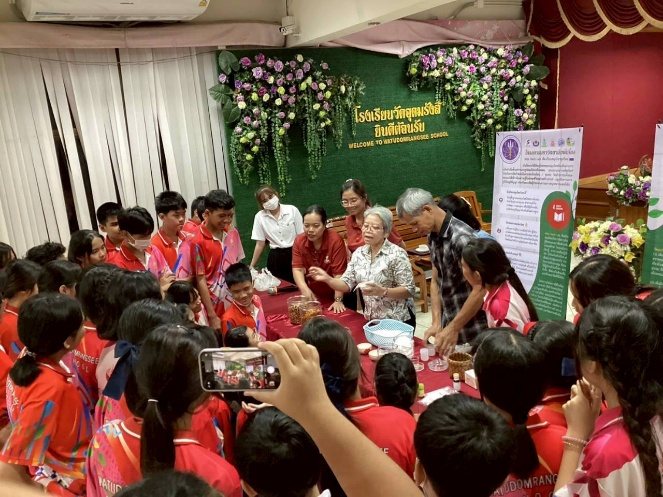
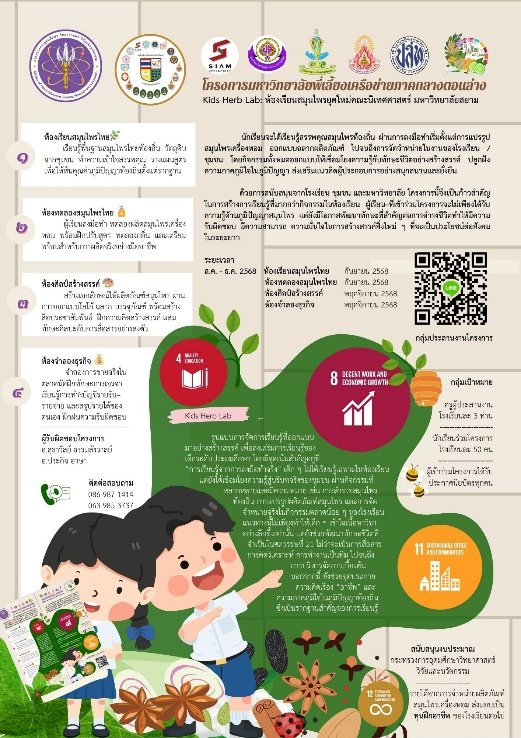
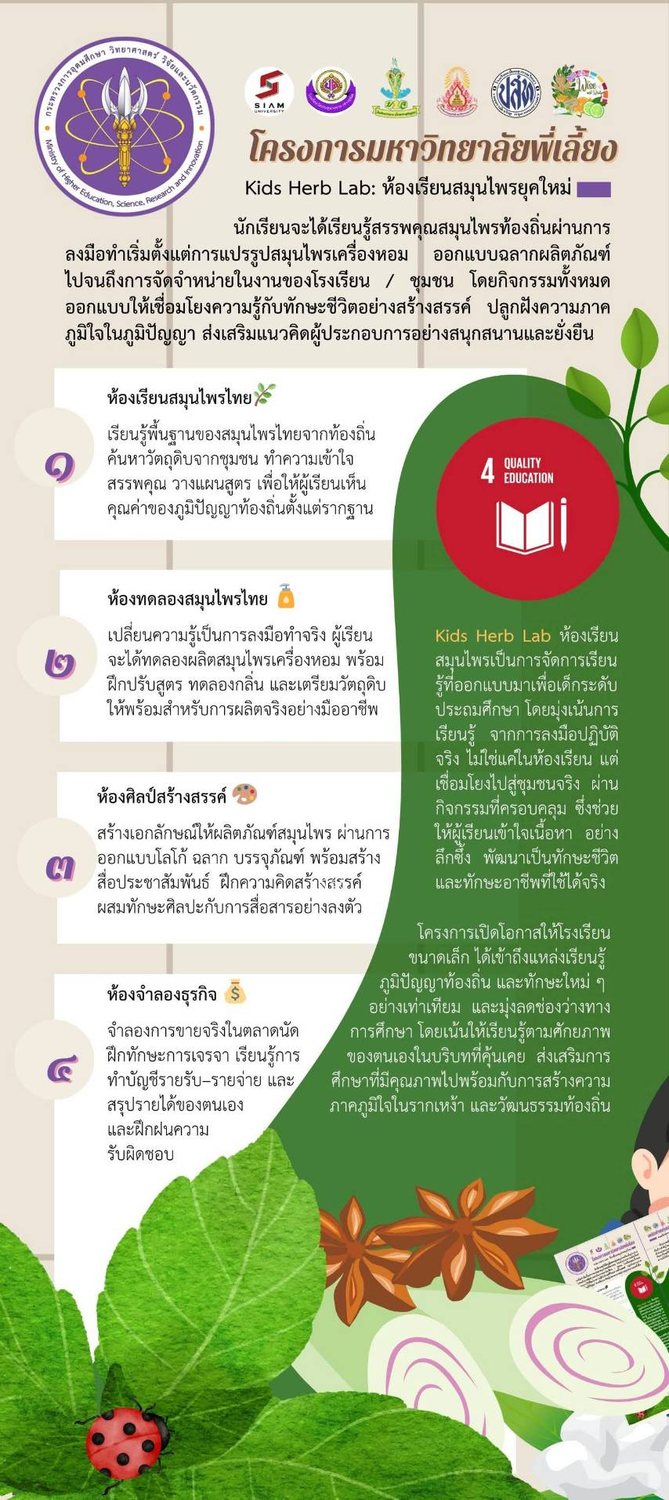
The Faculty of Communication Arts at Siam University served as a mentor institution in the Education Quality and Local Development Project with Higher Education Institutions as Mentors (Lower Central Region Network). The project combines university expertise with community knowledge to promote creative learning and local development. Through hands-on activities at the Sirin and Friends Community, the faculty supported young people and local residents in learning about Thai herbs and developing traditional knowledge of herbal inhalers. The project ran for ten months from August 2025 and involved about 460 participants. Activities included workshops, learning stations and creative media production. Participants learned about Thai medicinal plants and their benefits, how herbal inhalers are made, and how to design products suited to contemporary lifestyles. They also developed skills in packaging design, brand communication and digital product presentation. Communication arts skills such as photography, video production and online public relations were integrated to add value to community products. As a result, young people and community members gained a greater appreciation of local herbal knowledge and were able to apply it creatively to product development and income-generating activities. The project also helped preserve this knowledge by passing it on to younger generations through modern, accessible learning.
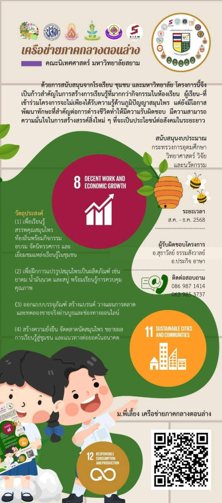
Packaging Development for Processed Animal Feed from Black Soldier Fly Larvae
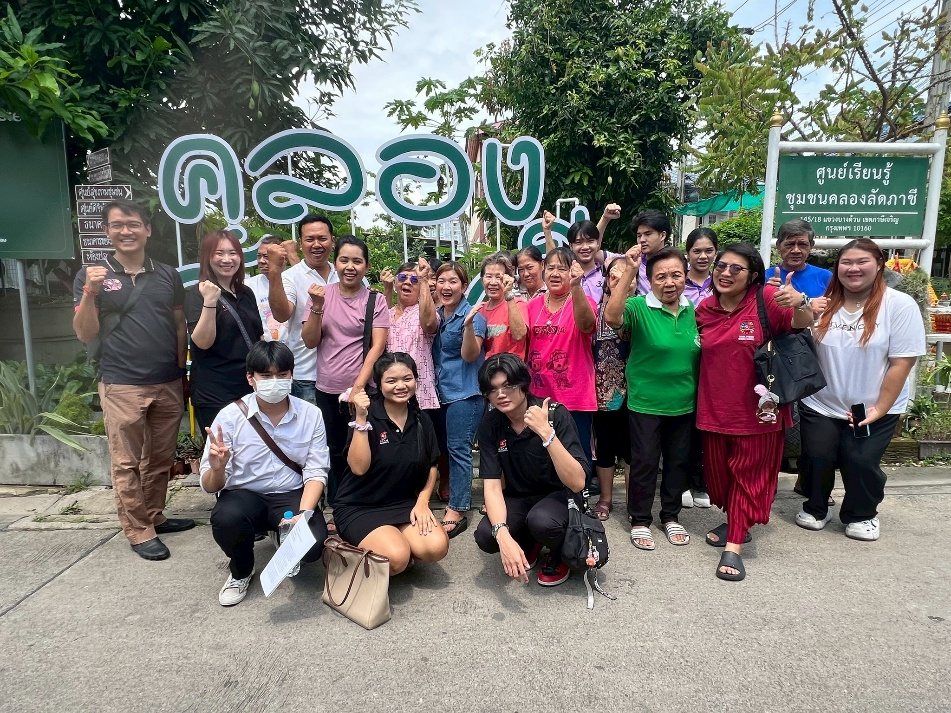
The sub-project “Packaging Development for Processed Animal Feed from Black Soldier Fly Larvae,” part of the 2025 Youth Volunteer Project, was an academic service activity carried out by the Faculty of Communication Arts with the Khlong Lad Phachee community. It aimed to develop community products and increase their economic value through creative design and communication. The faculty applied its expertise in communication arts, packaging design and marketing communication to animal feed made from black soldier fly larvae, a nutritious alternative resource consistent with circular economy principles. The project gave students and community members hands-on experience working with a real community. They helped research the product, analyze its target market, design a brand identity, and develop packaging that balanced appearance, practicality and clear product information. As a result, the Khlong Lad Phachee community has prototype packaging that improves the value and image of its product, along with stronger knowledge of branding and marketing communication to support sustainable income. Students developed skills in design, creative thinking, teamwork and communication for social good through close fieldwork with the community. The project shows how the university integrates teaching with academic service to deliver tangible benefits to communities and society.

Partnerships for the Goals
International Collaboration
International Forum for Sustainable Futures (IFSF) 2026
https://www.facebook.com/profile.php?id=61584783753002&locale=sr_RS#
https://inter.siam.edu/international-forum-for-sustainable-futures/
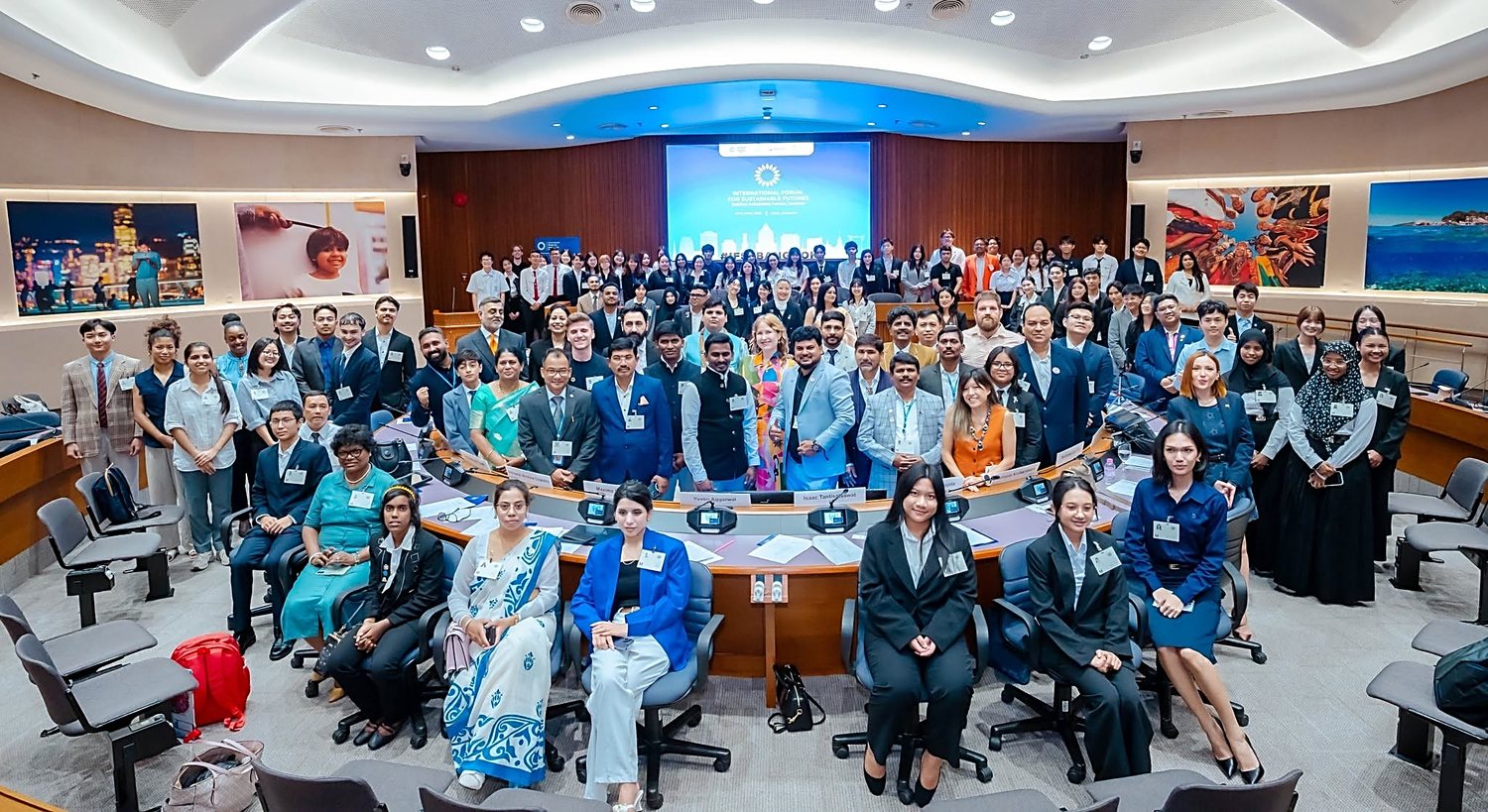
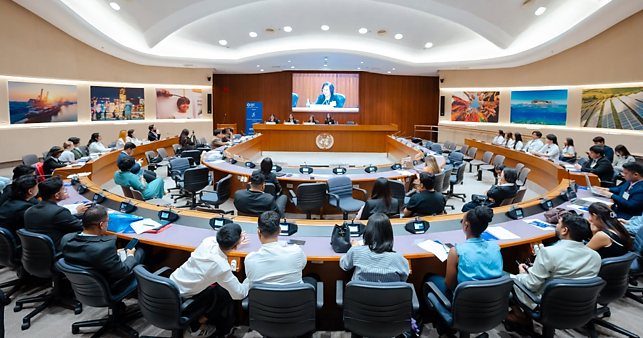
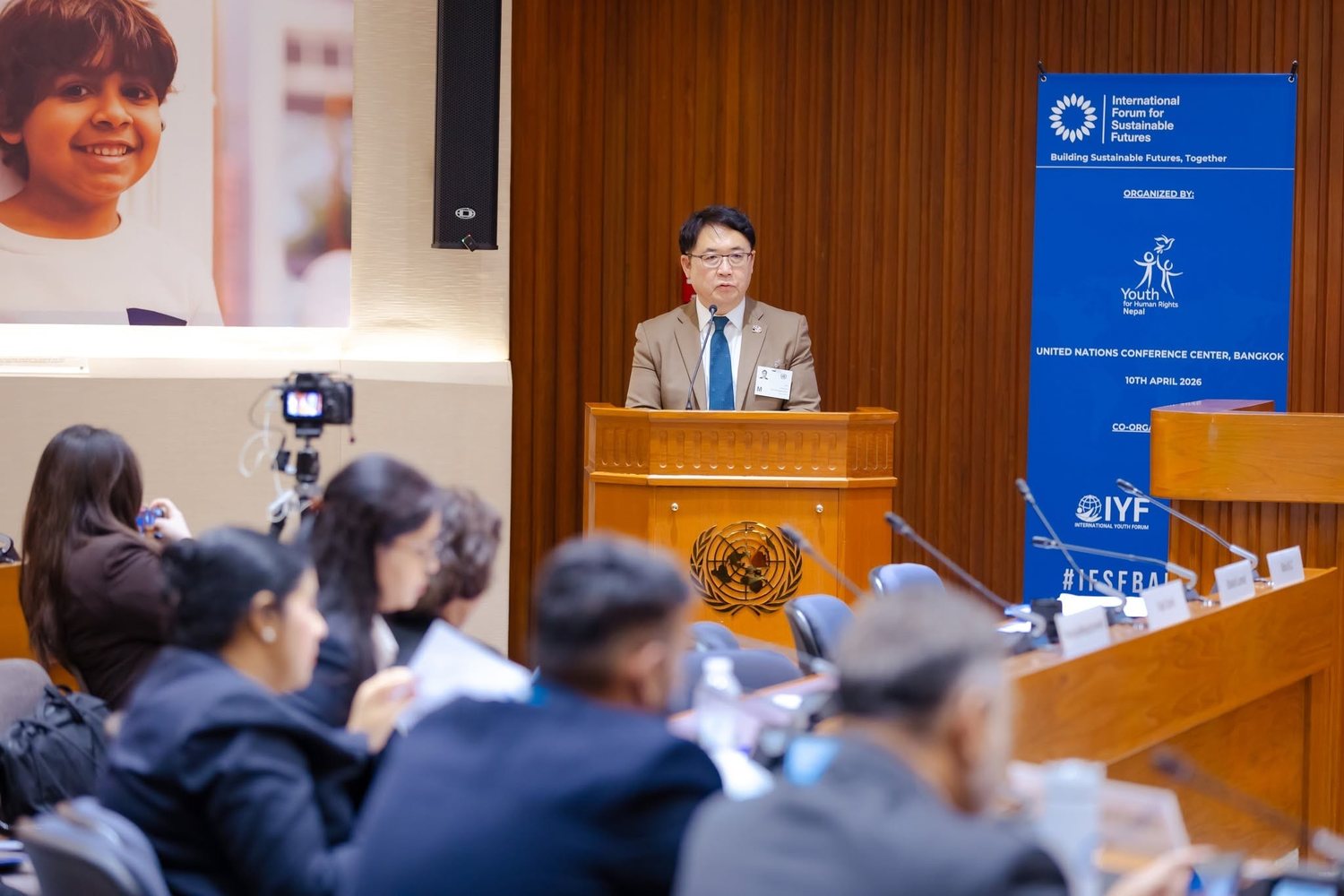
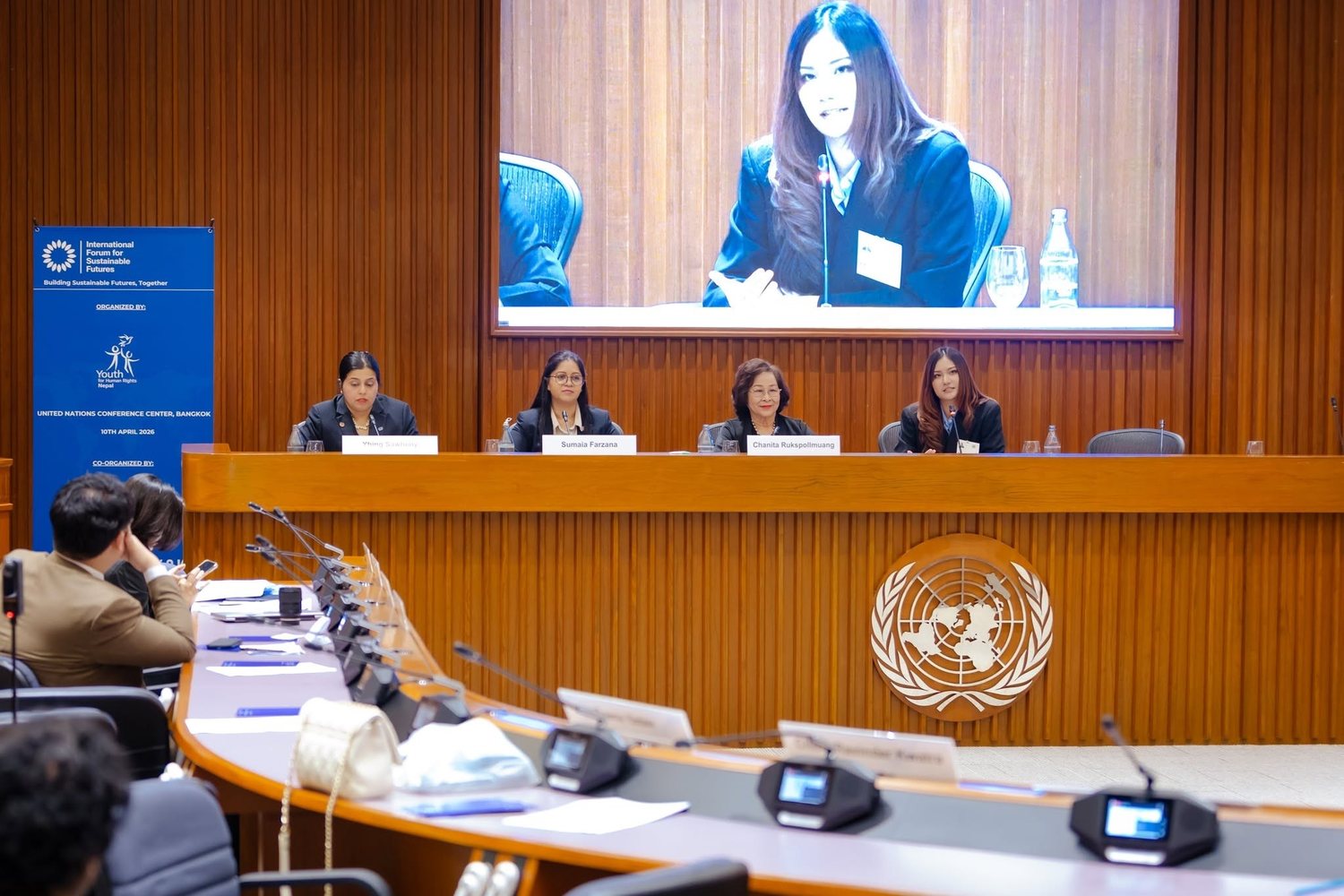
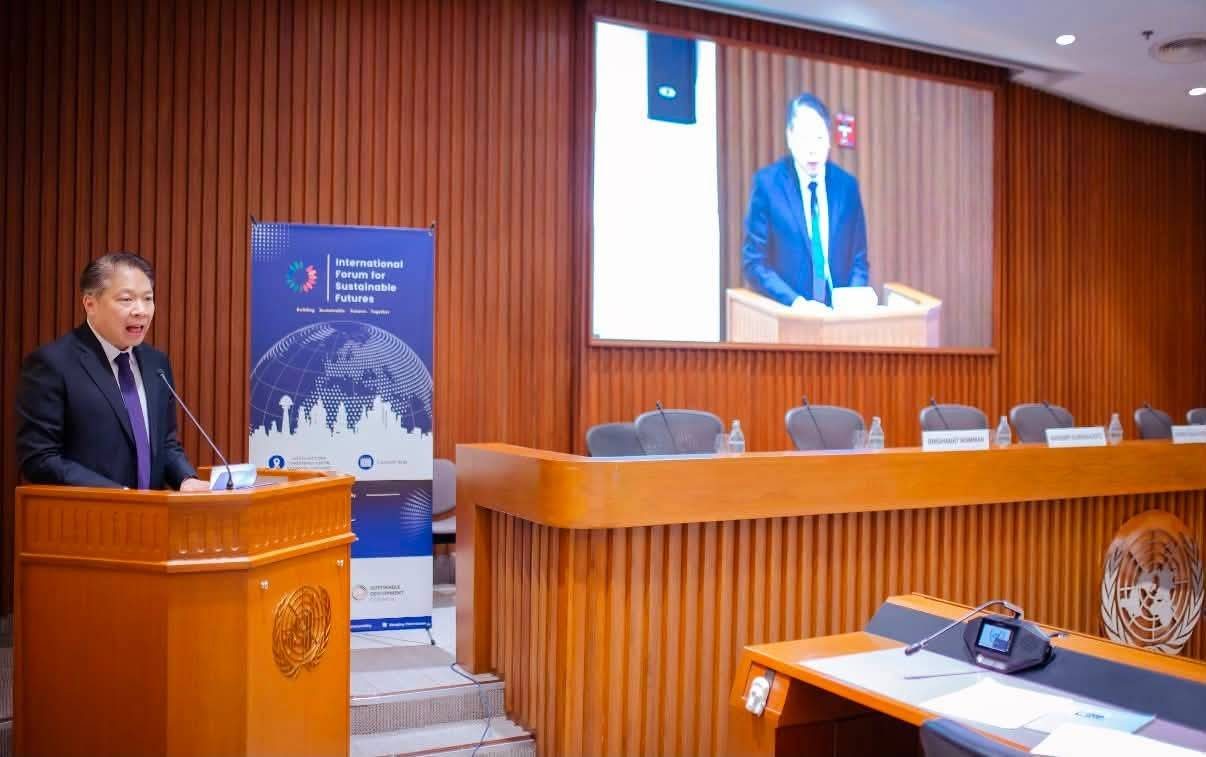
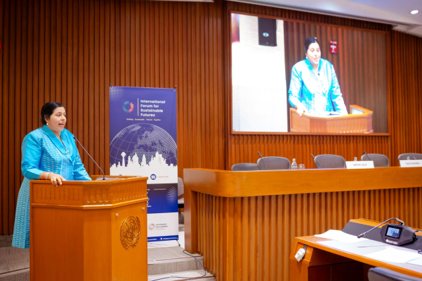
The First International Forum for Sustainable Futures (IFSF) 2026, held under the banner “Building Sustainable Futures, Together,” took place on 10 April 2026 at the United Nations Conference Centre in Bangkok. Organised by the Sustainable Development Council, with Siam University, De Montfort University and Kasetsart University as academic co-hosts, the forum addressed pressing global challenges such as climate change, systemic inequality, biodiversity loss and public health crises. Under the theme “Youth Leadership and Innovation for Sustainable Economies,” it aimed to help young people move beyond discussing the UN SDGs and build resilient, inclusive solutions. The event drew hundreds of participants from around the world, including policymakers, academics, development professionals, regional experts such as representatives of the IUCN, and student panellists from international universities.
Siam University played a prominent role in the programme. President, Dr. Pornchai Mongkhonvanit, delivered a keynote address on sustainability and the evolving role of universities. Professor Dr. Chanita Rukspollmuang, Vice President and Dean of the Graduate School of Education, spoke on a panel about the university’s campus and community sustainability initiatives. Dr. Yhing Sawheny, Director of International Affairs, moderated a session, and Ms. Kodchaphorn Audyana, an award-winning BBA student from the International College, appeared as a student panellist. Dr. Farzana Sumaia also joined the panel, speaking on the role of mentors in empowering youth. The forum gave young advocates, a global platform to present practical strategies directly to international leaders, shifting the focus of sustainable development from policy to youth-led innovation. Its sessions produced practical strategies on future skills for the AI era, health equity, climate adaptation and the protection of human rights. It also strengthened links between academic leaders, including Siam University’s campus sustainability work, and international policymakers, creating long-term mentorship pathways to support the 2030 Agenda. For Siam University, the forum confirmed that youth-led innovation is central to an inclusive and sustainable future.
On 3 August 2026, Siam University paricipated in the inaugural session of the International Forum for Sustainable Futures (IFSF), held also at the United Nations Conference Centre in Bangkok. Dr. Pornchai Mongkhonvanit, President of Siam University and President of the Sustainable University Network of Thailand (SUN Thailand), served as a keynote speaker. Two other Siam University figures also gave keynote addresses: Dr. Jomphong Mongkhonvanit spoke on the leadership, systemic innovation and educational frameworks needed for sustainable development, and Dr. Yhing Sawheny offered perspectives on international collaboration, leadership and global dialogue. Participants worked together on practical, equitable and resilient sustainability solutions aligned with several Sustainable Development Goals, notably SDGs 3, 7, 10, 12, 13 and 17. The forum highlighted youth-led innovation, encouraged cross-sector collaboration to accelerate progress on the SDGs, and featured student-led panel discussions on innovation for sustainable economies.
Global University Student Network (GUSN) 2026
https://siam.edu/gusn-2026-siam-university/
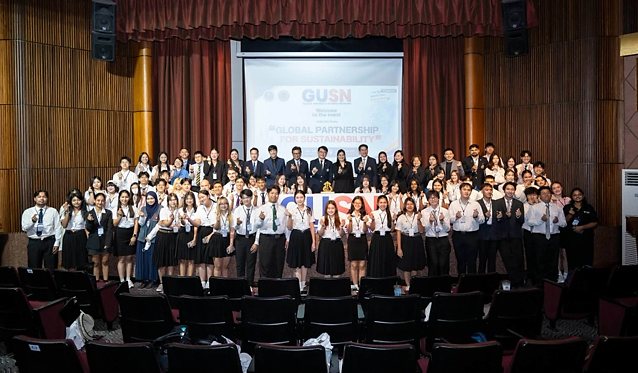
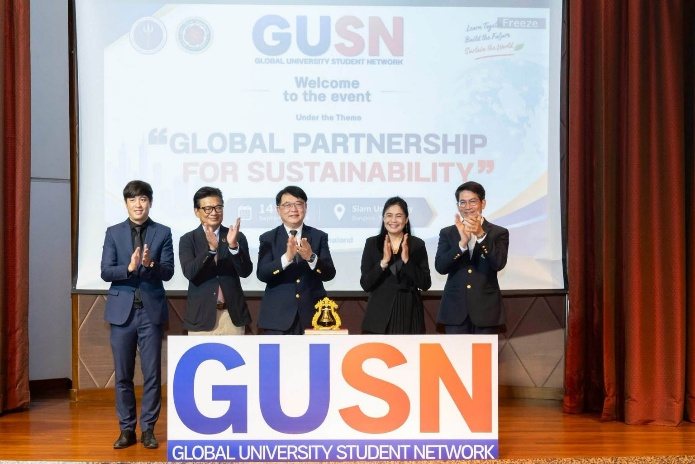
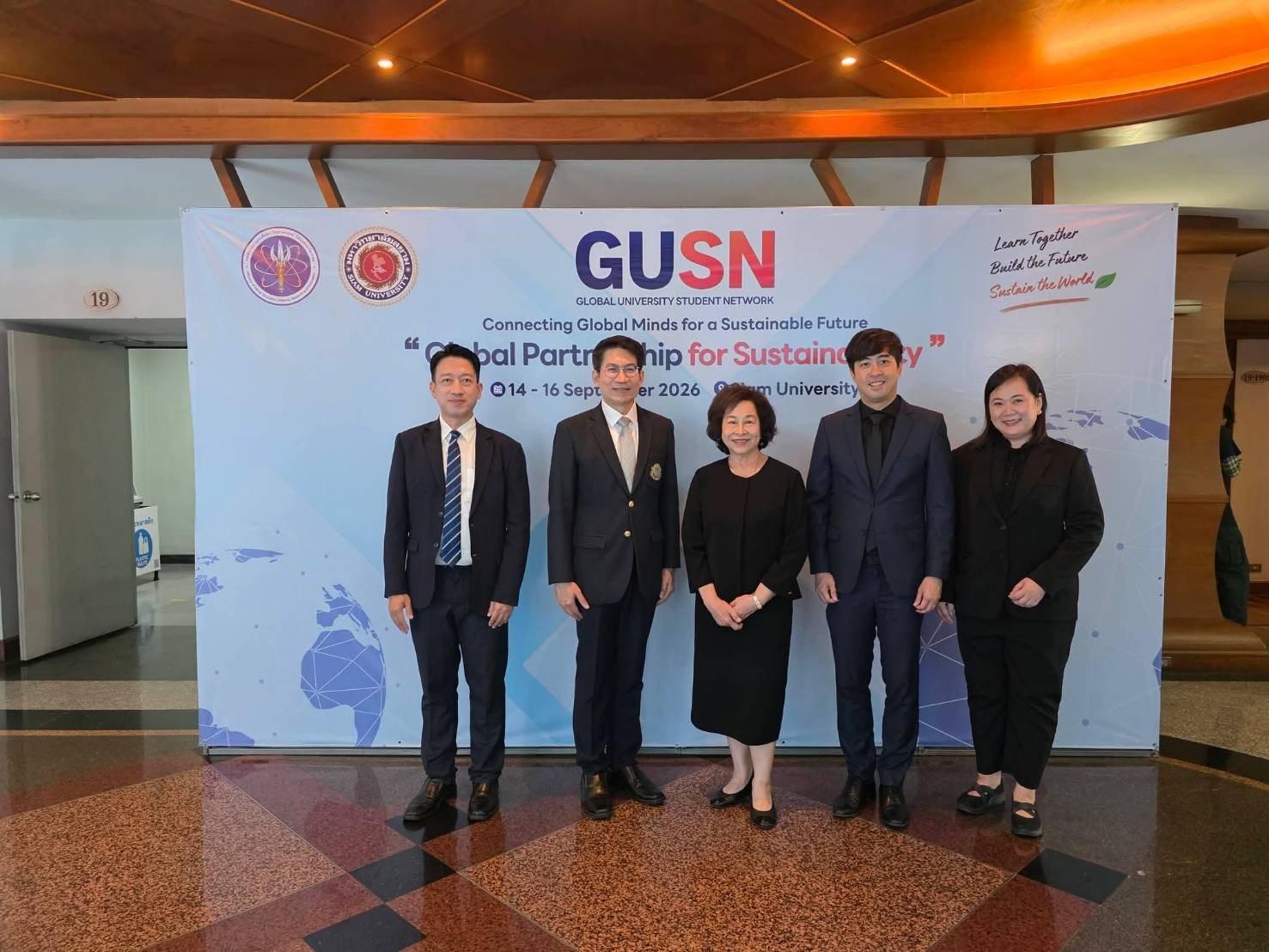
Siam University hosted the Global University Student Network (GUSN) 2026 from 14 to 16 September 2026 under the theme “Global Partnership for Sustainability.” The programme aimed to build a network of Thai and international students through cross-cultural learning, community field visits and the exchange of ideas on the Sustainable Development Goals. This year’s programme attracted wide participation. It brought together 60 students of 11 nationalities: Cambodian, Chinese, Indian, Korean, Lao, Myanmar, Nepalese, Russian, Swedish, Thai and American. They came from 13 higher education institutions, including the host: Chulalongkorn University, Kasetsart University, Thammasat University, Mahasarakham University, Naresuan University, Burapha University, Rangsit University, Bangkok University, Dhurakij Pundit University, Kasem Bundit University, Southeast Bangkok University, King Mongkut’s University of Technology Thonburi and Siam University. The programme reflects Siam University’s role as an international learning hub, giving students opportunities to cross linguistic and cultural boundaries, learn from diversity, and grow into socially responsible global citizens who can work together for a sustainable world.
CoNGO Regional Committee in Asia-Pacific Meeting
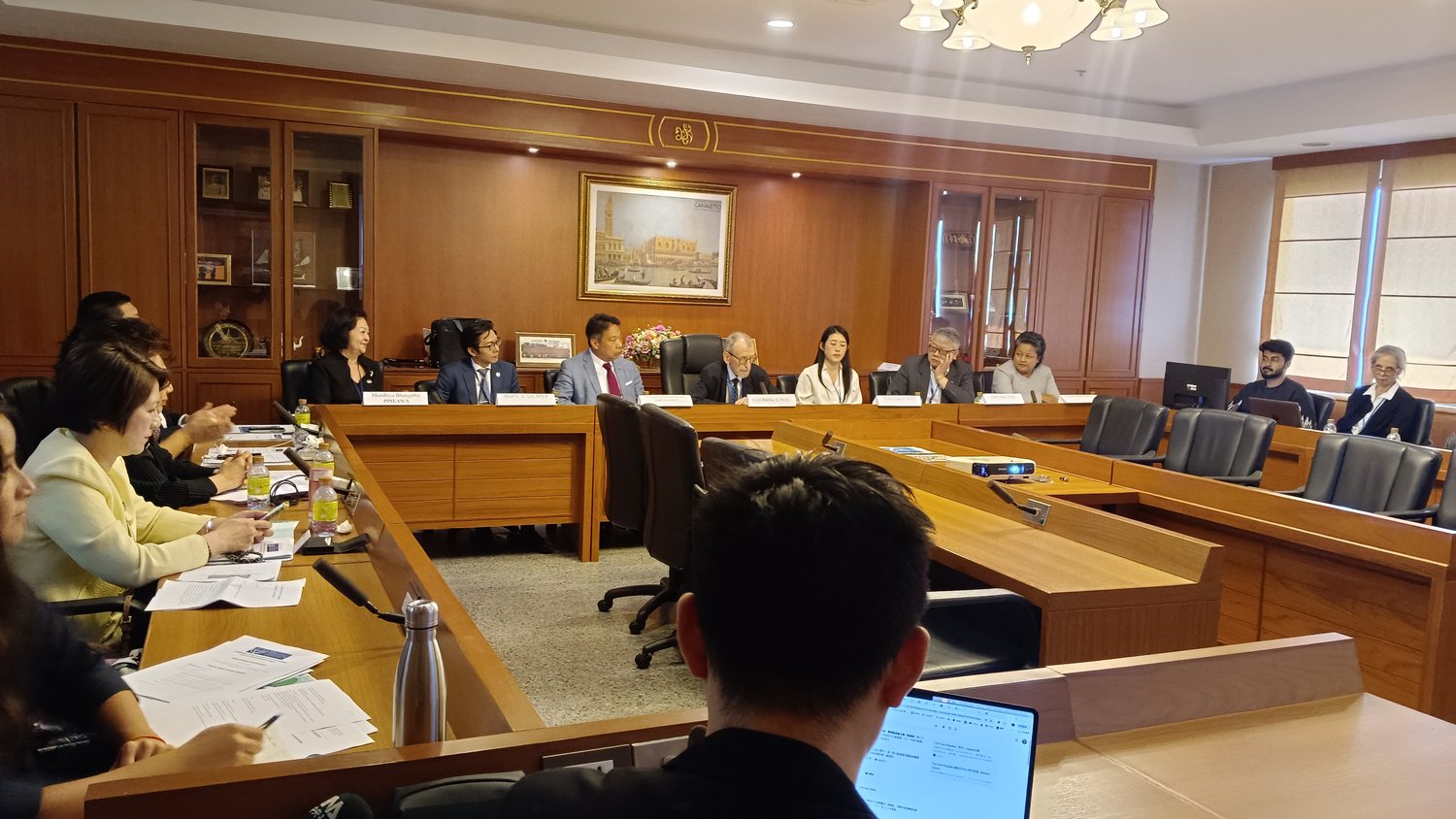
Siam University has been working closely with the Conference of Non-Governmental Organizations in Consultative Relationship with the United Nations (CoNGO), which is an active orgamization involving NGOs in preparing their Voluntary National Reviews (VNRs) at the 2026 HLPF, for many years. This year, the Regional Committee in Asia-Pacific (RCAP) of CoNGO met on 22–23 April 2026 at Siam University under the theme “Transformative, Equitable, Innovative and Coordinated Actions for the Implementation of the 2030 Agenda for a Sustainable Future for All.” The meeting opened with a message from Peter Preziosi, President of CoNGO, followed by an open international panel on the same theme. Discussions focused on the implementation of five Sustainable Development Goals: sustainable water and sanitation management (SDG 6), affordable and sustainable energy (SDG 7), innovation for resilient, inclusive and sustainable industrialisation (SDG 9), inclusive, safe, resilient and sustainable settlements (SDG 11), and strengthening the global partnership for sustainable development (SDG 17). A plenary session then examined cross-cutting issues, mutual support and partnership-building, as well as civil society advocacy in relation to UN ESCAP, the High-Level Political Forum (HLPF), the wider UN system, and future UN summits and conferences.
MCO Research Committee: the Responsive and Responsible University Project
https://www.magna-charta.org/activities-and-projects
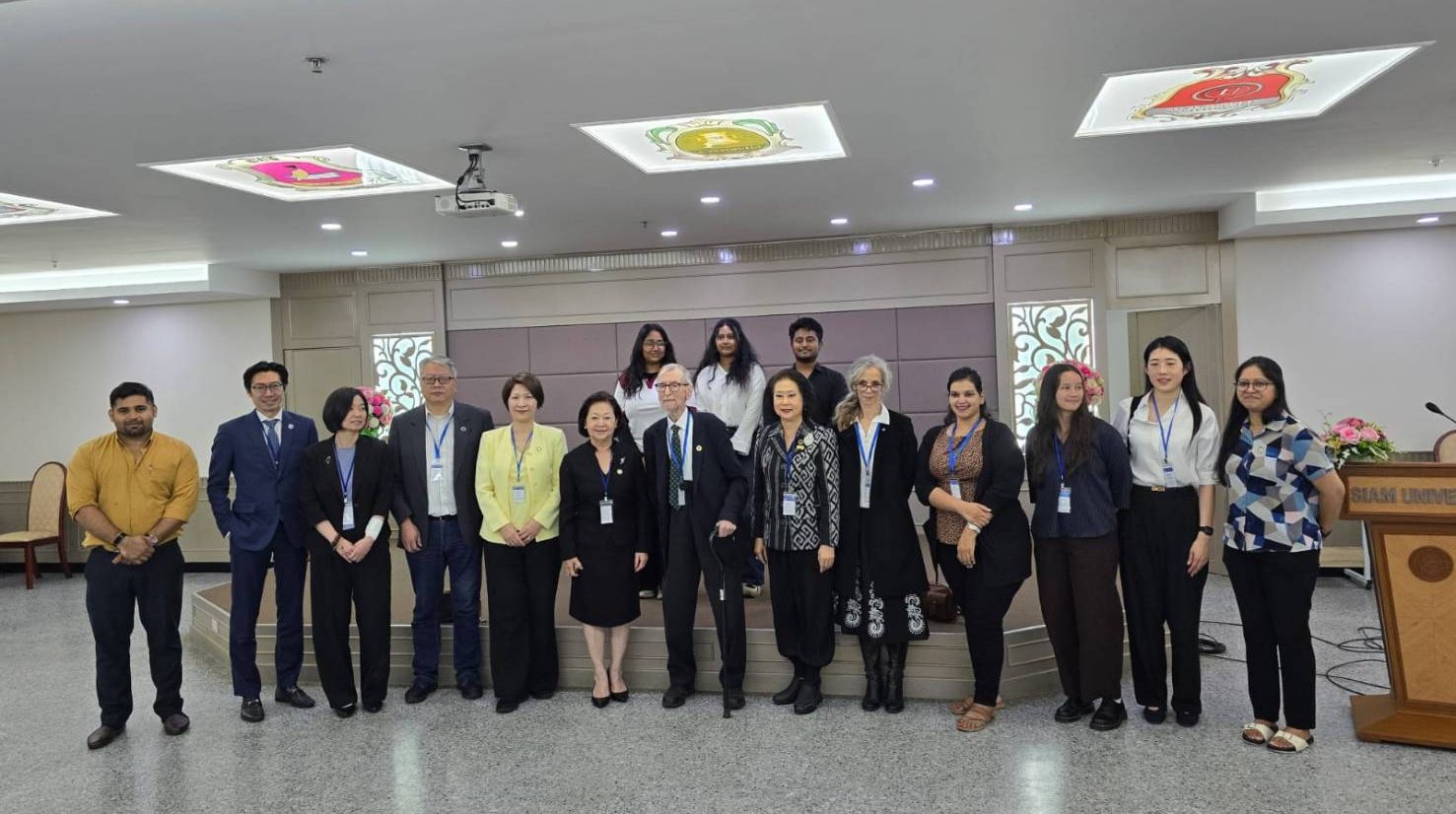
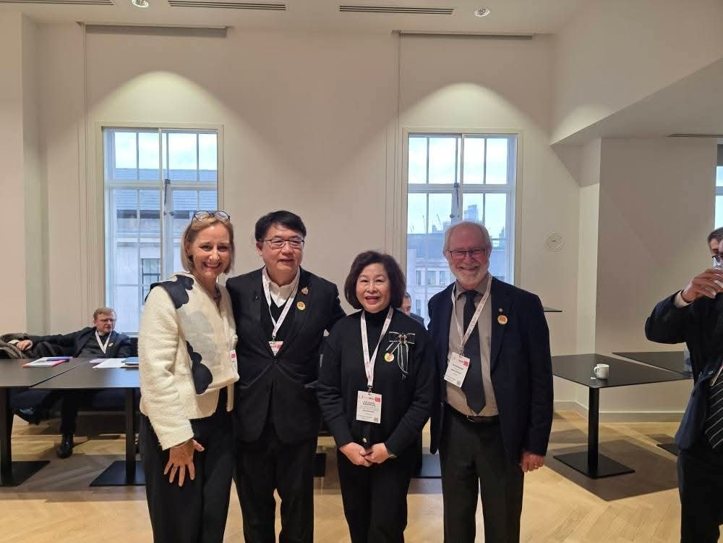
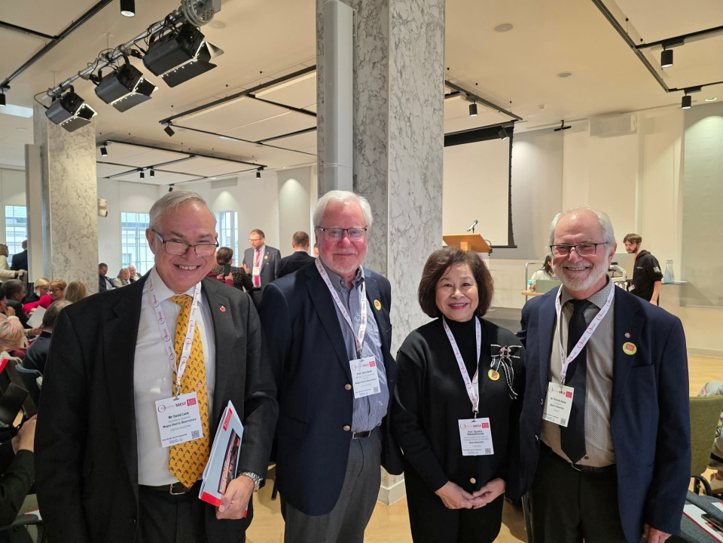
Siam University is the only Thai signatory of the Magna Charta Universitatum 2020, and Professor Chanita served on the working group that drafted it. The MCU 2020 explicitly pairs academic freedom with a strict responsibility to society. The charter’s signatories passed 1,000 at the Observatory’s anniversary conference at King’s College London on 11–13 November 2025. Professor Emerita Dr. Chanita Rukspollmuang Vice President of Siam University sits on the Research Committee of the Magna Charta Observatory, chaired by Professor Giga Zedania of Ilia State University, Georgia. The committee leads “The Responsive and Responsible University” project, which examines how universities fulfil their social responsibilities in line with the Magna Charta Universitatum 2020 or MCU 2020 which confirms that “Universities acknowledge that they have a responsibility to engage with and respond to the aspirations and challenges of the world and to the communities they serve, to benefit humanity and contribute to sustainability”. Signatory universities carry out reflective research on their own practice, and the findings will form a shared global resource on community engagement, ethical leadership and sustainability. The progress reports of the project were presented in the conference.

The UNESCO – IIEP Visitng Researcher
https://www.iiep.unesco.org/en/articles/how-tvet-can-prepare-learners-changing-world-work
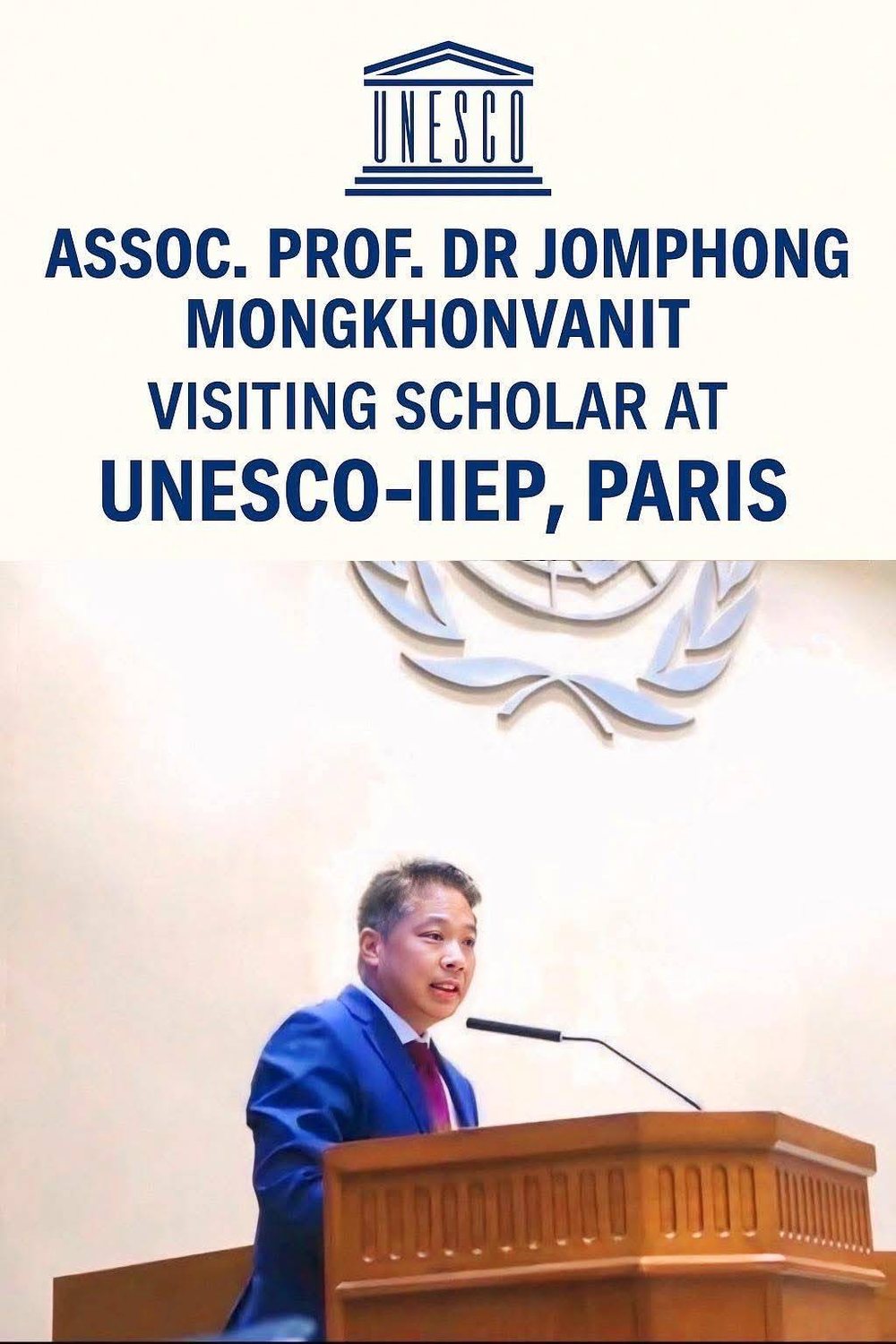
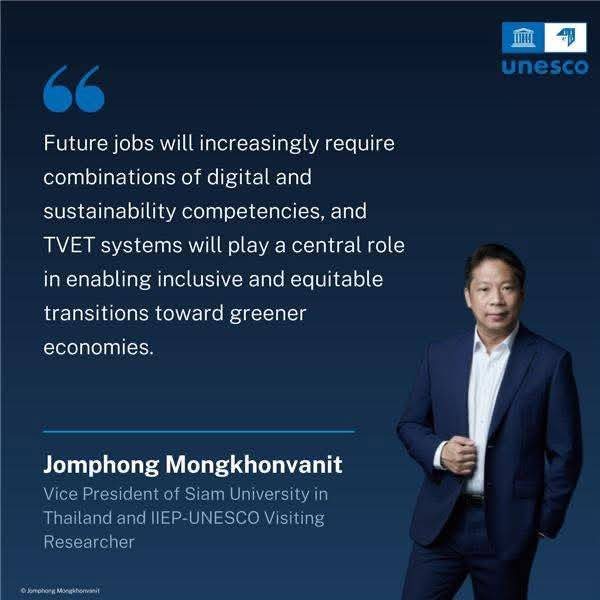
Associate Professor Dr. Jomphong Mongkhonvanit, Vice President of Siam University, was appointed a Visiting Researcher at the UNESCO International Institute for Educational Planning (IIEP-UNESCO) in Paris in October 2025. His research examined the integration of digital and foundational skills into higher education. It also examined how Thailand’s technical and vocational education and training (TVET) system can be developed to meet the needs of a changing labour market. He argued that the green and digital transitions must be addressed together to build flexible, future-ready models of skills development.
The research produced several outputs. The principal one was a 2026 IIEP policy paper, Strengthening Foundational Skills in Thailand’s TVET System: From Policy Intent to Delivery Capacity. Dr. Jomphong also contributed an interview to the Institute’s work on how TVET can prepare learners for a changing world of work. In addition, he carried out comparative research aligning Thai TVET with international standards and UNESCO guidelines, which IIEP disseminated as guidance for other developing countries.
During his stay, Dr. Jomphong met with IAU Secretary General Hilligje van’t Land and Senior Programme Officer Isabel T. at the International Association of Universities (IAU) in Paris. They discussed sustainable futures, learning transitions, digital transformation, and sustainable development. At IIEP, he also represented ASEAN perspectives on educational management. In Thailand, he is applying UNESCO frameworks for educational planning and the SDGs to Siam University’s strategic planning. He is also presenting his findings to Thai policymakers to support curriculum reform.
National Collaboration
Sustainable University Network of Thailand (SUN Thailand)
https://sunthailand.net/Images/Activities/E-Book-2025%20Best%20SUN.pdf
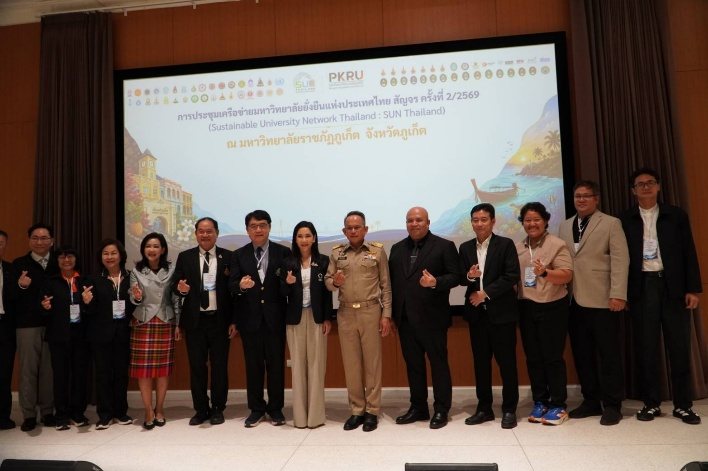
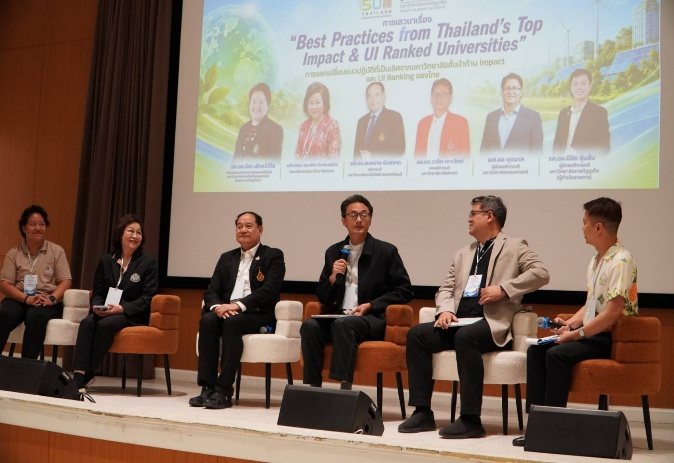
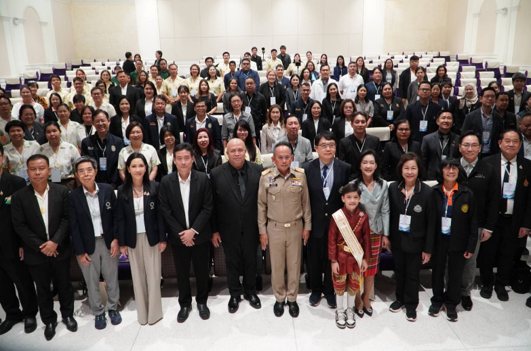
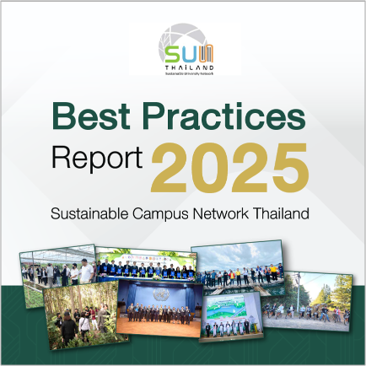
The Sustainable University Network of Thailand (SUN Thailand) is a network of Thai university administrators who share a commitment to advancing sustainability in higher education. It aims to promote sustainable development in Thai higher education institutions, to encourage the sharing of experience and mutual learning, and to build partnerships that make the education sector a model of sustainability for the rest of Thai society. The network was founded on 16 December 2015, when 16 universities signed a memorandum of understanding at Mahidol University. Siam University became the first private university to join in 2016. As of August 2026, SUN Thailand has 66 members from every type of higher education institution, including public, private, Rajabhat and Rajamangala universities of technology, and is affiliated with the Council of University Presidents of Thailand. Under the leadership of its current President, Dr. Pornchai Mongkhonvanit, the network has set up seven knowledge-sharing clusters: education, research and innovation (including education for sustainable development); campus management and green infrastructure; waste and the circular economy; climate change and carbon neutrality; biodiversity; living labs; and good governance and behavioural change for sustainability. The network’s Best Practices Report 2025, published in print and as an e-book in Thai and English, presents 41 best practices from its members. They cover engagement, culture and behaviour (11), campus management (9), teaching, learning and research (7), campus as a living lab (5), biodiversity (4), climate (3) and governance (2).
Developing the Thai Carnegie Community Engagement Classification
Engagement Thailand (EnT), the Association for University Social Engagement Thailand, is a network of Thai higher education institutions led by its President, Prof. Dr. Narin Jiransuthikul. The association works to advance university engagement for the sustainable development of communities and society and is a leder in introducing the Carnegie Community Engagement Classification. The Classification is an internationally recognized U.S. framework for assessing and certifying higher education institutions that excel in community engagement. It evaluates whether engagement is systematic and embedded throughout the institution, and it is built on several core principles:
•
Partnership: Universities collaborate with communities and partner networks as equal partners.
•
Reciprocity: All parties share in the benefits of the collaboration.
•
Epistemic inclusion: Community knowledge is recognized and used alongside academic knowledge.
•
Sustainability: Universities move from short-term projects that help communities toward long-term, sustained engagement that links universities, communities, and partners in shared work for society.
•
Impact: The real and ongoing effects on both communities and universities are measured.
Thailand is expected to become the first ASEAN country to adopt a “Thai Carnegie” classification, one adapted to the national context while remaining comparable internationally. Engagement Thailand (EnT) thus organized a series of workshops to adapt the classification’s criteria to the Thai context. At present, through an international partnership, the “Thai Carnegie Community Engagement Classification” was translated and Siam University was invited to be a leading member in adopting the Classification.
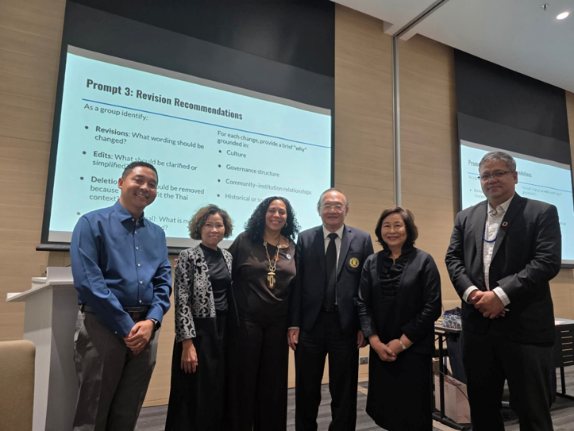
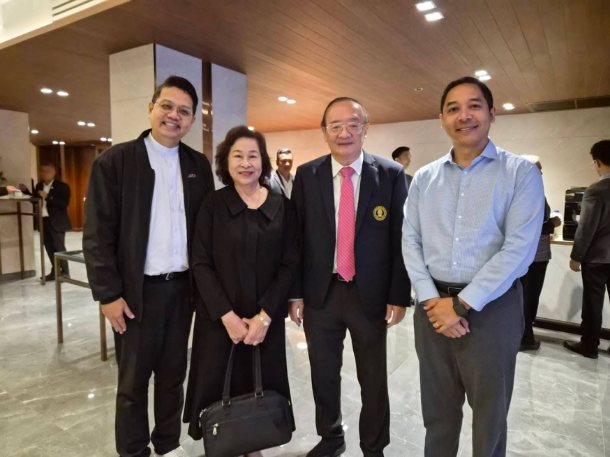
The first meeting took place on 13 January 2026. Siam University was represented by Prof. Dr. Chanita Rukspollmuang, Asst. Prof. Dr. Jaratdao Suwan, and Dr. Worapoom Saengkaew. EnT invited Dr. Marisol Morales, Assistant Vice President at the American Council on Education and executive director of the classification, to explain the framework and gather input from Thai participants.Later on 4–5 September 2026, Prof. Dr. Chanita Rukspollmuang and Dr. Worapoom Saengkaew represented the University at a second workshop, organized by EnT in collaboration with the Ministry of Higher Education, Science, Research and Innovation (MHESI). A further meeting will be held in Amphawa on 19–20 November 2026 to finalize the adapted criteria.
Key Takeaways from the Workshops
•
From “for” to “with”: Universities should work with communities rather than for them, through shared thinking, action, learning, and benefit.
•
An asset-based perspective: Communities should be understood through their strengths rather than their deficits. They hold a great deal of knowledge that often goes unrecognized.
•
Engagement as a mindset: Community engagement should be integrated into teaching and research rather than treated as a separate activity.
•
Measuring real impact: Evaluation should focus on actual outcomes for communities, not on the number of projects or satisfaction scores.
•
A framework for improvement: The classification’s main value lies in the process, which helps institutions identify their own strengths and gaps.
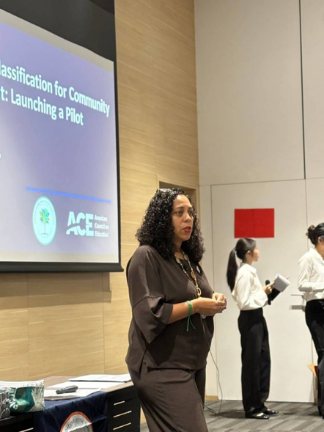
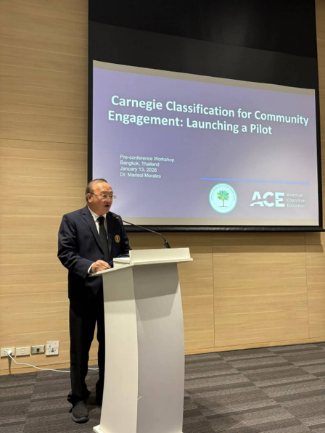
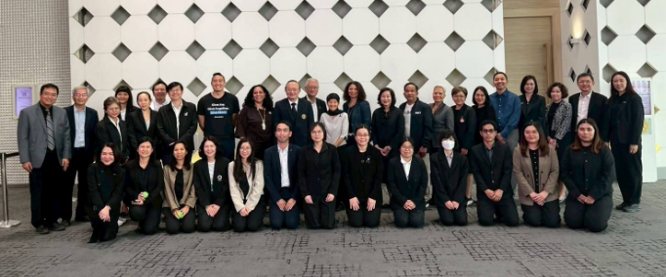
First workshop on 13 January 2026 at Chulalongorn University
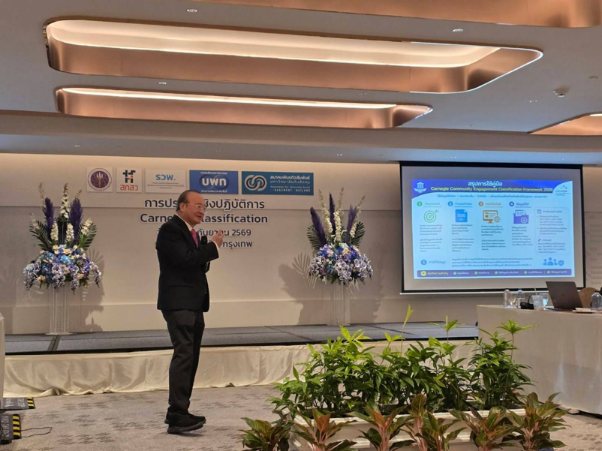
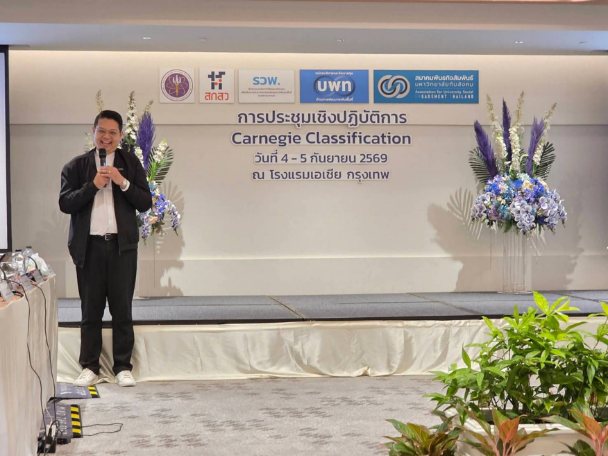
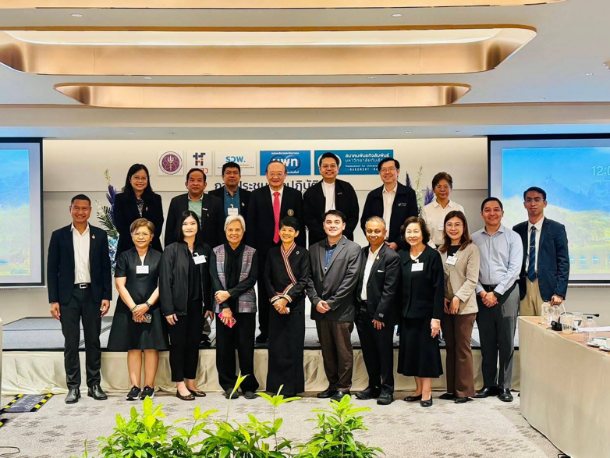
Second workshop on 4–5 September 2026 at Asia Hotel, Bangkok
Local Collaboration
Phasi Charoen District Development Participation Committee
Civil society engagement and area development in Phasi Charoen District are carried out in partnership with Siam University through two main mechanisms: the Phasi Charoen District Development Participation Committee and the Siam University Research Centre for Community Development. Dr. Pornchai Mongkhonvanit, President of Siam University, chairs the District Development Participation Committee for Phasi Charoen. The committee brings together the Phasi Charoen District Office, Siam University and local civil society to implement Bangkok Metropolitan Administration policy and to develop communities at the grassroots level. Its work is organised into area-based working groups, covering areas such as environmental management and green space expansion, and organic waste management in model communities. The second mechanism, the Healthy Space initiative, is led by the Research Centre for Community Development together with the district office and the Thai Health Promotion Foundation (ThaiHealth), with the aim of making Phasi Charoen a pilot healthy district. Seven working groups lead this effort. They are responsible for integrating agencies’ strategic plans, managing community information and public relations, expanding green space, adding cycle lanes and walkways, redesigning public spaces for safety, making the district a zero-waste healthy space, and establishing a central market for safe fruit and vegetables. Current flagship projects include the Phasi Charoen Time Bank, developed with partner networks and the steering committee for the all-ages time bank as a social innovation to support a sustainable ageing society. The partners are also building a data-driven digital database to support the care of older people and other vulnerable groups, piloted in the Phun Bamphen and Sirin and Friends communities.
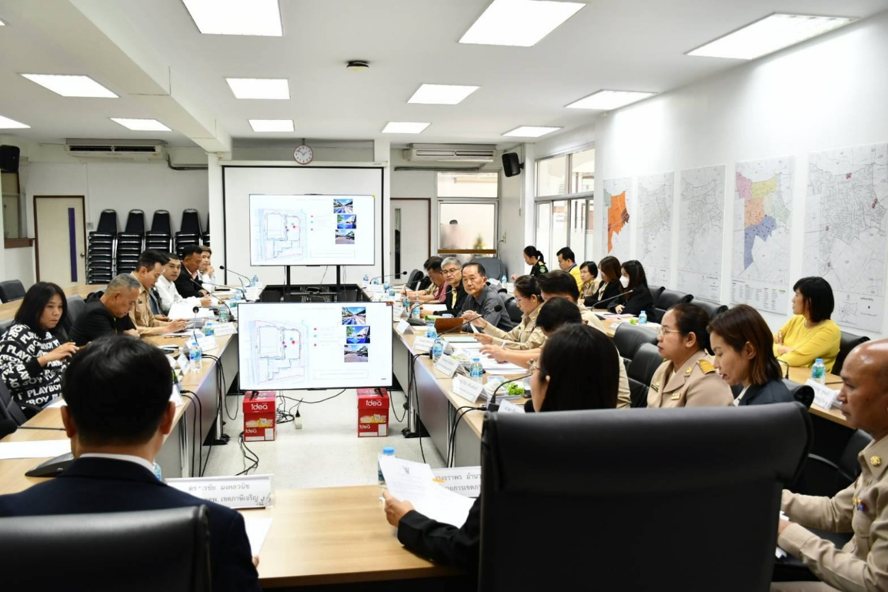
Siam University and ThaiHealth Draw Lessons to Improve Older People’s Quality of Life
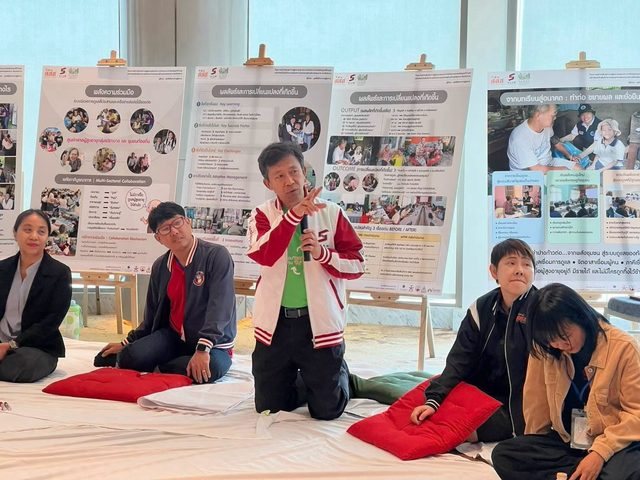
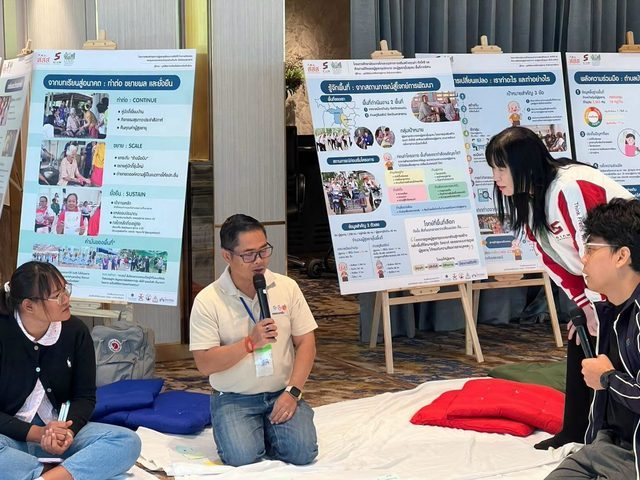
On 8–9 September 2026, the Siam University Research Centre for Community Development, with the Bureau of Specific Population Health Promotion of the Thai Health Promotion Foundation (ThaiHealth) and partner networks, held a learning forum at the Aswin Grand Convention Hotel in Bangkok. The forum was part of a project synthesising lessons to advance area-based quality-of-life development for older people. Representatives of five projects in nine areas across six provinces (Pathum Thani, Ubon Ratchathani, Lampang, Lopburi, Khon Kaen and Maha Sarakham) presented their work and shared field experience. Discussions covered local contexts and community assets, grassroots social innovations in elderly care, strengths worth sustaining, and recommendations from experts. Participants also used SWOT analysis and the TOWS matrix to turn their findings into clear strategies for the next phase of work. The forum connected people, areas, knowledge and networks to help communities care for one another. Through its Research Centre, Siam University remains committed to coordinating collaboration among communities, government, the health sector and partner networks, so that practical knowledge can improve quality of life for people of all ages
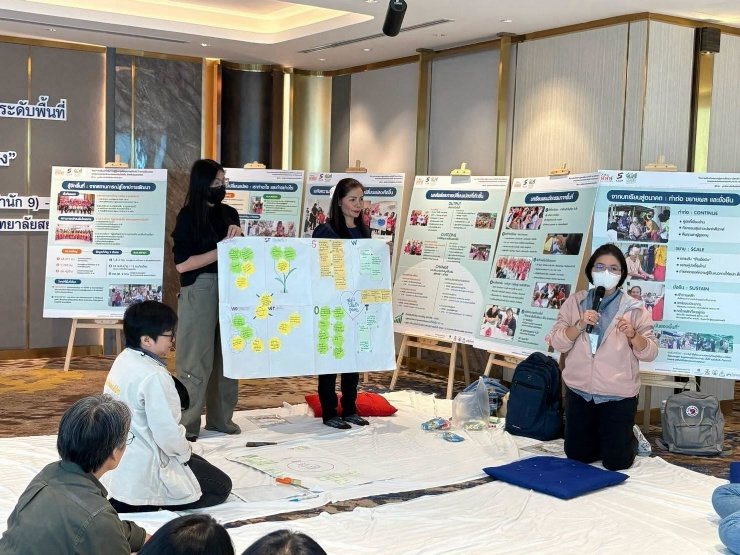
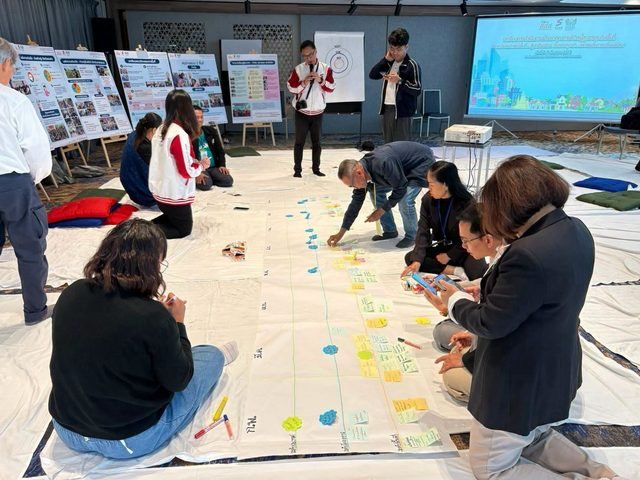
International Collaboration Data Gathering for SDG
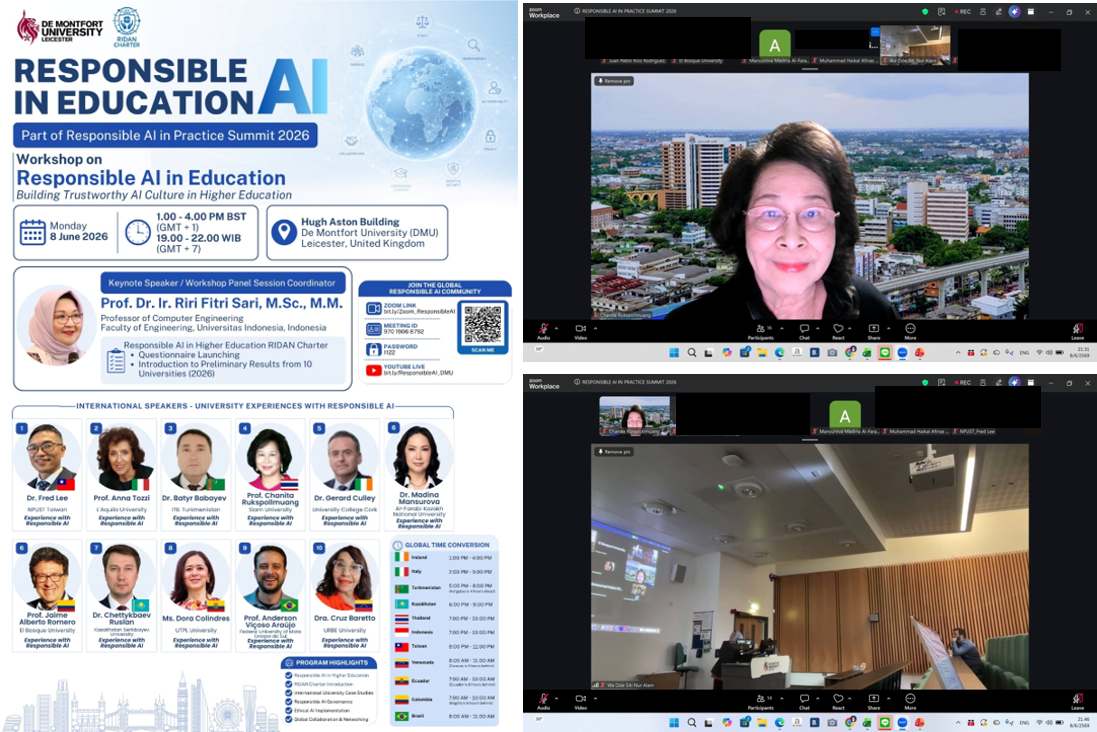
Siam University Contributes to the RIDAN Charter Responsible AI Manifesto
The RIDAN Charter Manifesto, officially known as the Ridan Charter Responsible AI Manifesto, is an international educational and ethical resolution formulated at the Responsible AI in Practice Summit 2026 hosted at De Montfort University in Leicester, United Kingdom. It grew out of academic workshops on responsible AI in higher education, including “Responsible AI in Education: Building Trustworthy AI Culture in Higher Education,” chaired by Professor Riri Fitri Sari of Universitas Indonesia. The workshop turned academic discussion into a public manifesto and set out eight indicators that universities can use to measure, govern and audit their AI maturity. The manifesto calls on scientists, university and industry leaders, governments and the public to recognise that generative AI and AI agents in education may threaten the distinct role of human intelligence. It urges that AI be governed ethically and fairly, with transparency, accountability, privacy, security and safety, and through continuous learning and collaboration, so that the relationship between humans and AI remains balanced and protects human dignity. Professor Chanita Rukspollmuang, Vice President of Siam University was a key contributor. She led data collection for the project, particularly on Siam University’s operations which was reported on Jume 8, 2026,, and co-signed the resolution, bringing Southeast Asian higher education perspectives on ethical AI training, university curricula and responsible procurement to the charter.