Leading University Creating Innovation for Sustainable Future

Goal 12: Ensure sustainable consumption and production patterns
The Green University Project
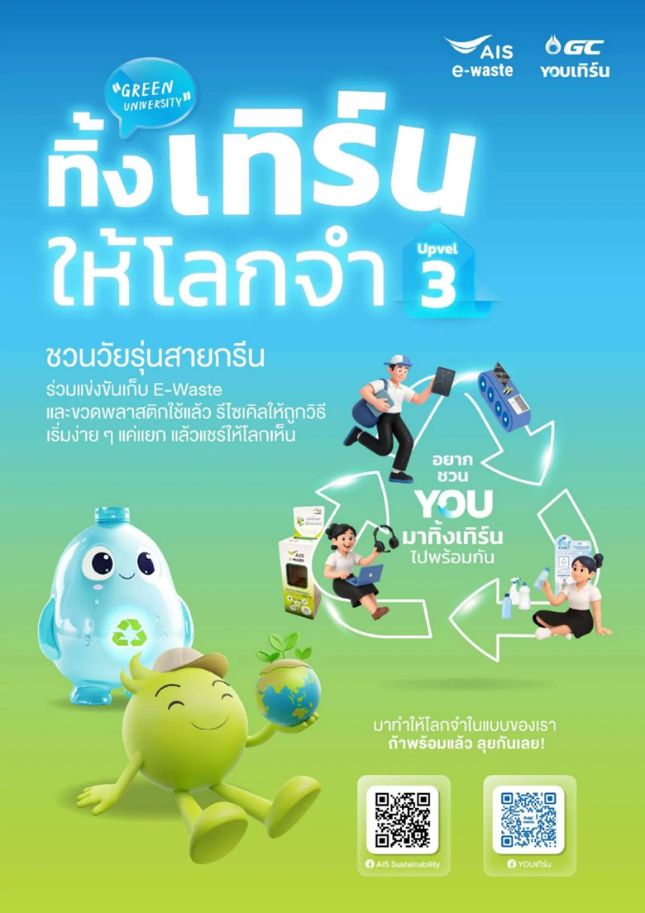
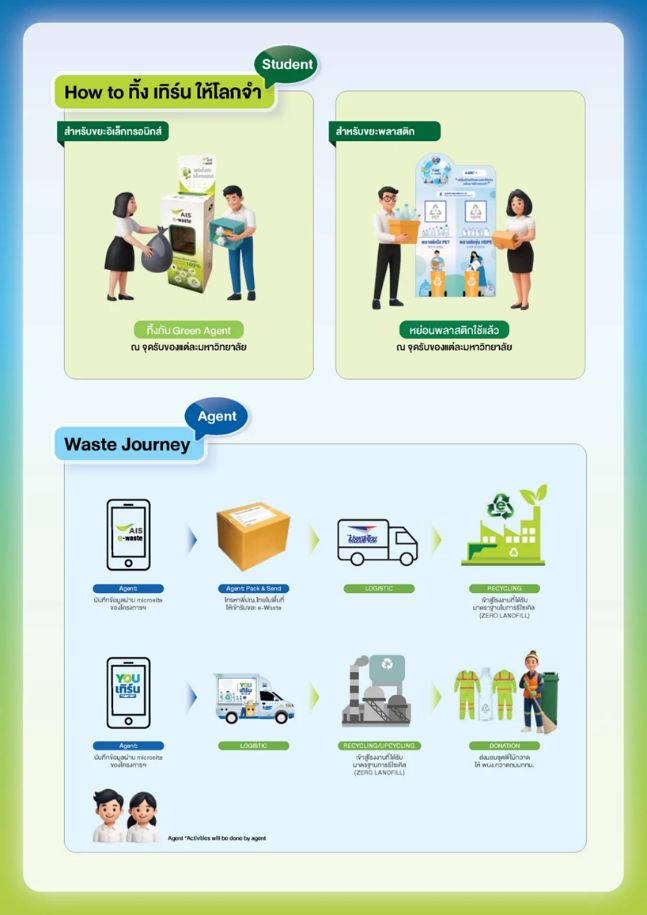
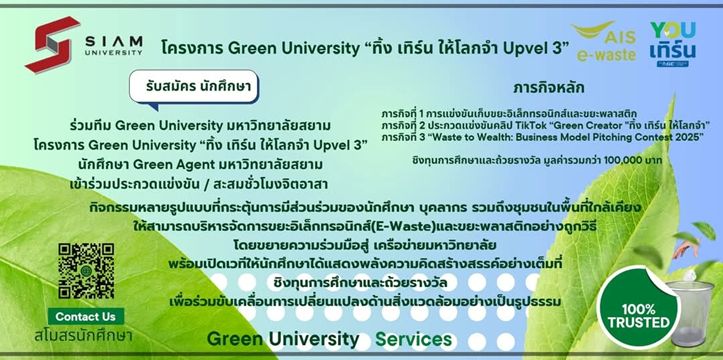
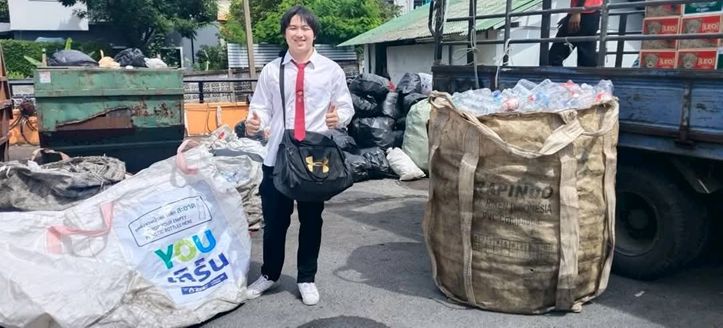
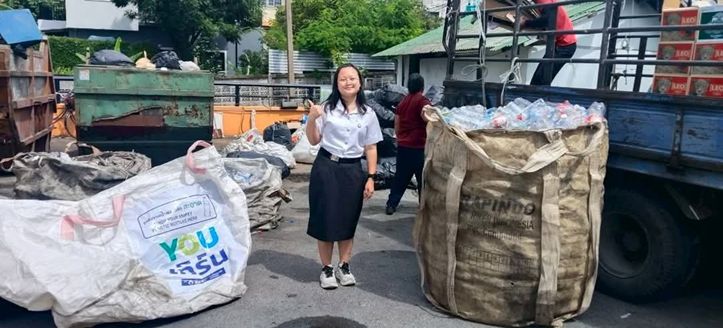
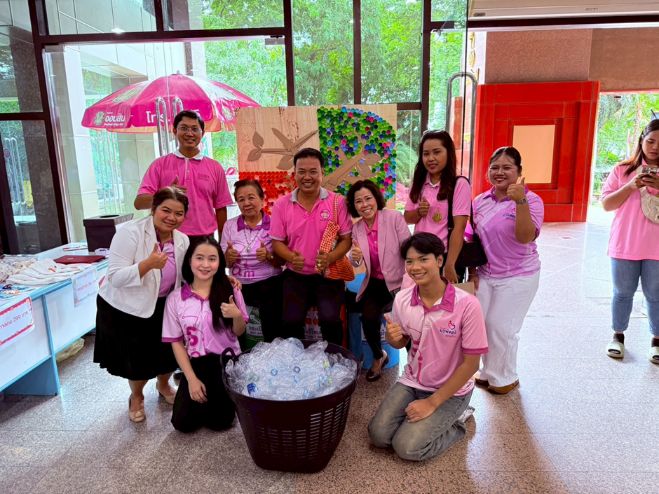
Siam University participated in the Green University Project: “Think-Turn to Make a Mark on the World – Upvel 3.” Launched by PTT Global Chemical Public Company Limited (GC) in collaboration with Advanced Info Service Public Company Limited (AIS). The last two years of the project have demonstrated that the circular economy concept can be effectively implemented in daily life, resulting in the diversion of over one million pieces of plastic and electronic waste from landfills. This sustainability initiative aims to raise awareness about the growing waste problem and its impact on ecosystems and the environment. It does so by fostering a network of green universities through various interactive activities that encourage participation from students, faculty members, and surrounding communities in properly managing electronic (E-waste) and plastic waste. The “Green University: Think-Turn to Make a Mark on the World – Upvel 3” project has expanded its collaboration to include 50 universities nationwide, including Siam University. Students will share a platform to showcase their creativity by “Upvelling” their ideas—transforming waste into value—and collectively building a better world, starting within their own campuses.
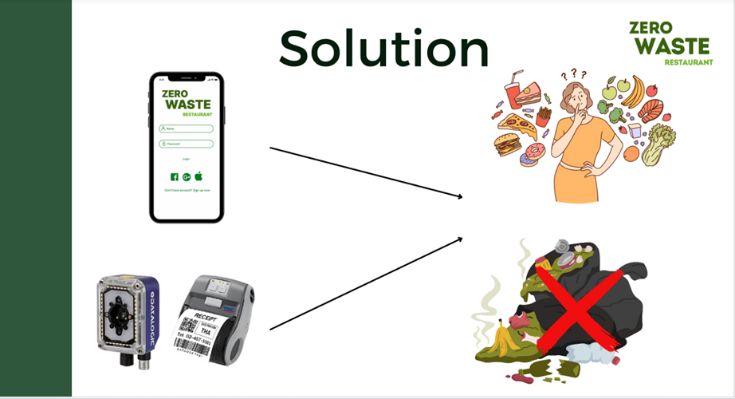
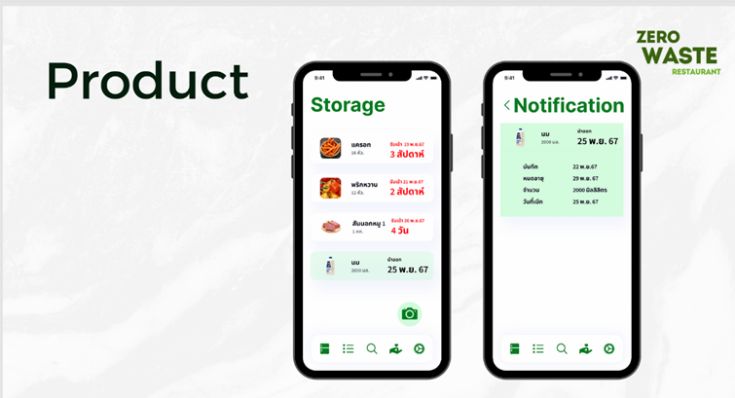
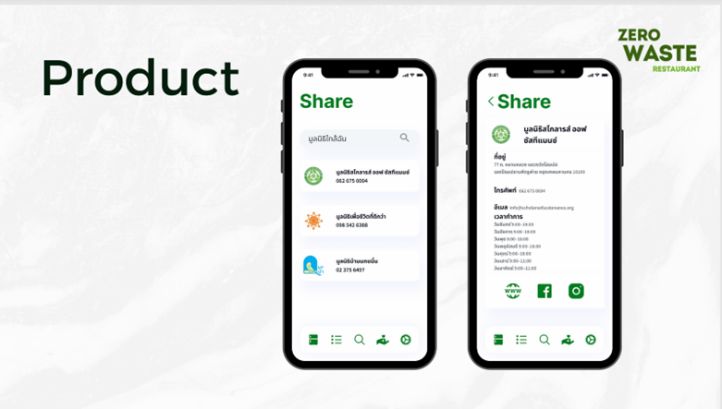
The Green Dish: Zero Waste Restaurant Project
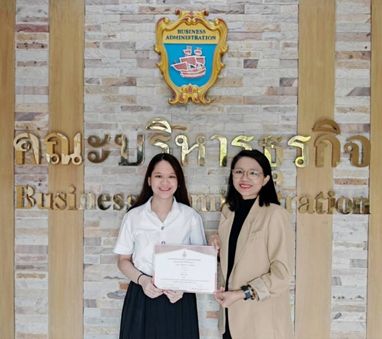
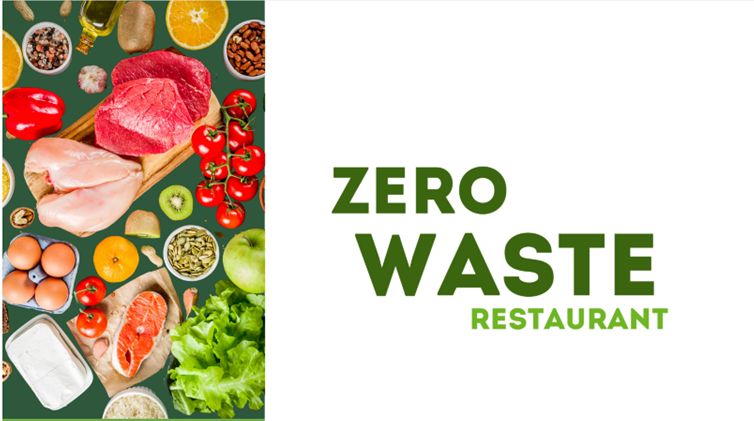
The Green Dish Project was initiated by the students from the Department of Management and Entrepreneurship, Faculty of Business Administration, in response to growing awareness of the global waste crisis, particularly the substantial amount of food waste generated by restaurants and fast-food chains. To address this issue, the team developed the Zero Restaurant Application, designed to help restaurants manage food orders in precise quantities each day. In cases where surplus food still remains, the application also provides a feature that connects restaurants with organizations that accept food donations—ensuring that surplus is redistributed effectively. The goal is to achieve true Zero Waste in the food service industry by combining efficient resource management with social responsibility. The project not only secured First Runner-Up in the Siam Acceleration Pitching Day competition held at Siam University in late 2024, but in early 2025, it also won an award in the Business Model Competition at the Entrepreneurial Innovator Skills Exhibition, hosted during the Open House at Rajamangala University of Technology Rattanakosin.
Goal 13: Take urgent action to combat climate change and its impacts
Waste Management and Upcycling: From Waste to Wear
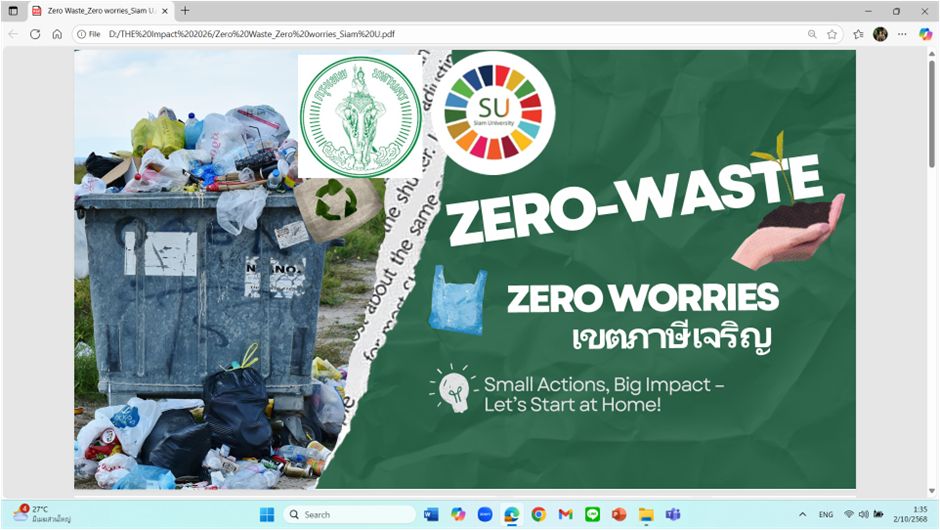
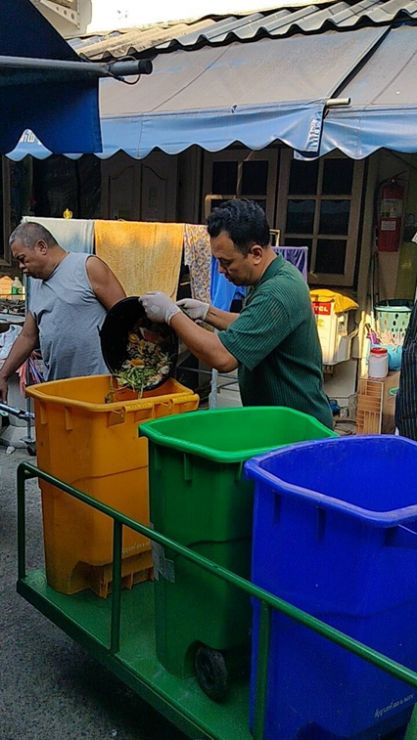
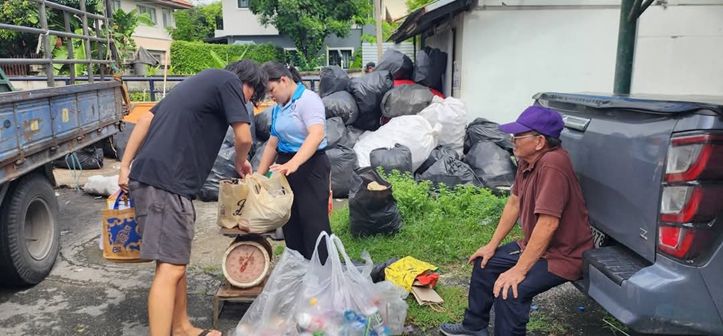
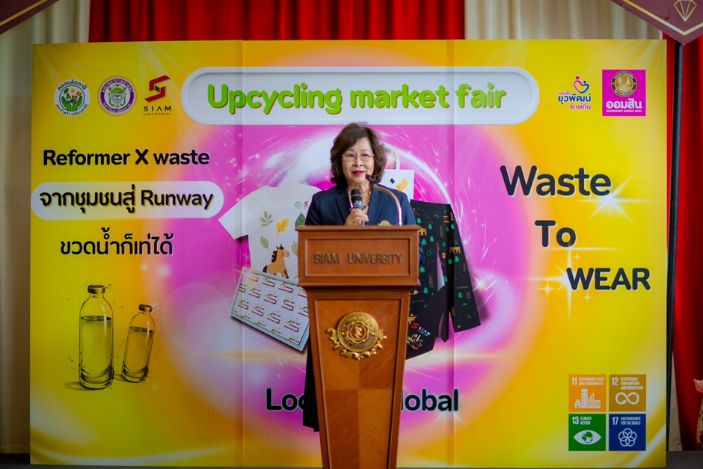
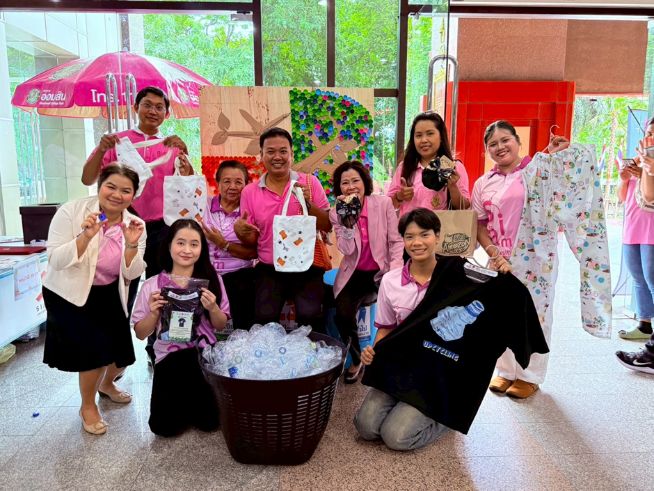
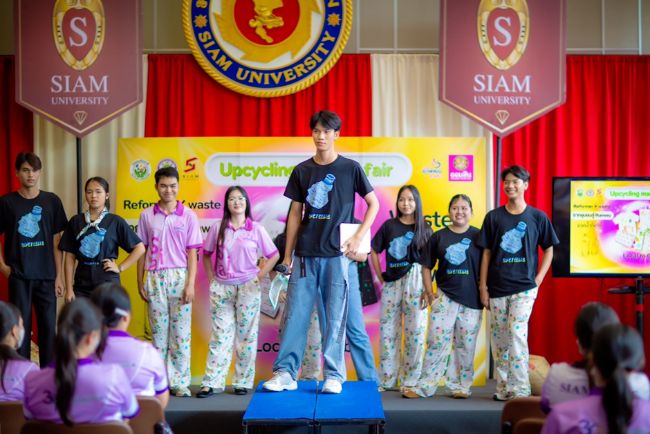
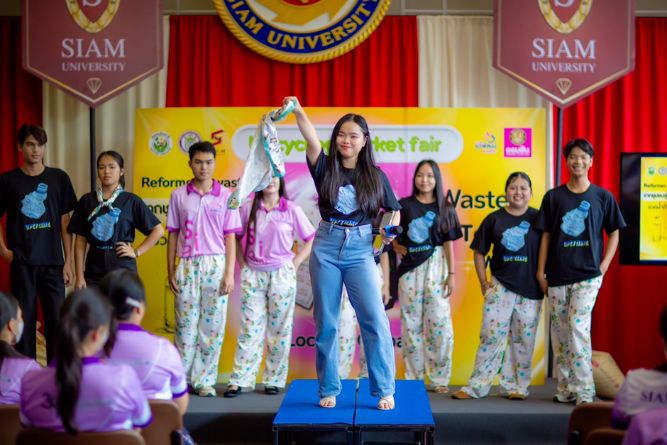
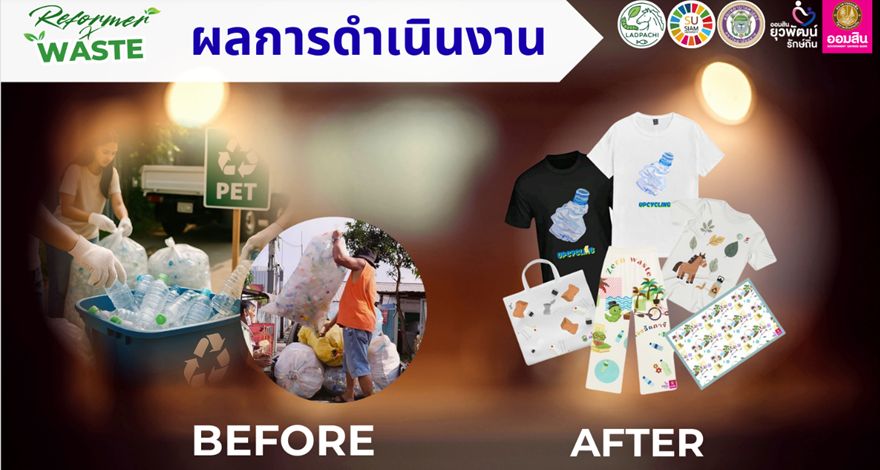
“Sustainable University, Sustainable District” policy encourages our students, staff, and faculty members to work in sustainability issues with surrounding communities, one of which is Khlong Lad Phachi. This small community has only 337 residents, but one of its pain points is the volume of waste. Overflowing trash bins and the stench of decaying waste have become daily challenges, with increasing amounts of garbage awaiting disposal by local authorities. Siam University has worked with the community with support from the Phasi Charoen District office and the Government Savings Bank for many years. Recently, we participated in the district “Zero Waste, Zero Worries” campaign focusing on comprehensive waste management strategies. One notable effort includes the separation of food scraps and organic waste, which are used to feed black soldier fly larvae, and further processed into protein-rich animal feed. However, one persistent issue remains: the growing accumulation of plastic water bottles (PET). This increase is primarily due to the rise in e-commerce and the widespread use of convenience stores, both of which contribute to significant packaging waste, including shipping boxes and sealing materials. These materials fall under what is commonly referred to as “orphan waste”—waste that no one is willing to purchase for recycling, as it is not economically viable. The volume of orphan waste continues to grow, adding to the community’s environmental burden.
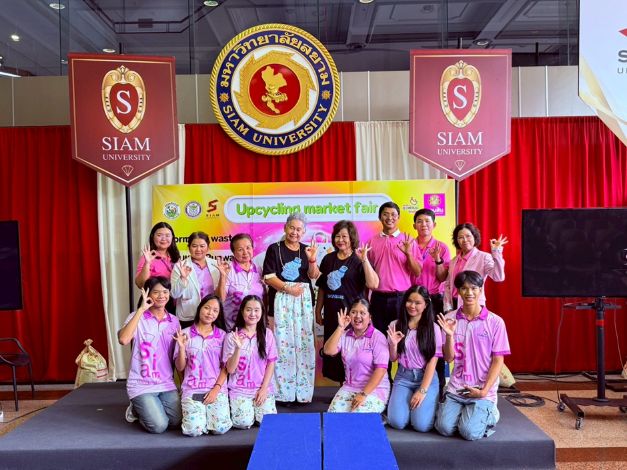
Faculty members and students from the Faculty of Nursing at Siam University conducted a needs assessment and discovered that local product groups were seeking solutions to this issue. They aimed to develop and design marketable products made from orphan waste. As a result, the student team “Reformer X Waste” proposed a project to upcycle waste, incorporating elements that reflect the identity of the Khlong Lad Phachi community. The project focuses on product design, brand creation, packaging, and labeling, to enable the community to build self-reliance through learning processes. By transforming waste into commercially viable products, the initiative also aims to generate sufficient income to meet household expenses and increase sales by 50%.
Smart Garbage Collecting Motorcycle
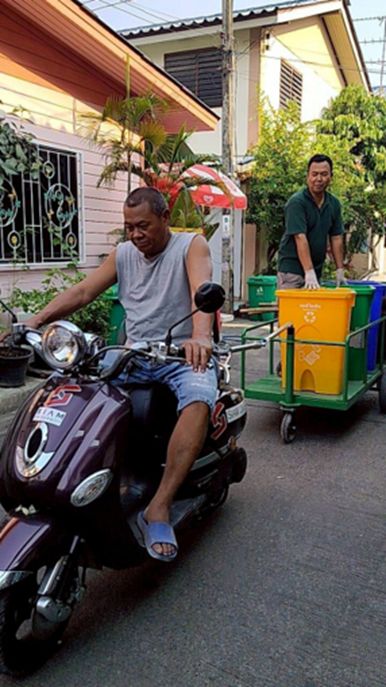
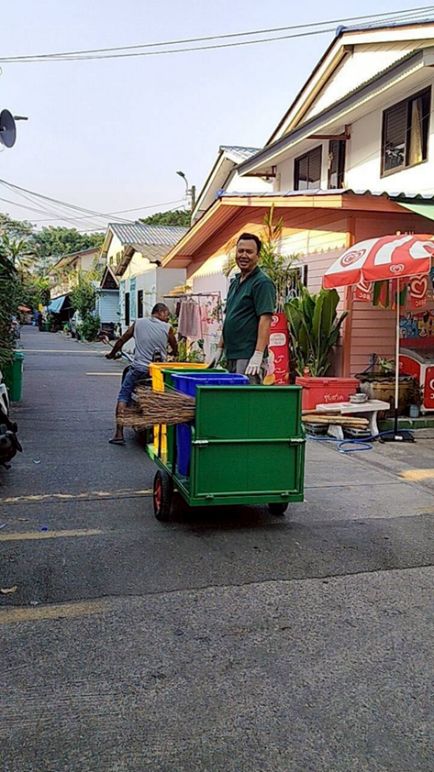
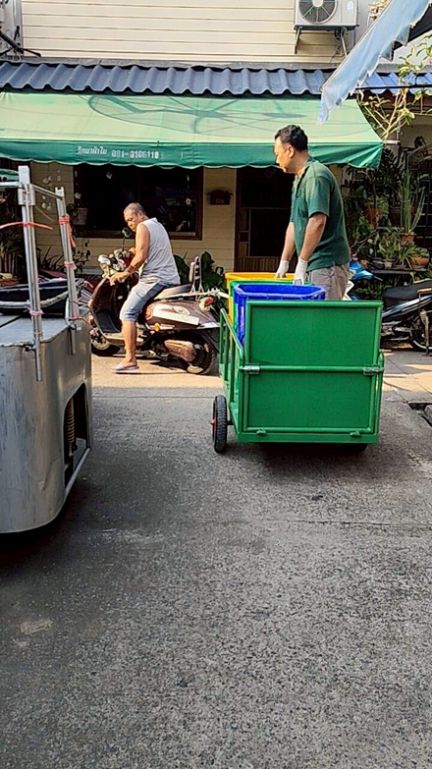
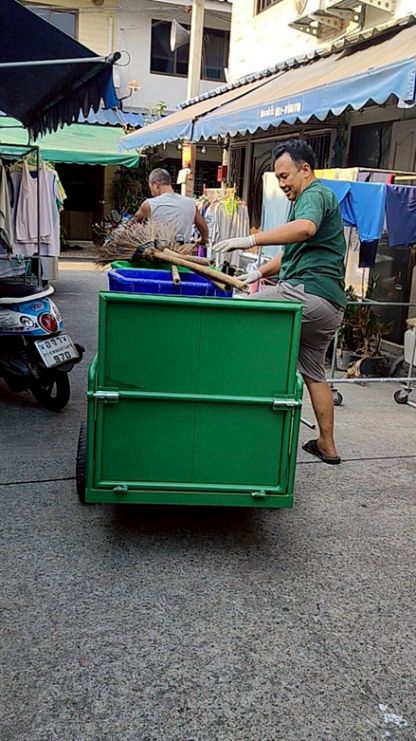
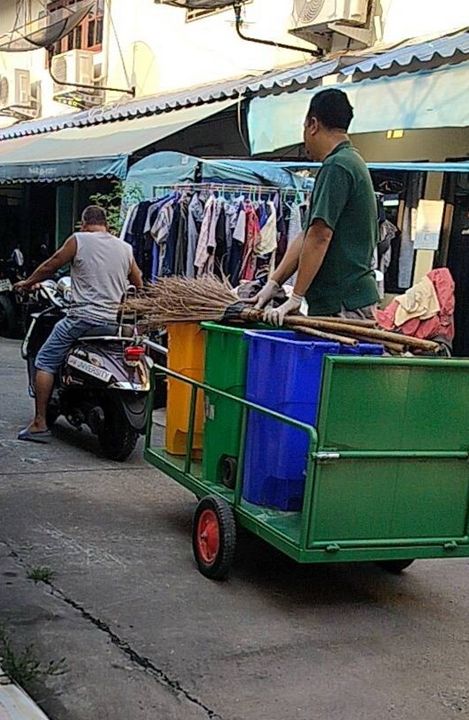
The Faculty of Engineering designed a smart, rechargeable electric garbage collection motorcycle to solve the problem of garbage collection in narrow alleys because of the size of the district garbage collectors. It aims to reduce the problem of garbage accumulation, leading to garbage pollution. A prototype of an electric motorcycle with a garbage trailer to transport both organic and inorganic waste in narrow alleys in community areas was designed and tested in Khlong Lad Phachi. The prototype was then improved and modified for better efficiency and a plan to install solar panels so that charging electric motorcycles will be possible.