Leading University Creating Innovation for Sustainable Future

University Rating System (HURS)
University : Siam University
Country : Thailand
Web Address : https://sustainability.siam.edu
SI 2.2 Implementation of Waste Management Systems
[2.2.7] Waste Tracking (Year: 2024)
|
1) Amount of recycled waste (metric ton) generated and recycled in 2024
2) Amount of organic waste (metric ton) generated and recycled in 2024
3) Amount of hazardous waste (metric ton) generated and recycled in 2024
|
||||||||||||||||||||||||||||||||||||||||||||||||
|---|---|---|---|---|---|---|---|---|---|---|---|---|---|---|---|---|---|---|---|---|---|---|---|---|---|---|---|---|---|---|---|---|---|---|---|---|---|---|---|---|---|---|---|---|---|---|---|---|
| Waste Tracking (Siam University, Thailand) |
| Flow chart of waste tracking and waste separation classified by trash bins |
Description:
The university has installed waste separation bins across the campus for recyclable, general, organic, and hazardous waste, and established a waste sorting and collection area at the back of the university. A systematic waste management program has been initiated, along with a policy to encourage staff participation through a waste management point accumulation system to promote continuous engagement. An IoT-based monitoring system has been implemented to measure and track the amount of separated waste, supporting efficient and data-driven campus waste management.
The monitoring process of waste collection and recycling rates, previously conducted manually by waste auditors through weighing and recording data via Google Form, is being upgraded in line with the Data-Centric Policy. The new system introduces an IoT-based incentive program that allows staff to earn points for proper waste management. Waste is weighed at IoT-connected collection points, where users scan a QR code to record data automatically. All data are transmitted to the Green Information Dashboard, enabling instant monitoring and analytics. An automated analysis system compiles reports for the responsible teams to support evaluation and process improvement.
Waste collection and recycling rates were tracked. Waste auditor monitored and measured each type of waste separated by using empirical technique, such as weighing and recording through google form and drive. All data is sent to responsible team in the campus.
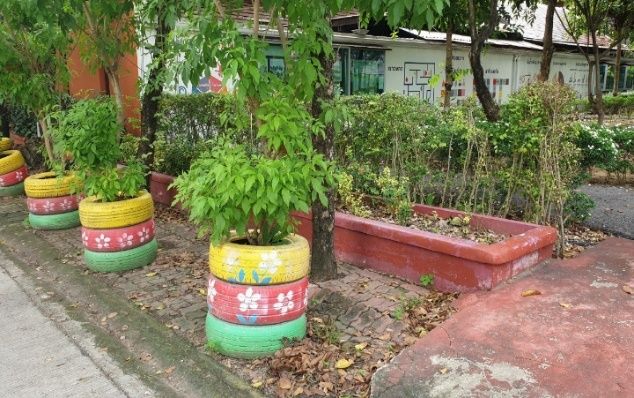
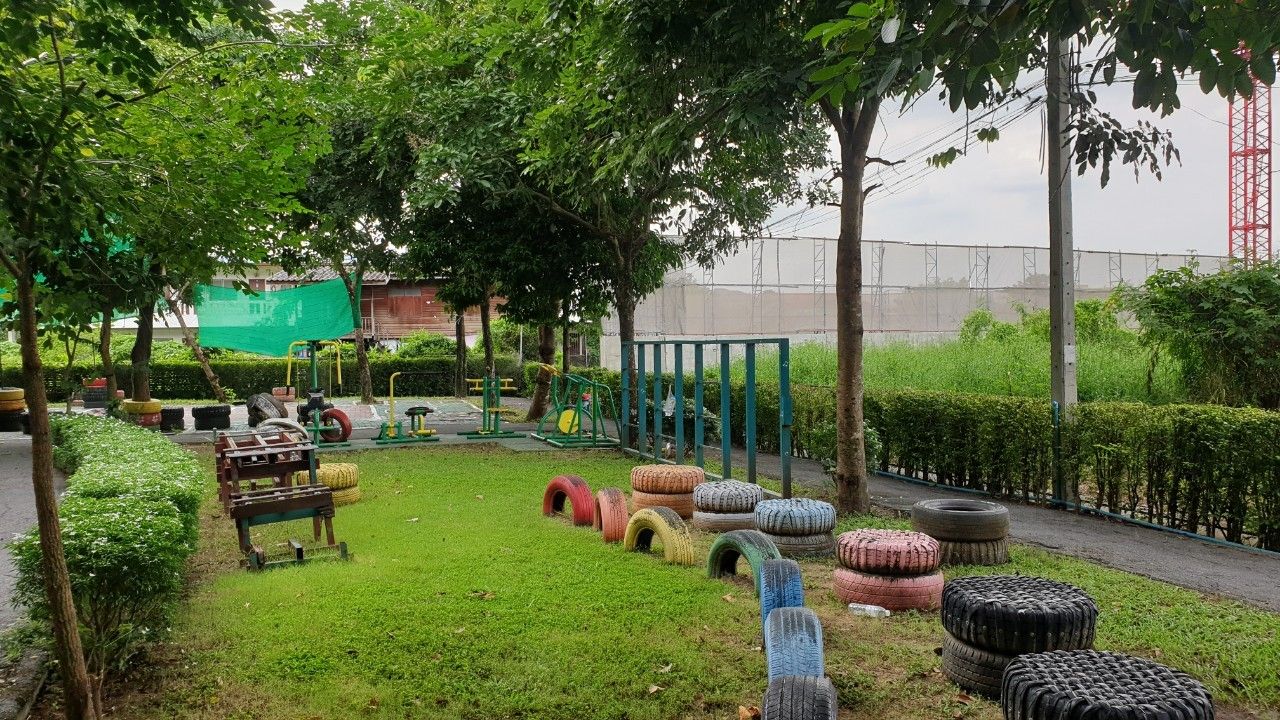
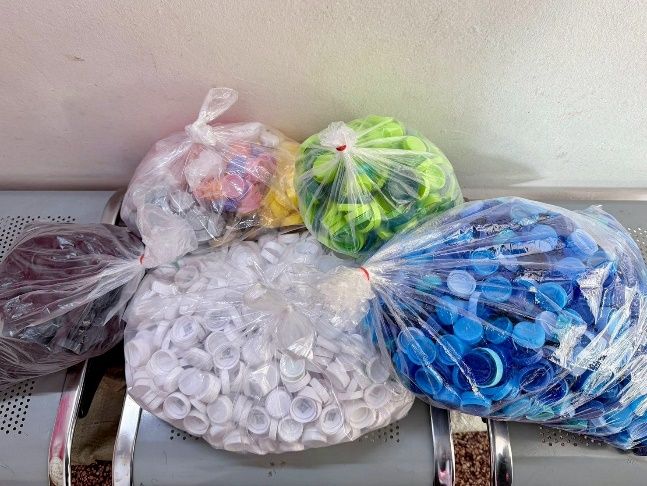
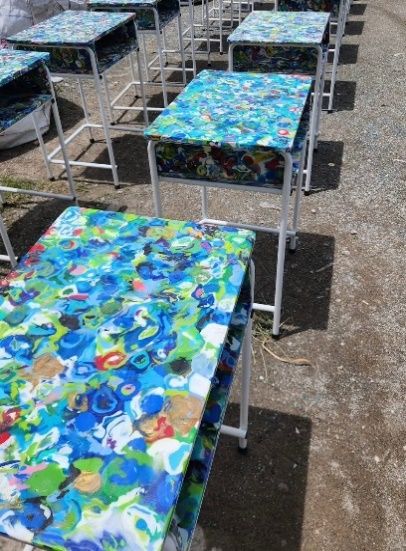
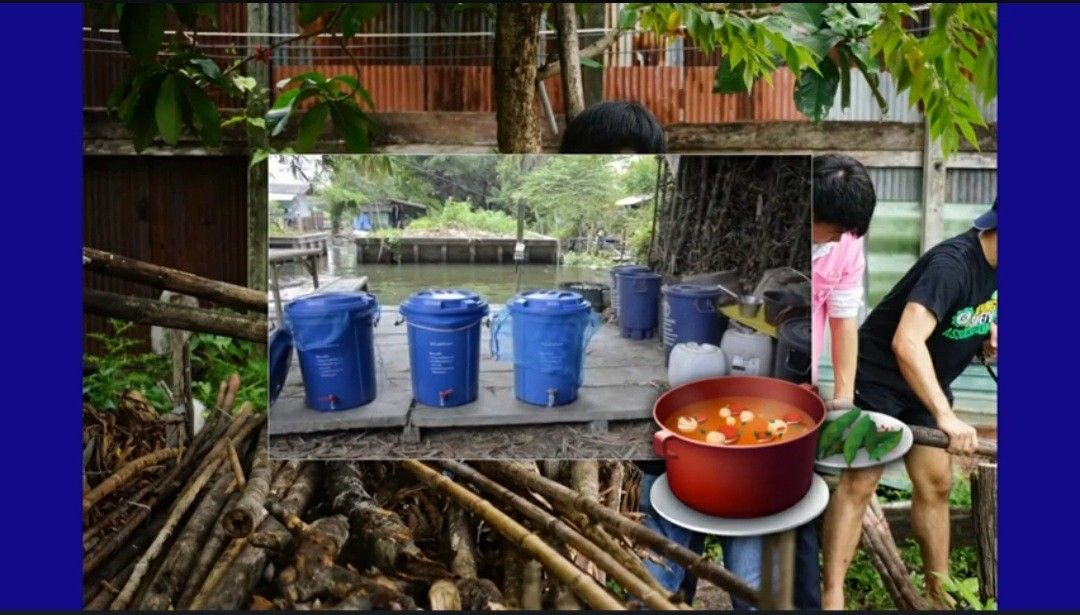
All staff and students including merchants in canteens are asked to separate organic waste (i.e., cooked foods left from consumption and raw materials left from preparation) from general waste (i.e., food-soiled plastic and paper wastes, tissue papers, etc.). Inorganic waste can be mostly recycled, such as plastic bottles and lids, aluminum cans and glasses, which were collected and sent to a third party for recycling. A certain kind of organic waste will be used for animal feed and compost, while the general waste is sent to landfill or a waste-collect station and then the garbage collectors (Phasi Charoen Municipality Office) managed them afterwards. All hazardous waste is managed and disposed by an authorized company.
 |
  |
|---|---|
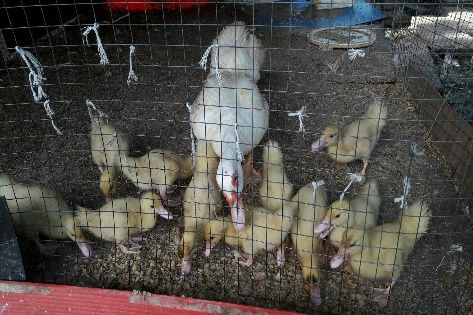
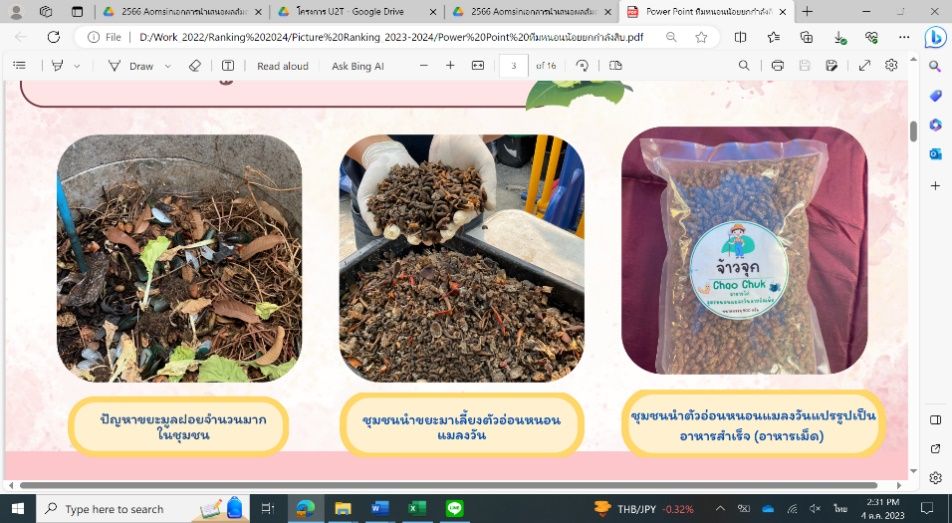
| Organic waste for animal meals | Organic waste for compost / Fertilizer and EM water |
|
|
|---|
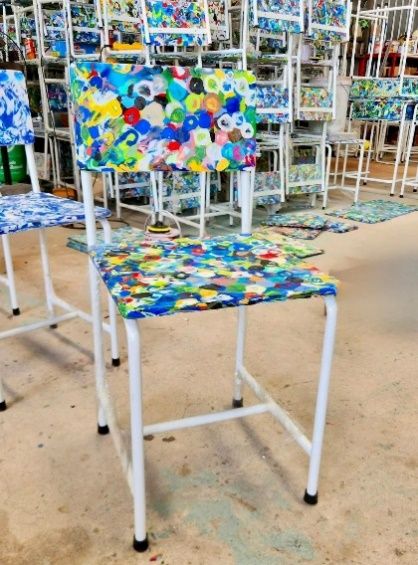
| Inorganic recycled waste for new items |